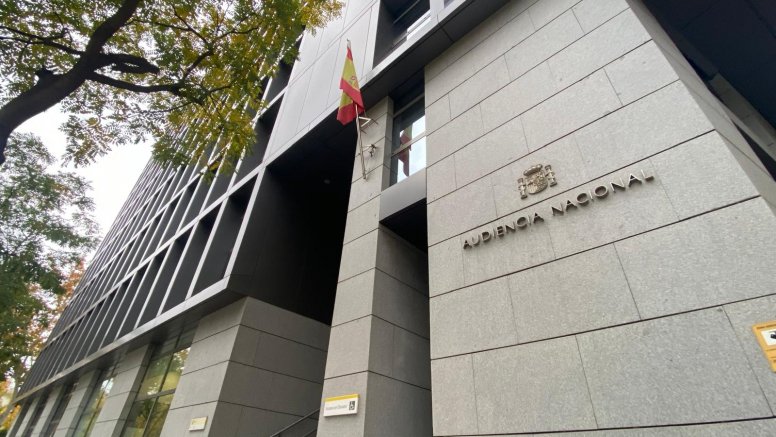
The National Court (AN) has recognized a resident in Gran Canaria the right to be compensated with 34,000 euros after having remained for three years in prison provisional for an alleged crime of drug trafficking and finally be acquitted in a final judgment.
In this case, the amount is set taking into account the moral damage caused, the physical detachment from her usual place of residence and the family, made up of two children, both economically dependent on the mother.
Also for having been forced to live with people "not chosen", the entity of the imputed crime, the time in which she was deprived of liberty, social disrepute and moral damage caused.
The woman's defense requested the Ministry of Justice at the end of 2022 for compensation of 328,500 euros and, upon being denied, went to the National Court where the State Attorney maintained the request that the lawsuit be dismissed.
The main question was to determine whether the fact of having remained from October 2011 to September 2015, a total of 1,058 days in pre-trial detention and having been acquitted of the crime of which she was accused by the Provincial Court, gave her the right to be compensated.
The Ministry of Justice considered that the ruling "in no way declares the non-existence of the imputed facts" and that, in addition, the appeal was filed one month after the deadline, which was actually due to an error in the electronic registry.
It was also alleged that an attempt was made to carry out a notification but it was impossible due to the absence of the recipient, which according to the ruling does not mean that the file can be considered resolved and there is no other alleged attempt either. Likewise, the request that the proceedings be returned to their beginning was rejected, which was also not considered appropriate.
Acquitted in a final judgment
Current legislation contemplates that it is possible to request a patrimonial claim in cases like this, in which an accused person enters pre-trial detention and then is acquitted in a final judgment, so that only the amount of compensation remained to be set.
The regulations stipulate that this will be determined based on the time of deprivation of liberty and the personal and family consequences that have occurred. In the present case, she was a Colombian citizen with a residence and work permit in Spain, who at the time of the arrest was 48 years old and had two children who depended on the accused.
"The prison caused her serious psychological damage, both to her and her family, since the stay in prison of three years in a penitentiary center undoubtedly implies a traumatic event. Even more so when the person turns out to be innocent and exempt from all guilt, generating towards her and her family a social rejection that they experienced in a traumatic way, both at school and in the family environment," indicates the ruling that can be appealed before the Supreme Court (TS).
The AN states that the measure originated "a more than precarious economic situation for her and her family nucleus, given that with her entry into a penitentiary center she was prevented from carrying out any work activity, thus generating serious economic consequences for the family."
Add La Voz de Lanzarote as a preferred Google source.
Stay informed with the latest current news.