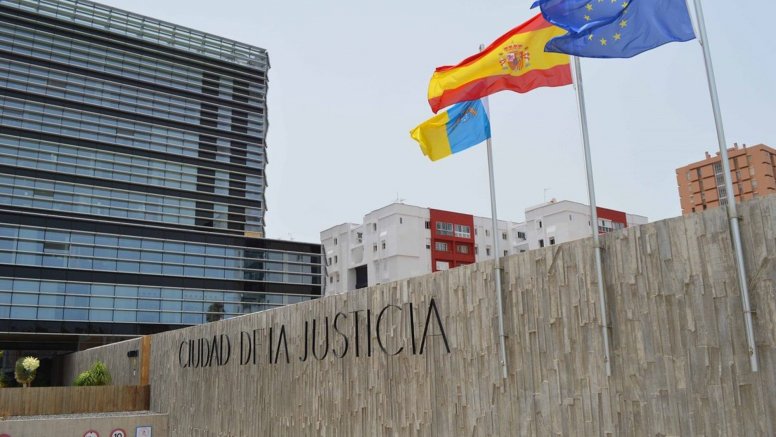
The Social Chamber of the Superior Court of Justice of the Canary Islands (TSJC) at its Las Palmas headquarters has recognized the right of a worker to receive temporary disability benefits for complications that arose after undergoing cosmetic surgery.
The ruling upholds the appeal filed by the worker and overturns the decision of the lower court, which had rejected her claim. The Court orders Mutua Fraternidad Muprespa to pay the benefit corresponding to the period between March 10 and May 6, 2024.
On March 1, 2024, during her annual leave, the worker underwent an abdominal dermolipectomy, abdominal wall reconstruction, abdominoplasty, and several liposuction procedures. After the intervention, she suffered a surgical wound dehiscence and an abdominal seroma.
These complications required medical assistance, with sessions to remove the seroma for six weeks and daily dressings until the wound closed. The Canary Islands Health Service issued the medical leave on March 11, 2024, and the worker was discharged on May 6, returning to her post the following day.
The mutual insurance company had refused to pay the benefit, considering that the leave resulted from a purely cosmetic surgery intervention and that the incidents that arose during recovery were part of the normal convalescence process.
The Chamber recalls that voluntary cosmetic surgery is not, in itself, among the contingencies covered by the Social Security system. In this regard, the ruling states that these interventions, even if they may cause a suspension of the employment contract, do not constitute a situation of temporary disability when they exclusively respond to a personal decision to improve physical appearance.
It specifies, however, that this exclusion does not extend to complications or pathologies that may appear as a consequence of the intervention.
The ruling states that the Supreme Court's doctrine allows for recognition of protection when a health alteration occurs that goes beyond simple convalescence after cosmetic surgery.
In the case analyzed, the Court considers that the wound dehiscence and abdominal seroma were not mere incidents of the normal recovery process, but complications that affected the worker's health, required additional medical assistance, and delayed her recovery.
Regarding dehiscence, the ruling highlights that the separation of the edges of a surgical wound before complete healing requires medical attention and cannot be considered part of the normal healing process.
According to the resolution, it is a complication that can increase the risk of morbidity, prolong recovery, and affect the scar. In relation to abdominal seroma, the Court differentiates between cases where the fluid is reabsorbed spontaneously within two to four weeks and those where, due to their duration or extent, drains or punctures are necessary.
In these latter cases, it understands that there is a complication that must be acted upon to avoid infections, wound opening, or fluid encapsulation. The resolution emphasizes that, in this case, the seroma had to be treated for six weeks, so it could not be considered a mere ordinary consequence of the intervention.
Add La Voz de Lanzarote as a preferred Google source.
Stay informed with the latest current news.