The Immigration Section of the Provincial Prosecutor's Office of Las Palmas de Gran Canaria has received a complaint for "child neglect" against the Fundación Samu entity for the condition of the protected migrant minors who are staying at the Casa del Mar in Arrecife in Lanzarote and the deficiencies in the services and facilities.
Fundación Samu was hired by the Government of the Canary Islands to manage the space, which opened its doors last October 2023.
In their complaint, the lawyers Irma Ferrer and Loueila Sid Ahmed, members of the Lanzarote Bar Association, collect the testimonies of minors and center employees. To present it, they have relied on witnesses, audio recordings, writings, videos, and photographs.
Currently, the space houses 55 migrant minors, although its capacity is less than half, 25 minors. In the aforementioned document, the lawyers state that the 20 rooms of the complex "are in terrible condition" and also "do not meet the minimum conditions of habitability." At this point, they point out that there are loose electrical cables, broken windows, and no furniture.
The minors also do not have access to the cafeteria or have a kitchen, and the food is prepared by a catering service that they denounce as having a "terrible quality," according to users and workers.
One of the most serious parts of the lawsuit includes an alleged "violent, abusive, and derogatory" episode by the only social worker at the center with a minor. At this point, they state that the employee "had an altercation" with one of the users, "using physical force, grabbing him by the neck and pushing the minor against the wall." The informants, on whom the complaint is based, state that "such a level of physical violence" was "unnecessary, counterproductive, and very dangerous."
According to the lawsuit, the management allegedly "uses some boys to act as snitches, threatens them with complaints" and promises to give them papers, money, or extra food if they give them information. This situation creates "an atmosphere of oppression and surveillance inappropriate for a place of reception and protection."
In addition, it points out that "it is widespread, on the part of the team, to treat adolescents with contempt." Thus, it exposes racist episodes by the center's director and part of the team that "treats adolescents with contempt."
Thus, it also points out that there is "an arbitrary and subjective system of offenses and punishments," since the minors "are not informed of the offenses imposed on them," even, "sometimes they are punished without eating."
Addictions
The stories collected in the text indicate that "the regulations for the protection of children are systematically violated, that their religious beliefs are not respected, limiting any manifestation of their origins." They are also not provided with psychological support, nor are they provided with "a safe place" to express themselves, where they can respond to their basic needs, and in which they are trained and offered leisure to prepare for adult life.
One of the children at the center died after being run over last February. "No psychological assistance was offered to his companions or support in their grieving process, there was no attention to their emotional needs," he adds. Despite the fact that several minors were very affected, "their depressive symptoms, calls for attention, or rebellious attitudes" for which they were punished were ignored.
Thus, they warn that the mental health of the children is not being taken into account, nor are their addictions. "They say they detect cases of acute depression, there is consumption of medications such as Rivotril or Diazepam. Several minors consume anxiolytics with energy and alcoholic drinks as a mechanism to escape."
Among them, it includes an episode from last June 11, when a worker found an empty box of Tramadol, but points out that "the management does not take any measures in this regard."
Likewise, the minors "are not schooled, their attendance at class is not controlled, and they do not receive training, nor is access to recreational, educational, sports, cultural, etc. activities promoted."
"They are not offered any activity, much less training," he highlights. This extreme situation leads many minors to drug or alcohol use to escape the situation, others run away from the resources. "The center's management pushes them to live on the street in subhuman conditions despite being minors protected by the Government of the Canary Islands and the Island Council," he adds.
State of the facilities
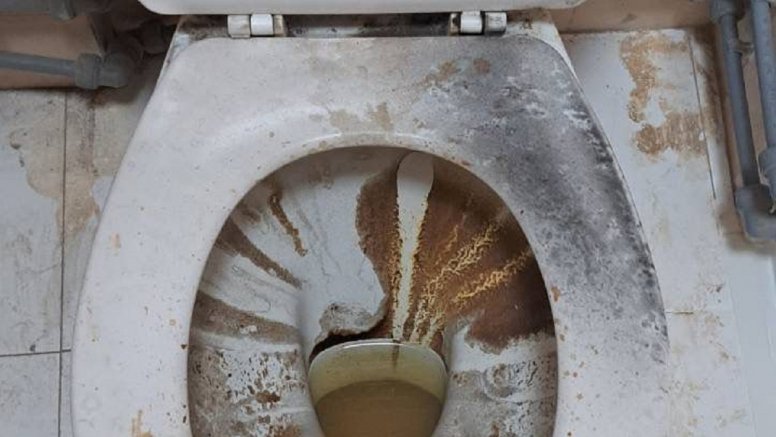
According to the photographs attached to the complaint, the spaces are "very dirty, neglected, with loose cables everywhere, peeling paint, old and broken sofas."
In addition to this, in the case of the kitchen, the sinks are "very dirty, with ants" and there is also "presence of cockroaches." While the bathrooms "do not have maintenance or cleaning." In addition, the lawyers state that "they are not suitable for use, much less for minors."
In this line, they point out that "the washing machine does not work, that they do not have sheets and the clothes are not cleaned." Even, the educators "mention that, sometimes, they have seen the situation so extreme that they have taken sheets and clothes from the minors to wash in their own homes."
Regarding food and menus, some workers state that it is "very unhealthy and unbalanced," that it consists of "potatoes or pasta and bread in practically all meals and, when there is meat, it is reconstituted meat that sometimes smells bad." In addition, "it arrives in plastic boxes, sometimes in very bad condition, with hairs or cockroaches."
There are also not "enough cutlery for everyone" and the minors have to end up eating with their hands. "Rations for the staff were no longer requested because no one eats it due to the poor condition of the catering food."
This lack of food leads some of the minors to behave aggressively because "they are hungry." Therefore, there are employees who bring them food secretly, but they are exposed to reprisals. "The food is stored and separated from the children," the document reads.
Thus, they also indicate the case of a child who reached a state of malnutrition and had to "have an urgent blood transfusion."
A fire last February
Regarding protection against emergencies, they assure that all the fire extinguishers are under a table in the same room locked with a key, and that only one person has that key. The lawyers do not know if those fire extinguishers work.
In addition to this, the light switches "are torn from the walls" and if two loose cables get close "it turns on," which has caused users and workers to be electrocuted "several times." "Some of these bare cables are on the head of the beds where they sleep," they added.
The complaint states that last February 14, the center suffered a fire in a corridor. The users and workers stayed outside the premises "for hours, feeling cold and hungry." Then, after putting out the fire, the firefighters indicated that it was not possible to spend the night in the burned area due to the toxic fumes, but some users spent the night in the area.
The action of the Prosecutor's Office for Minors
On the other hand, the document states that on May 6, the Prosecutor's Office for Minors appeared in a announced visit to the center. According to the testimonies collected in the lawsuit, "before the visit, the center's director hid papers and asked some workers to put files in their car to hide them from the inspection."
At that time, the food, prevention of occupational hazards, fire extinguishers, etc. were reviewed, but "no statements were taken from either workers or users."
The closure of La Santa
Thus, the document points out that "there are minors with judicial measures or with complaints, drug users, and with weapons or dangerous instruments who have been referred to the center where minors in a situation of helplessness are located."
After concluding the closure of the La Santa juvenile center, nine users were transferred to the center, including the perpetrator of a stabbing of another minor. According to the complaint, that day, at 11:00 p.m. at night, when the transfer was made, "only one person was working, who had to do the night shift with a worker from the La Santa juvenile center. The worker was scared to be in the presence of this minor and have to protect, alone, all the other users of the center."
Lack of training for workers
The center has 14 workers: the director, a social worker, three social educators, four assistants, and five mediators. However, there is no cleaning or maintenance staff.
"Many members of the staff do not have specific training corresponding to their jobs," thus "several people are being hired without the appropriate qualification" and others "performing functions and being remunerated, without having the specific hiring for it." Three mediators speak dariya (Moroccan Arabic) and one of them, French.
To conclude, the complaint states that "the reception center itself, which must provide comprehensive care, is the one that originates the situation of child neglect." Therefore, they request the urgent and extraordinary intervention of the Prosecutor's Office, as a result of the facts presented.
Add La Voz de Lanzarote as a preferred Google source.
Stay informed with the latest current news.