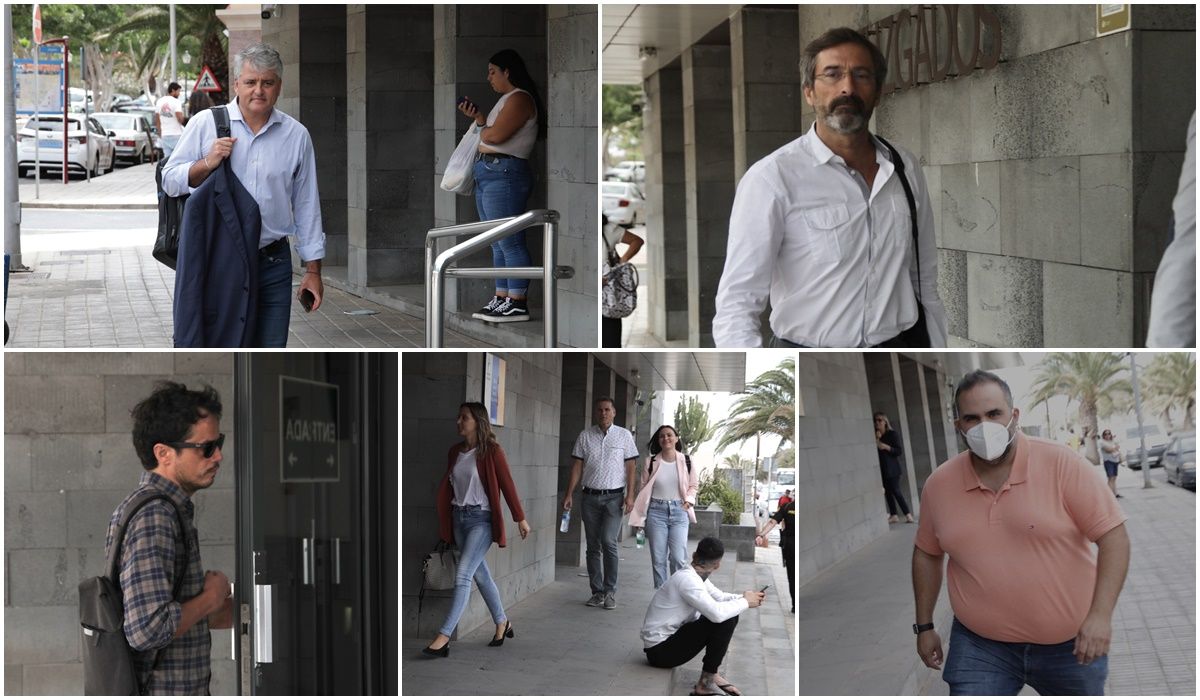
Judge Jerónimo Alonso has decided to provisionally dismiss one of the cases opened against Pedro San Ginés, in which he was investigated for a crime of coercion against councilor Juan Manuel Sosa. This procedure was later extended to all the councilors of the CC group, for an alleged crime of document forgery, which has now also been dismissed.
In an order dated this Monday, against which an appeal is possible, the magistrate points out with respect to the first crime that "there is only the incriminating statement of the complainant", without any "indicative element" having been obtained after the investigation to "corroborate" his testimony.
What Juan Manuel Sosa denounced, as the order recalls, was that on May 12, 2021, Pedro San Ginés summoned him to his house and there "showed him on his computer screen a document containing a lawsuit filed against him for the commission of a crime against the Public Treasury, with a request for a sentence of 2 to 6 years in prison and a fine of 85,000 euros".
In that meeting, according to Sosa, San Ginés threatened him with filing the lawsuit and launching a press campaign against him if he did not resign from his position as councilor in the Cabildo.
"The press releases and statements made after May 13, 2021 by the investigated Pedro San Ginés Gutiérrez do not imply, in themselves, that the alleged threat existed," the magistrate now argues, after having investigated the facts by order of the Provincial Court, which annulled his first dismissal order.
Regarding the alleged falsification of the regulations of the CC group in the Cabildo, which according to Sosa was "simulated and created ad hoc" to be able to expel him, the judge concludes that it "lacks criminal relevance, without prejudice to the consequences that this action may have in the administrative sphere".
Add La Voz de Lanzarote as a preferred Google source.
Stay informed with the latest current news.