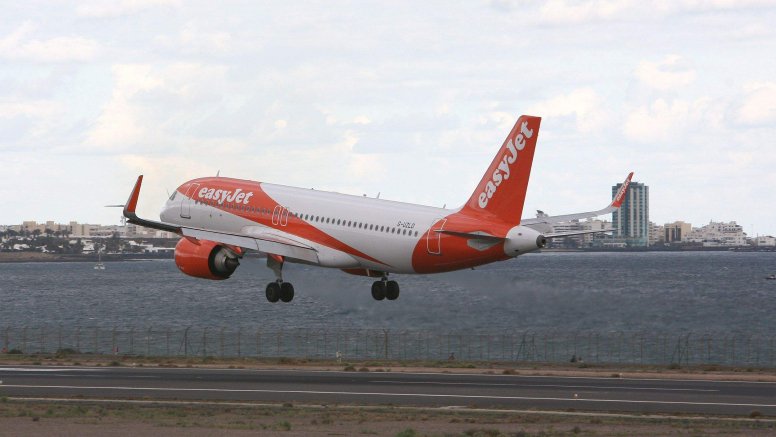
The Island Director of the Government of Spain in Lanzarote, Pedro Viera, has given an interview to La Voz to explain the situation of the César Manrique Airport, which has been the subject of controversy in recent months due to problems with the passport stamping of non-EU passengers. Especially, given the increase in the arrival of British tourists.
Currently, "Lanzarote Airport supports almost 60% more British flights than Gran Canaria Airport", Viera said. In addition, according to data from the Canary Islands Institute of Statistics (ISTAC) and FRONTUR-Canarias, 60% of the tourists who arrived on the island in May were British.
As this newsroom reported, on July 31, a total of 38 passengers were left on the ground after waiting at the boarding gate for a flight departing from Lanzarote to the United Kingdom due to problems in the border control of citizens from outside the European Union.
"Beyond any specific issue that may arise at our airport, things are proceeding normally," he said. However, the truth is that the pressure from non-EU travelers at César Manrique has forced the National Police to reinforce its staff with other officers. In addition, it has caused moments of long waits at border controls.
The pressure of British tourism
Regarding the shortcomings in border control in Lanzarote, the island director explains that they are working "actively to address the situation." Thus, he attributes these incidents to the United Kingdom's departure from the European Union and, therefore, from the Schengen Area, and to the increase in frequencies of flights from England, Wales, Scotland, and Northern Ireland.
The United Kingdom definitively left the European Union on January 31, 2020. Then, the transitional period was extended until January 1, 2021. This means that British passengers must pass border control like other non-EU citizens and, therefore, more National Police officers are required to carry out this check of entries and exits.
The island director explains that "up to 12 flights arrive in an hour and a half. We are talking about more than 2,000 people, and although the control is done according to current regulations, it is always a handicap, especially at the entrances," he continued. Thus, he revealed that a large deployment of agents is not always necessary, because there is not the same concentration of passengers at all hours, so when required, national police officers from the Arrecife Police Station are mobilized.
Viera places the problems in "the configuration of the airport", since it does not have a single exit for non-EU travelers, but eleven boarding gates, where border control is carried out. This adds to the concentration of trips in very short periods of time.
Sources from the National Police point out to La Voz the need for Aena to create a fixed border post at Lanzarote Airport to stamp the entry and exit of travelers.
Meanwhile, the Island Directorate of the Government of Spain has assured that the solution lies in better coordination with Aena. "Among the measures, it would have to see if the slot times, the landing and take-off times, are the most appropriate or should be extended," he continued explaining. Thus, he has also considered the option of studying "the redistribution of flight schedules and reducing saturation."
That the control is done in accordance with the regulations is something that was questioned by a National Police officer, who reported a hole in the external border of the European Union in Lanzarote. The officer assured before a Court of Arrecife that the Airport had been failing for three years to stamp the passports of British passengers, with the consequences that this entails, by not being able to close their entry into European territory.
According to data from the Island Directorate, the César Manrique Airport has 37 officers, 35 agents and two inspectors who are assigned to the aerodrome. To this must be added the temporary transfers of police officers from the Brigade for Response to Clandestine Immigration that have been transferred from Madrid, 30 agents weekly transferred extraordinarily by the General Directorate of the Police to make up for shortcomings and the reinforcements from the Arrecife Police Station, which are only mobilized in hours of greater influx.
Add La Voz de Lanzarote as a preferred Google source.
Stay informed with the latest current news.