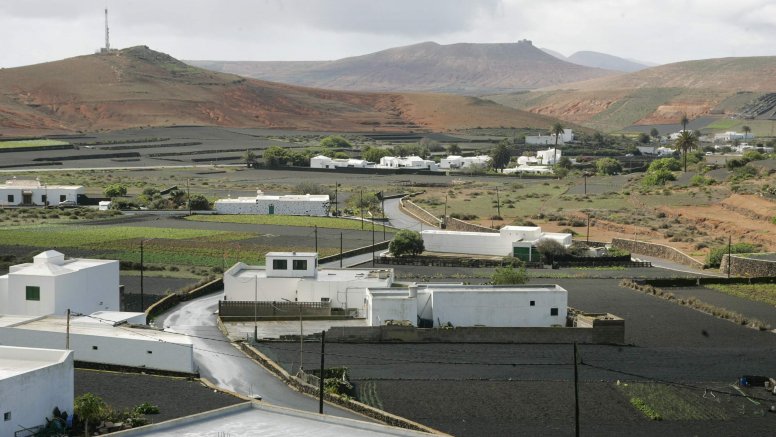
The Ministry of Tourism and Employment of the Canary Islands Government has published in the Official Gazette of the Canary Islands (BOC), a line of subsidies aimed at financing energy efficiency and circular economy projects in rural accommodations in the archipelago within the framework of the Recovery, Transformation and Resilience Plan, financed by the European Union through the Next Generation EU instrument.
The call has an economic endowment of 1,250,000 euros and will be awarded on a non-competitive basis. Each beneficiary may receive a maximum subsidy of 50,000 euros, and may submit one or more projects, provided that the total amount requested does not exceed this sum.
The Minister of Tourism and Employment, Jéssica de León, highlighted her Department's commitment to rural tourism, a sector "that generates local employment, fosters entrepreneurship, and strengthens areas such as agriculture, crafts, and gastronomy, creating synergies that enrich the productive fabric of our towns". Furthermore, she added, "this type of tourism also acts as a tool to combat depopulation, by offering real opportunities for development and rootedness for the resident population".
Eligible actions include projects aimed at reducing energy consumption and improving the environmental performance of establishments, such as interventions in the building's thermal envelope, the incorporation of materials that promote insulation, or the implementation of more energy-efficient technologies and equipment.
Likewise, the installation of sensors and monitoring systems is contemplated to control the consumption of energy, water, and other resources, as well as the implementation of energy management systems that optimize energy use.
Measures related to the circular economy are also subject to funding, particularly those aimed at improving the **waste management** generated by tourism activities, encouraging their reuse and recycling
The call also allows for improvement actions in facilities and equipment, such as the renovation of lighting systems with low-consumption ones, the installation of presence detectors, the replacement of appliances with more energy-efficient models, the insulation of boilers and pipes, or the improvement of air conditioning, ventilation, and heating systems.
Likewise, measures related to the replacement of **fuels** or **boilers** with high-efficiency ones, thermal and electrical storage, efficient air conditioning of buildings and swimming pools, as well as the installation of self-consumption systems using solar photovoltaic energy, may be financed, provided that these contribute to the reduction of the establishment's non-renewable primary energy consumption
Projects for the digitalization, automation, and control of buildings can also be subsidized, through the implementation of intelligent management systems that allow for the reduction of unnecessary consumption, especially in areas such as lighting and air conditioning.
The maximum deadline for the execution of the eligible actions will extend until March 1, 2026. Access the regulatory bases to learn in detail the requirements and deadlines for submitting applications.
Add La Voz de Lanzarote as a preferred Google source.
Stay informed with the latest current news.