The Ministry of Universities, Science, Innovation and Culture of the Government of the Canary Islands, through the Canary Agency for Research, Innovation and Information Society (ACIISI), celebrated this October 14 the closing meeting of NextAgora 2026, a program in which 23 young people from public universities in the Canary Islands participated to explore different professional development opportunities with 23 mentors outside the academic field.
The event, held at the facilities of the Canary Islands Technology Institute (ITC), in Pozo Izquierdo, Gran Canaria, has put an end to the third edition of this initiative, aimed at bringing research staff closer to the business fabric and other professional fields where they can apply their knowledge and skills.
For three months, NextAgora has brought together 23 mentoring pairs, formed by pre- and post-doctoral research staff from the University of La Laguna (ULL) and the University of Las Palmas de Gran Canaria (ULPGC), along with professionals from different business sectors who have shared their experience and offered guidance on the possibilities of labor development beyond the academic field.
The accompaniment has combined individual meetings with online group sessions, in which the participants have been able to share their progress, exchange experiences, and reflect on the competencies and skills necessary to face new professional challenges such as scientific entrepreneurship, the transition to the private sector, the search for professional specialization, or the leadership of an innovation team, among others.
The director of ACIISI, Javier Franco Hormiga, pointed out that "research training provides knowledge and skills that can be applied in different work environments. Knowing other professional paths and sharing experiences with people from different sectors helps to identify possibilities that, on occasion, are not considered during the university stage."
Franco Hormiga also highlighted the importance of this exchange: "Critical thinking, creativity, and problem-solving skills are inherent to research and have applications in numerous professional fields. Mentoring allows us to learn firsthand how these skills are used outside the academic environment."
A meeting to share experiences and learning
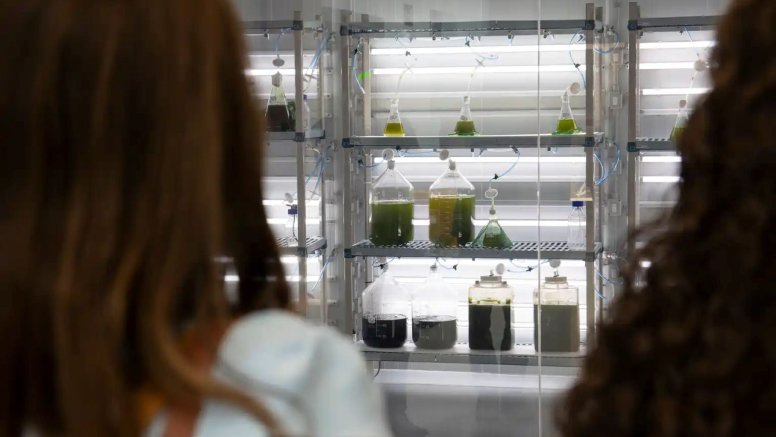
The closing day has begun with the institutional welcome from the director of ACIISI and a visit to the ITC facilities in Pozo Izquierdo, accompanied by its R&D&i director, Gonzalo Piernavieja Izquierdo.
Subsequently, the results and learnings of NextAgora 2026 were presented, in a session dedicated to sharing the experiences of the three months of mentoring and learning about the evolution of the mentoring programs.
The meeting also gave a voice to the participants, who shared their experiences and reflected on the acquired skills, the identified professional opportunities, and the exchange of knowledge between the academic environment and other sectors.
NextAgora follows the REBECA methodology, linked to the European network EURAXESS, which promotes the professional guidance of research staff and facilitates knowledge of job opportunities in sectors other than university.
The day concluded with an exchange of impressions between the participants and professionals who participated in the mentoring, focused on the learnings of this edition and the different professional development possibilities explored during the program.
Add La Voz de Lanzarote as a preferred Google source.
Stay informed with the latest current news.