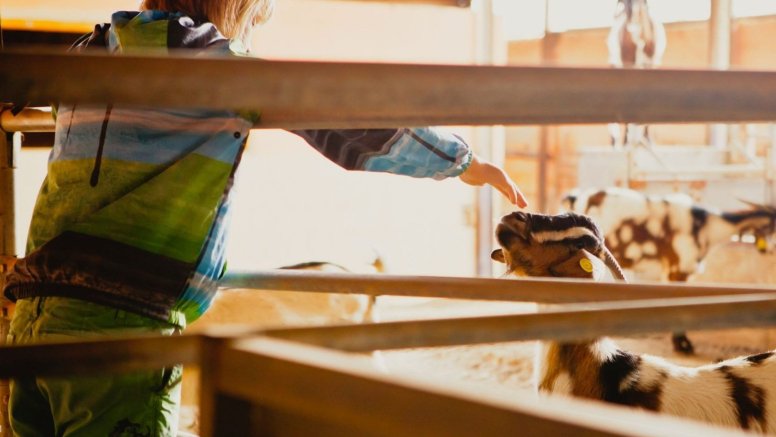
Improving the welfare of goats and, at the same time, contributing to healthier and more sustainable livestock production is the objective of the WELCOMGOAT research project, led by the University of Las Palmas de Gran Canaria (ULPGC) to analyze how environmental enrichment influences the immune system of goats and the quality of colostrum, an essential element for the survival and development of offspring.
The initiative is part of the beneficiary projects of the call for aid for applied R&D projects promoted by the Ministry of Universities, Science and Innovation and Culture (CUCIC), through the Canary Agency for Research, Innovation and Information Society (ACIISI).
The project starts from the premise that the environment in which animals live has a direct influence on their physiological state and immune response. Unlike traditional approaches focused mainly on productivity, WELCOMGOAT proposes to study how different environmental enrichment measures can reduce stress in goats and promote better colostrum quality.
Colostrum is the first source of defenses for kids during their first hours of life, so any improvement in its composition can positively impact the health and welfare of animals from birth. The results will generate scientific knowledge applicable to the management of livestock farms and advance towards production models that are more respectful of animal welfare.
Research with an impact on the Canarian goat sector
Goat farming holds a prominent place in the economy and cultural identity of the Canary Islands, where milk and cheese production is a strategic activity for numerous farms in the archipelago. In this context, the project seeks to provide innovative solutions to improve the sector's competitiveness without sacrificing high standards of animal welfare.
The proposal obtained a score of 75.6 points in the scientific and technical evaluation of the call and will have funding of 140,810.93 euros to develop an experimental development project.
Due to its orientation, WELCOMGOAT is integrated into the priority area of Welfare and Health, contributing to the promotion of research that benefits both animal health and the quality of agri-food products. Likewise, it aligns with the objectives of the Canary Islands Smart Specialization Strategy (expanded RIS3), promoting innovation in one of the most deeply rooted agricultural and livestock sectors in the islands.
The initiative is part of the 17 projects financed in the latest regional call for applied R&D, endowed with more than 2.5 million euros, and has co-financing from the European Union through the European Regional Development Fund (ERDF), within the framework of the ERDF Canary Islands Program 2021-2027.
Add La Voz de Lanzarote as a preferred Google source.
Stay informed with the latest current news.