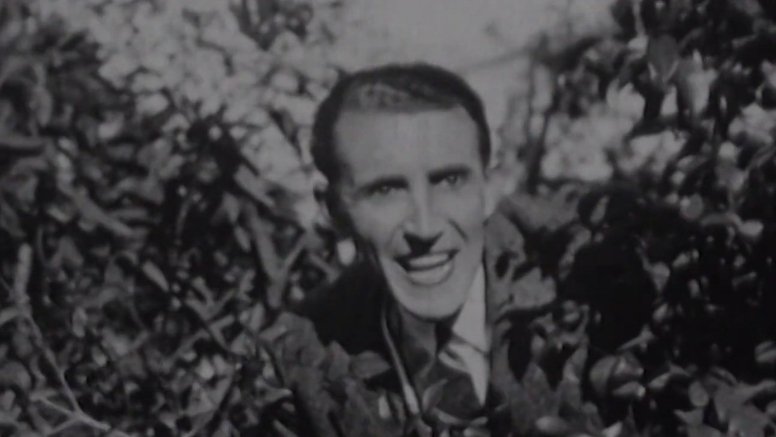
Filmoteca Canaria says goodbye to the cycle ‘The Body of the Crime’ with a very significant event for the historical and cultural heritage of the islands, the commemoration of the centenary of ‘The Thief of White Gloves’. The film, released in 1926, has the particularity of being the first feature film made by Canarians and shot entirely in the Canary Islands and is, in turn, one of the great milestones of the origins of island cinema.
‘The Thief of White Gloves’ is a 138-minute police film. Its plot revolves around the theft of a necklace during a dance. This event triggers a thrilling chase to catch the criminal Malcorne, while the investigators will have to deal with circumstances such as thefts, false identities, and many other impediments.
Behind the feat of shooting this film a century ago are José González Rivero and Romualdo García de Paredes, who jointly took on the direction of the project.
González Rivero, who at the beginning of the 20s (of the 20th century) was also the manager of the Teatro Leal in La Laguna, had begun at that time to make documentaries and local newsreels with his own camera and his own production company: Rivero Film. For this project, however, he joined forces with García de Paredes, who was responsible for writing the film's screenplay and playing Tom Carter, the detective investigating the theft. The cast of the film was completed with actors such as José Miguel Mandillo, Angelina Navarro, Carlos Reyes, Antonio Varela, Guetón Rodríguez Melo, and Pedro Rodríguez Bello, who made this unprecedented production in the Islands possible.
The film was shot in Tenerife during 1926 and, although it was screened on several islands - and even in Cuba - it disappeared from the screens with the arrival of sound cinema. In the 1980s, the copy kept by the González Rivero family was recovered, which has allowed its exhibition on several occasions.
The second reel, with the ballroom scene (shot in the Hall of Mirrors of the old Casino of Santa Cruz de Tenerife), disappeared and has not been located to date.
The film was shot in black and white with tinting. The original nitrate rolls (flammable material) are deposited at the Filmoteca Española. Some of these rolls were very deteriorated and, in the year 2023, Filmoteca Canaria commissioned a specialized laboratory to restore and digitize the film in 4K. This restored digital copy is what will be exhibited to commemorate the 100th anniversary of its premiere.
With this anniversary screening, Filmoteca Canaria closes the cycle ‘The body of the crime’, a carefully curated proposal that in recent weeks has invited viewers to look at crime as a mirror of collective concerns.
Add La Voz de Lanzarote as a preferred Google source.
Stay informed with the latest current news.