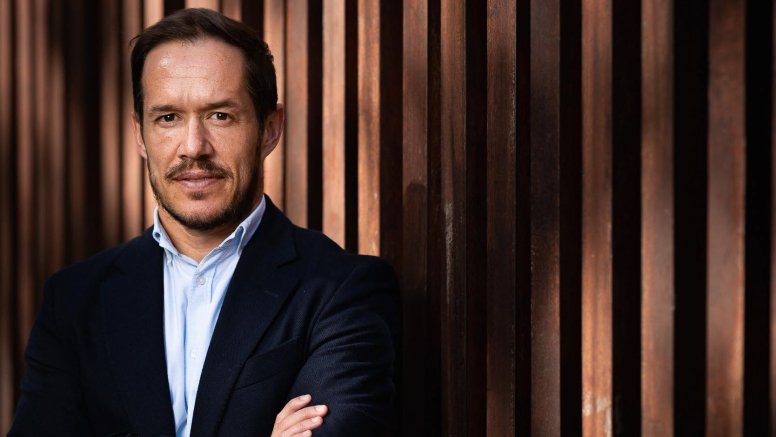
“We cannot control the rise in temperatures solely by reacting when a heat episode occurs. We have to act beforehand, producing more clean energy, reducing our dependence on fossil fuels, and preparing our municipalities to especially protect those who are most vulnerable,” explained the Minister of Ecological Transition and Energy Mariano H. Zapata.
The minister expressed this in the Parliament while reviewing the main actions taken to advance the energy transition and prepare the archipelago for the progressive increase in temperatures.
The minister of the area, Mariano H. Zapata, defended a strategy based on two complementary lines that seek to reduce emissions by transforming the energy model and adapt our towns and cities to better protect the population from heat.
In terms of energy, the Canary Islands have incorporated 232 megawatts of renewable power since 2023, increasing from 972 MW to the current 1,204 MW, which represents a growth of close to 24%. This increase is also reflected in electricity generation: renewables have gone from representing 19.2% in 2023 to currently standing at around 23%.
One of the most significant advances is in self-consumption. Installed capacity has gone from 136 MW in 2023 to more than 302 MW in 2026, while the number of installations has grown from approximately 14,700 to over 24,800 in homes, businesses, administrations, and other buildings in the Archipelago.
“In just three years, we have incorporated 232 MW of renewables and more than doubled self-consumption capacity. There are increasingly more families and businesses producing their own energy, and the Canary Islands depend a little less on fossil fuels,” highlighted the minister.
Zapata pointed out, however, that the next major challenge is to ensure that all this new renewable generation can be utilized. “It's not just about installing more solar panels or wind turbines. We have to be able to store energy when it is produced and use it when we need it. The goal is to take advantage of every renewable kilowatt we generate in the Canary Islands,” he explained.
In this area, the Executive is working on strategic projects such as Salto de Chira, the future Güímar pumped-storage power plant, the deployment of battery storage, and the Tenerife-La Gomera electrical interconnection.
In addition, the Canary Islands have been demanding a framework from the State that allows for the adequate development of energy storage in the island electricity systems, an essential element for continuing to increase the penetration of renewables.
Preparing Canary Islands municipalities for rising temperatures
Along with energy transformation, the Ministry is developing adaptation measures aimed at reducing the impact of high temperatures, paying special attention to vulnerable groups such as the elderly, people with chronic illnesses, or workers exposed to heat.
Among these, the Canary Network of Climate Shelters stands out, developed jointly with the Canary Federation of Municipalities (FECAM), which will have a common methodology to identify and condition spaces capable of offering adequate conditions against high temperature episodes.
In addition, the Government of the Canary Islands is already advancing actions in Los Realejos (Tenerife), San Bartolomé de Tirajana (Gran Canaria), Puerto de Tazacorte, and Santa Cruz de La Palma with specific projects. “Adapting means preparing our public spaces from now on: creating shade, incorporating vegetation, providing water, and creating places where any citizen, especially the most vulnerable, can protect themselves during the hottest hours,” explained Zapata.
This initiative is complemented by the Climate Shelters Guide, prepared through the Canary Green Offices and sent to the 88 municipalities and seven island councils. The document establishes guidelines for adapting squares, streets, and public buildings through shaded areas, adapted vegetation, drinking water points, protected furniture, and conditioned interior spaces.
Likewise, the Ministry is promoting the Urban Renaturalization Guide, aimed at incorporating nature-based solutions that reduce the urban heat island effect and improve the thermal conditions of urban centers.
Zapata concluded that “the response must occur on both fronts: continuing to move towards a cleaner energy system and preparing the Canary Islands for a reality of increasingly high temperatures. Mitigating and adapting are not alternatives; we have to do both.”
Add La Voz de Lanzarote as a preferred Google source.
Stay informed with the latest current news.