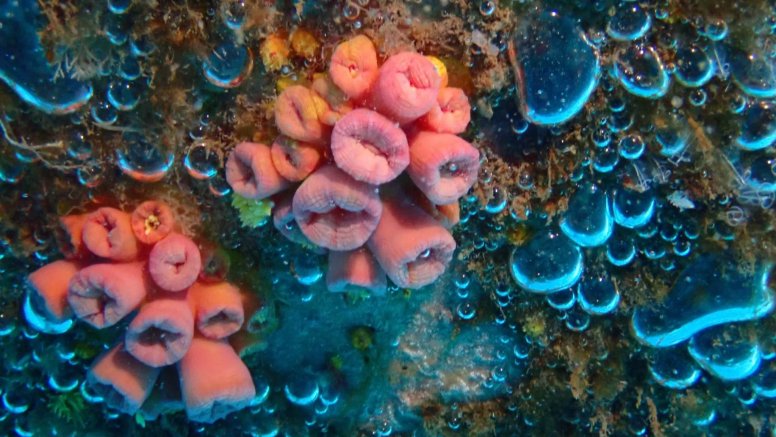
Canarias develops a research project focused on understanding how the effects of climate change can modify the response of marine species with high invasive potential and favor their expansion in the ecosystems of Canarias. The ULL research will study these processes from the early stages of organism development to their ecosystem-scale effects.
The project is part of the beneficiaries of the call for aid for applied R&D projects promoted by the Ministry of Universities, Science, Innovation and Culture (CUCIC), through the Canary Agency for Research, Innovation and Information Society (ACIISI).
The increase in temperature and the decrease in pH, along with increasing maritime traffic, are generating modifications in the distribution of potentially invasive species, such as the case of the sun coral Tubastraea coccinea and certain species of crabs. In this context, the research aims to determine how they respond to different environmental scenarios and what characteristics can favor their establishment and expansion.
The analysis will cover different levels of biological organization, from larval and juvenile stages to adult organisms and the communities in which they interact. This approach will allow the identification of possible changes in their survival, development, and adaptation capacity in the face of new environmental conditions.
Knowledge to protect marine ecosystems
The project results can contribute to improving Canarias' ability to anticipate the expansion of exotic species and design more effective monitoring and management strategies. Generating information on the response of these species to climate change is especially relevant for an island territory, where marine ecosystems have high environmental and socioeconomic value.
The research has funding of 121,956.46 euros and has obtained a score of 83.5 points in the scientific and technical evaluation of the call.
Due to its scope of action, the project is linked to the sustainable blue economy, as well as to the priorities related to sustainability, the environment, and the management of natural resources of the Canary Islands Smart Specialization Strategy (RIS3 extended). Likewise, it is framed within the objective of promoting the improvement of scientific knowledge and management tools linked to an innovative and sustainable fishing activity.
The initiative is integrated into the regional call for applied R&D projects, aimed at promoting research capable of providing answers to some of the main scientific, environmental, and socioeconomic challenges of the Canary Islands, and it has co-financing from the European Union through the European Regional Development Fund (ERDF), within the framework of the ERDF Canary Islands Program 2021-2027.
Add La Voz de Lanzarote as a preferred Google source.
Stay informed with the latest current news.