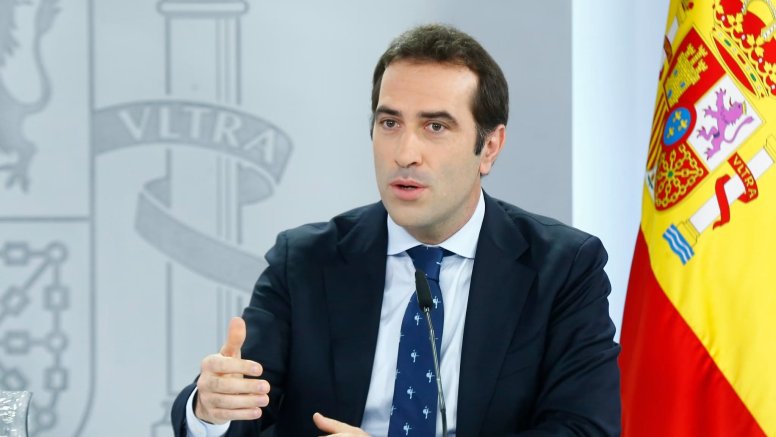
The Council of Ministers has approved this Tuesday, November 10, at the proposal of the Ministry of Transport and Sustainable Mobility, a Royal Decree to create the Ombudsman for Victims of Collective Transport Accidents. It is a permanent figure attached to the ministry whose main function will be to coordinate care for those affected and their families in the medium and long term, ensuring follow-up once emergency devices are dismantled.
The new commissioner will have the rank of undersecretary and will have the capacity to request official information, supervise commitments, and coordinate the different bodies involved.
The structure of this body will be articulated through an Office of the Ombudsman with the rank of Directorate General, which will include a General Secretariat and a Deputy Directorate General for Victim Assistance, as well as a Technical Cabinet for direct advice. The head of the body will be appointed by Royal Decree of the Council of Ministers at the proposal of the Minister of Transport.
Within three months of his appointment, the Ombudsman must present a proposal for reform of the regulatory framework for victim assistance, prepared together with associations from the sector, in order to review intervention protocols and define changes that require the force of law.
The scope of action will cover accidents in collective transport means of state competence: rail, commercial aviation, passenger maritime transport, and regular bus lines. However, its work may be extended to regional and local services through collaboration agreements with territorial administrations.
The regulations extend the legal consideration of victim not only to those who die, disappear, or suffer physical injuries, but also to people with psychological damage, family members, dependents, and close relatives directly affected by the accident.
Among the main functions entrusted to the Ombudsman are:
-
Interlocution and coordination: To act as the single point of contact with the different administrations and to promote homogeneous protocols of action, with special attention to vulnerable people.
-
Legal and assistance advice: To provide guidance on property claims, access to free legal aid, financial aid, and continuous therapeutic assistance.
-
Technical investigation and transparency: To cooperate with the Independent Administrative Authority for the Technical Investigation of Accidents and Incidents (AITAT) respecting its independence, and to prepare periodic reports on the management of each event.
-
Information treatment: To draft a code of good practices with media associations for the treatment of information in this type of catastrophe.
-
Associative participation: To permanently integrate victim organizations through a consultative working group.
The decree specifies that the Ombudsman will not replace judicial bodies, technical investigation teams, or the powers assumed by autonomous communities and city councils in health or social services, and must articulate their intervention in these cases through inter-administrative cooperation mechanisms.
Add La Voz de Lanzarote as a preferred Google source.
Stay informed with the latest current news.