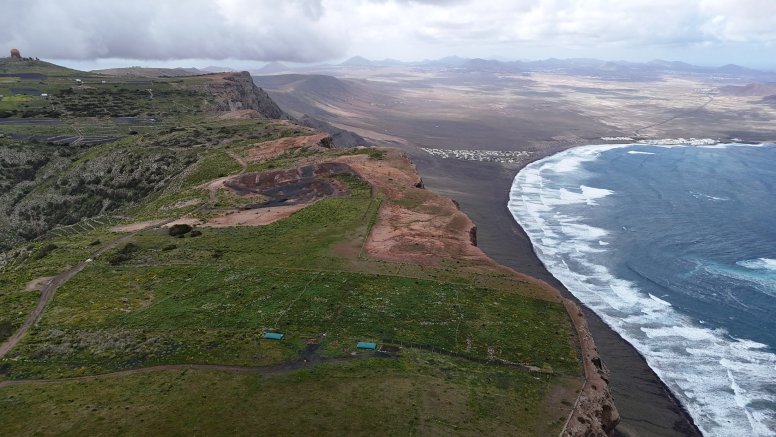
Analyzing the vulnerability of island ecosystems to climate change through advanced remote sensing technologies is the objective of DEEPISLANDS, a research project led by the University of Las Palmas de Gran Canaria (ULPGC) and selected in the call for applied R&D projects promoted by the Ministry of Universities, Science and Innovation and Culture (CUCIC), through the Canarian Agency for Research, Innovation and Information Society (ACIISI).
The project is based on the results of previous initiatives such as ARTeMISat, ARTeMISat-2, and TARA to advance the development of observation methodologies capable of analyzing, with high resolution, the vulnerabilities of island ecosystems to the effects of climate change and other environmental challenges.
DEEPISLANDS will employ high-resolution multi-platform remote sensing, a technology that allows for detailed information about the Earth's surface to be obtained from different observation platforms. The knowledge generated will contribute to improving the identification and analysis of environmental impacts affecting island ecosystems.
The initiative poses a relevant socioeconomic impact for the Canary Islands by developing new methodologies applicable to contemporary environmental challenges, including climate change and pollution, and generating useful knowledge and tools for the management of the archipelago's ecosystems.
Due to its multidisciplinary and innovative nature, the project aligns with the objectives of the Canary Islands' Research and Innovation Strategy for Smart Specialization (expanded RIS3) and is integrated into the sectoral area of astrophysics, space, and aeronautics, given its application of advanced observation and remote sensing technologies.
The proposal obtained a score of 74.3 points in the scientific and technical evaluation of the call and is classified as an experimental development project, with a budget of 183,624.84 euros.
The initiative is part of the 17 projects financed in the latest regional call for applied R&D, endowed with more than 2.5 million euros, and is co-financed by the European Union through the European Regional Development Fund (ERDF), within the framework of the ERDF Canary Islands Program 2021-2027.
Add La Voz de Lanzarote as a preferred Google source.
Stay informed with the latest current news.