The aeronautical group Air France-KLM concluded the second quarter of 2026 with an increase in its revenue, although its profitability suffered a severe blow due to the increase in the cost of kerosene, caused by geopolitical instability in the Middle East.
Although the company managed to avoid red numbers, net profits suffered a reduction of close to 71%, evidencing the direct impact of the energy scenario and international conflicts.
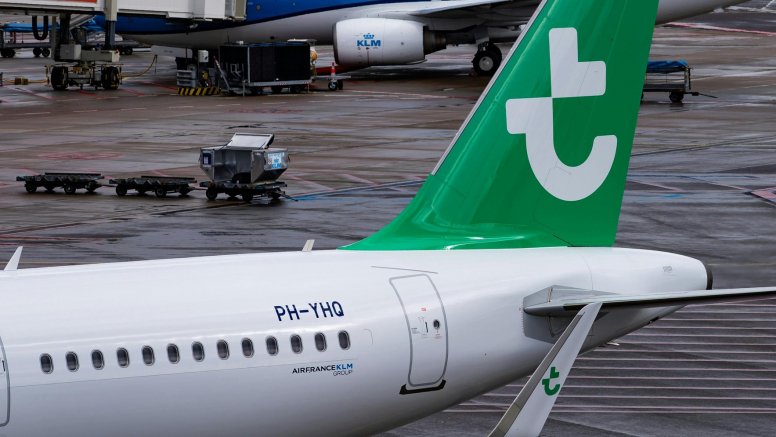
The low-cost subsidiary Transavia connects Lanzarote with Paris four times a week, as well as three weekly flights to Amsterdam and another three to Eindhoven.
The multinational reached a turnover of 9.277 million euros (+9.9%), but its net profit fell to 190 million — which represents 459 million less than in the same period of the previous year — returning the cost of fuel to the leading role in the group's finances.
Adjusted operating result fell to 484 million euros (a year-on-year drop of 251 million), cutting the operating margin by 3.5 percentage points to 5.2%. The contraction is particularly relevant as it occurs in a context of commercial growth.
The extra cost of fuel generated a gap of 804 million euros compared to last year. However, Air France-KLM managed to cushion 85% of this impact thanks to the increase in its revenues, exceeding initial forecasts of 60%. Management attributes this mitigation to fare flexibility, strict cost containment, and the application of surcharges on tickets; measures that contained the impact but did not prevent the erosion of margins.
Higher classes sustain financial performance
At constant exchange rates, unit revenues rose by 8.7%. This rebound was driven by the global increase in tickets, capacity limitations due to the war conflict, and the solid performance of demand in premium areas. The La Première and Business classes achieved double-digit growth in their yields, followed by Premium (+9.1%) and Economy (+6.1%), confirming that the high-income customer continues to be the main driver of profitability on long-haul routes.
During this period, Air France-KLM carried 28.3 million passengers (3.9% more), registering a 2.6% increase in capacity and 2.5% growth in total traffic. The aircraft load factor remained solid at 87.7% (only one tenth below the previous year), showing firm demand but prudently managed in seat supply.
By geographical areas, routes to Asia, North America, the Caribbean, and the Indian Ocean stood out for their revenue performance. The lower operational capacity of Gulf airlines during certain weeks diverted traveler flow towards the direct flights of the Franco-Dutch group, especially to India and East Africa. In parallel, the cargo division improved its unit revenues by 26.7% at constant exchange rates, while the low-cost subsidiary Transavia advanced 1.6% despite increasing its capacity.
Add La Voz de Lanzarote as a preferred Google source.
Stay informed with the latest current news.