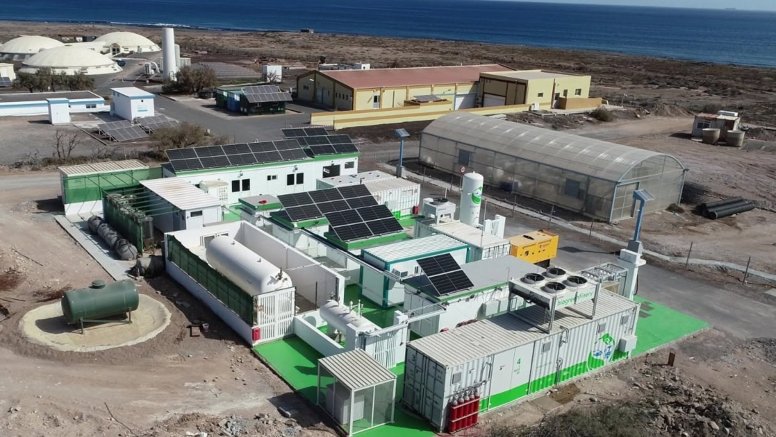
The Ministry of Universities, Science and Innovation and Culture of the Government of the Canary Islands, through the ACIISI, coordinates the European project SEAMAC, a territorial cooperation initiative aimed at developing applied research in marine renewable energies and new fuels, as well as facilitating the transfer of scientific and technological knowledge to the business sector.
The project has a budget of 4,738,595.95 euros, co-financed by 85% by the ERDF through the INTERREG MAC 2021-2027 program. Its execution will take place over 36 months, between October 2026 and September 2029.
This Tuesday, November 10, the facilities of the Canary Islands Technology Institute (ITC), in Pozo Izquierdo (Gran Canaria), hosted the technical meeting to launch the project, in which the participating entities coordinated the first actions and defined the execution deadlines for the different lines of work.
Applied research and knowledge transfer
SEAMAC is structured into three areas of action: research and technological development, transfer to the productive sector, and specialized training with international cooperation.
In the scientific field, it includes experimental trials of marine technologies, analysis of prototypes, and studies on their behavior in Macaronesian conditions. It also includes research focused on the production of green hydrogen and ammonia.
To carry out these activities, the project will leverage key existing infrastructures on the islands, such as the RENMARINAS laboratories, located in the ports of Arinaga and La Luz, and the BIOGREENFINERY and RESH2PORT facilities, specialized in renewable fuels.
Another priority is to transfer the results to the market through a specialized innovation network, the validation of technologies with commercial potential, and the promotion of new industrial activities linked to the blue economy.
Scientific and business cooperation in Macaronesia
The consortium brings together 13 beneficiary entities, including ACIISI, ITC, the University of Las Palmas de Gran Canaria, the University of La Laguna, PLOCAN, Azelmar Tecnología, PROEXCA, the Maritime Cluster of the Canary Islands, EMERGE, and the Official College of Industrial Engineers of Eastern Canary Islands.
International cooperation is expanding towards West Africa, with the integration of universities from Mauritania and Cape Verde as third-country partners, in addition to the participation of asticAN and Subsea Mechatronics as associated entities to adapt these solutions to island environments.
Add La Voz de Lanzarote as a preferred Google source.
Stay informed with the latest current news.