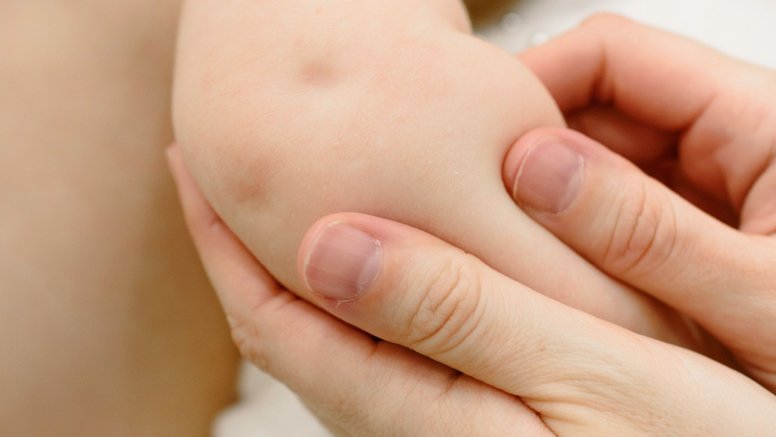
The Department of Health has reported a measles outbreak with four confirmed cases in Tenerife, one of whom required hospitalization, and whose origin corresponds to a minor from the United Kingdom who was on vacation on the island.
The index case of this outbreak was reported from the United Kingdom and was confirmed once the minor returned to his country after spending a few days in Tenerife, as reported this Tuesday by the Department of Health.
The three cases associated with this initial one had some type of contact with each other and none had been vaccinated against measles, as it was not indicated for their ages, which are between 45 and 55 years old.
Since the Directorate General of Public Health became aware of the suspicion of these cases, protocols for assessment, monitoring, and control of contacts were activated to try to control the spread of the disease.
Under this protocol, appropriate follow-ups are still being carried out for people who may have had contact with the confirmed cases.
The Directorate General of Public Health emphasizes the importance of receiving the two doses of the measles vaccine included in the vaccination schedule to achieve individual immunization and prevent the transmission of the disease to people who, for some reason, cannot receive the vaccine.
In this regard, it is recalled that the vaccine is the safest and most effective way to avoid contracting and transmitting measles.
This vaccine is administered in two doses, at twelve months and three years of age, and 95 percent of the Canary Islands population is correctly vaccinated in the first year of life.
Vaccination is also recommended for adolescents, young people, and adults born after 1978 who have not had the disease and have no documented history of receiving two doses of the MMR vaccine.
Vaccination
Therefore, Public Health calls on the population to check the vaccination status of children aged three and to verify that they have received two doses of the measles vaccine, as well as for people born after 1978 who have no record of being vaccinated or having naturally contracted the disease, to consult their health center to receive the vaccine.
Furthermore, healthcare personnel, especially due to being at higher risk of exposure to potential incident cases and representing a significant proportion of cases in outbreaks reported in Spain and other countries, must ensure they are correctly immunized against the disease.
In Spain, measles vaccination was introduced into the childhood vaccination schedule in 1975, and since 1981 it has been associated with the triple viral vaccine.
In 1996, a second dose was incorporated, rapidly improving coverage and achieving a drastic reduction in measles epidemics, so that since the year 2000 it has been an infrequent disease affecting mainly unvaccinated adults and children under one year of age.
Febrile illness
Measles is an exanthematous febrile illness that begins, after a 10-14 day incubation period, with fever, nasal congestion, cough, occasionally preceded by the appearance of small reddish spots with a whitish center on the oral mucosa (inner cheeks).
The rash, which appears between the third and seventh day after the onset of symptoms, starts on the face and spreads throughout the body.
The measles virus - morbillivirus - is highly contagious and is transmitted through the air via droplets expelled or suspended for up to two hours after expulsion, or by direct contact with nasal or pharyngeal secretions of infected individuals.
It is generally a benign disease, although it can lead to complications such as pneumonia, otitis, laryngotracheitis, and diarrhea, and can rarely cause encephalitis or death, especially in childhood.
The period of transmissibility of a person with measles, during which they can be contagious, ranges from four days before the appearance of the rash (exanthema) to four days after its disappearance.
During this time, it is essential to avoid contact with unvaccinated individuals, and Health authorities point out that the virus contained in the vaccine has not been shown to be transmissible.
Vaccination within 72 hours of exposure can prevent the disease or mitigate its severity, and in the course of an outbreak, susceptible contacts who are not vaccinated, either due to contraindications for the vaccine or for other reasons, are recommended to be excluded from the environment where the case occurred, whenever possible, until eighteen days after the onset of the rash of the last case of the outbreak.
In recent years, an increase in incidence has been observed in different countries where this disease had previously been eliminated (for example, the United Kingdom), as a consequence of the loss of confidence in vaccines by the population.
If vaccination coverage declines, measles can reappear and spread rapidly, causing outbreaks that can culminate in hospitalizations and deaths even in developed countries, as has been demonstrated in an epidemic outbreak in the state of Texas (United States), where the death of an unvaccinated child from this easily preventable disease was recorded.
Add La Voz de Lanzarote as a preferred Google source.
Stay informed with the latest current news.