There are places that cannot be explained solely with blueprints, organizational charts, or budget allocations. There are places explained by a silent, clasped hand, by a hallway walked at an odd hour, by the gaze of someone awaiting news, and by the relief, sometimes small, sometimes immense, of feeling cared for. The Insular Hospital of Lanzarote is one of those places. And that is why, when its future is discussed as if it were an interchangeable part, something in this island tightens.
That hospital was not born by chance. It is the result of the effort of generations who understood that an island truly progresses only when it takes care of its own. It was the first modern hospital in Lanzarote, built in the mid-20th century on the initiative of Dr. José Molina Orosa, a key figure in our collective memory.
And no, it is not, nor was it ever, a nursing home or a residence. It is a hospital, with legal recognition, and with a trajectory that has sustained public healthcare on the island for decades.
But if its history is moving, what truly makes it indispensable is its people. Because when a family remembers the Insular Hospital, they don't remember a facade. They remember names, looks, gestures. They remember that nurse who stayed two minutes longer to explain what no one had explained to you. They remember the auxiliary staff who adjust your blanket without being asked. They remember those who accompany you to the elevator when your legs tremble. They remember professionals who have made healthcare something more than a service: an act of humanity. Caring for those who care is not a pretty slogan: it is a moral and political obligation. And that's why I say it plainly: this is not about moving walls. When we talk about changing the location of the Insular Hospital, we are not talking about an administrative move. We are talking about altering a mechanism of care that works because it is sustained by specific people, teams that know each other, clinical routines built over years, and a culture of care that has earned Lanzarote's respect here.Public healthcare is supported by concrete shoulders. By hands that heal, that soothe, that lift those who cannot. By professionals who have often worked with more dedication than resources and with more responsibility than recognition. And also by their stability: knowing what to expect, being able to plan, not living in permanent uncertainty. That personnel must be cared for. And they must be cared for also when political decisions are made: by listening to them, respecting their work, and preventing what truly matters from being jeopardized under the discourse of 'transfer'. Caring for those who care is not a nice slogan: it is a moral and political obligationIn its final stage, the Insular Hospital specialized in geriatrics and became a recognized benchmark beyond the island. A major reference center in the Canary Islands, with an organizational model that attracted the attention of professionals from outside.And furthermore, this is important to remember, it is the only geriatric hospital in the Canary Islands, with decades of experience accompanying families in the most delicate moments of their elders' lives. When we talk about elders, we are not talking about numbers. We are talking about the people who built this island. And if there is a place where that truth has been treated with respect, it has been here. Little is also said, far too little, about something that should fill us with pride: the Hospital Insular has trained generations of professionals and plays a unique teaching role in the Canary Islands. It is the only center in the Archipelago that trains residents in geriatrics and is part of the existing geriatric training units in Spain. This function is not improvised. This function is built with years of work, with stable teams, with accumulated experience, with prestige earned day by day. And then there is what is not seen in the headlines, but weighs like a mountain in real life: palliative care. The way a society treats its elders and accompanies the end of life says more about it than a thousand speeches. In Lanzarote, countless families cherish the memory of the human quality of its professionals and how the most difficult moments were experienced there with respect, delicacy, and dignity. For all these reasons, when someone tries to reduce the Hospital Insular to a piece that is moved from one place to another as if it didn't matter, Lanzarote stirs within. Because it does matter. It matters to lose a center that has been a benchmark. It matters to weaken a place where entire lives have been accompanied. It matters to play with the stability of a human team that has done so much with so little. And there is an idea that particularly worries me, because sometimes this is how setbacks happen: you don't need to slam a door shut to dismantle a service. Sometimes it's enough to remove functions, dilute the role, reduce resources, move pieces without explaining anything. What is emptied from the inside, one day stops holding up. And that day always comes with a cynical phrase: "it no longer makes sense." Of course it doesn't make sense... when it has previously been emptied of its content.
That is why, when I state that the PSOE will not allow the Insular Hospital to be dismantled and that Lanzarote's society will prevent it, I am not speaking of a slogan. I am speaking of something profound: this hospital belongs to the people. And the people feel it is theirs because it has been there when it was most needed.
Defending the Hospital Insular is defending a way of understanding healthcare: close, humane, specialized, and dignified. It is defending the history of a center that was born from collective effort. And it is, above all, defending those who have sustained it every day: its staff.
I want the Hospital Insular to be spoken of as we speak of important things: with respect. I want its trajectory and the dedication of those who have made it great to be recognized. In fact, the PSOE already proposed that its trajectory deserved the highest institutional recognition, suggesting that the hospital be nominated for the Gold Medal of the Canary Islands for its brilliant journey.
But, beyond medals, what it deserves is something even simpler and more urgent: that its role be protected and its people be cared for.
We all have a story at the Hospital Insular. And precisely because of that, together, we will prevent anyone from writing an ending that does not belong to us.
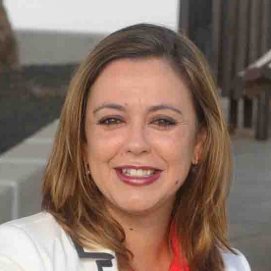
María Dolores Corujo, general secretary of the PSOE of Lanzarote and deputy in Congress
Add La Voz de Lanzarote as a preferred Google source.
Stay informed with the latest current news.