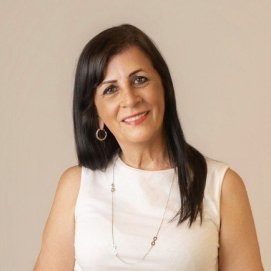
I am writing this for other adoptive families who, like me at first, have felt lost, overwhelmed, and full of questions.
Because no one prepares you for this. No one explains that your child can come into your life with a history they don't remember, but that lives every day in their way of feeling, reacting, and bonding. And when you don't understand it, it hurts.
At first, I cried and kicked. I cried out of frustration. I kicked out of helplessness. I wondered: why does he reject me if I love him so much? Why doesn't he seek comfort in me? Why does it seem like he doesn't need me? What am I doing wrong for all of this? It was very frustrating. Perhaps, being a mother already, I thought I knew everything
I thought I was failing as a mother until I understood something that changed everything: my son isn't weird, he's different. And that difference wasn't a behavioral problem, it was a consequence of his early childhood, the most important one.
Reading David Bueno, I understood that, in the first three years of life, a child does not generate conscious memories because the hippocampus is not yet mature. But that doesn't mean there is no memory. Children don't remember what they experienced, but their brain learns what the world they live in is like. What he calls emotional implicit memory is created.
And if in that stage there was abandonment, as was the case with my son, changes in caregivers, or a lack of response to crying —when it's so important to go and comfort—, the brain learns something very clear: "bonding is not safe, needing an adult is dangerous." That gets ingrained and will mark behavior years later or for life.
That's when I understood that he didn't distrust me, he distrusted the bond. That's when my learning began. My son didn't doubt my affection and my love; he doubted if that love could be stable. He tested me, he distanced himself, he controlled everything, and he always avoided contact. I, for my part, suffered thinking he didn't love me, until I understood that, in reality, he was asking: "Mommy, are you going to leave too?"
There was another very painful part of the journey: school. Many children rejected him, made fun of him, and set traps for him to make him look guilty of things he hadn't done. Added to this were the third-grade schoolwork, without speaking the language. I invented the unimaginable and started from scratch: I began with zero language and, at the same time, had to teach him about addition. I felt a mixture of enormous anger and helplessness, but I swore not to give up. Today I see desperate parents, and I understand them, but I couldn't tell my son I loved him, let alone explain academic subjects.
Over time, I understood something hard but real: those children were not obligated to understand what was happening to my son. But what was missing was something essential: adult empathy. Because when a child with attachment wounds is not understood, their behavior is interpreted as bad manners, defiance, oddity, or a behavioral problem. A possible medication was even considered to calm him. I refused and trained myself to help him without that prescribed medication. He never took it. I took a risk, but it worked.
All of this causes more rejection, more punishment, more labels, and more pain. My son was not only struggling with his internal story, he was also struggling against an environment that didn't know how to read what was happening to him.
What started to work at home weren't rules, punishments, or explanations. It was applying, almost without realizing it, what repairs this implicit memory: routines, consistently calm responses, and a lot of presence without invasiveness. Not taking rejection personally—that was hard, but I managed it—and staying present, even when he seemed to pull away.Because this memory is not changed with words, but with repeated experiences over time, with its own time.
The biggest change was in me. When I stopped seeing problematic behaviors, I started seeing attachment wounds etched before memories. I stopped feeling like I had to constantly correct my son and started feeling like I had to heal him by accompanying him. And that changed everything.
That's why I've decided to write this. Because I know how it feels. We're ashamed to talk about it. I know what it's like to think your child doesn't love you or to be told you're not their mother. I know what it's like to feel like a bad mother or father. I know the loneliness you experience when no one understands what's happening in your home.
And I want to say something that I would have liked to hear at the beginning, and that I discussed with my friend Felipe at José Saramago's house, where we were invited as adoptive parents: your child is not weird, your child is different. And that difference has an explanation.
My son didn't need me to teach him to behave. He needed to learn something much deeper: that connecting was no longer dangerous. And that learning is only achieved with time, calm, security, and constant presence.
Until the end of my days, the only thing I know is that I will be there. I will be there when you need me. I will be there when you reject me. I will be there when you test me.
Because now I know something I didn't know before: my son isn't fighting me. My son is fighting a history his body remembers, even if his mind doesn't
I cannot erase that past, but I can do something much more powerful: be the experience that contradicts it every day. Be the adult who doesn't leave, who doesn't get tired, who doesn't give up, who understands that behind every behavior there is a very old wound.
Because for a child who learned that bonding was dangerous, the most healing thing is not words, nor rules, nor explanations. It is the certainty, repeated thousands of times, that this time, the bond will not break. Thank you Andrey for being my son. Your brother was born from my womb and you from my heart.
Juani Alemán Hernández.
Add La Voz de Lanzarote as a preferred Google source.
Stay informed with the latest current news.