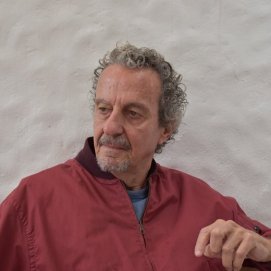
The medical act has a personal and social character at the same time. It is personal, as it happens to two people. It is social, insofar as the person of the sick and that of the doctor exist within a society that, to a great extent, conditions their way of being and meeting. Without taking into account this double character, the relationship between the doctor and the patient cannot be rightly understood (*).
The main protagonists of the medical act are: the patient, a sick human being who lives in society, and the doctor of the Public Health System.
On the Island of Lanzarote, in the last three decades, there have been exorbitant demographic growths, with the population of the Island doubling in a period of 17 years. This has happened as a consequence of the uncontrolled development of the tourism industry, which has led to a spectacular migratory balance. The new inhabitants incorporated into the Island during these years have the Constitutional Right to Health and Education of a public nature; however, the provision of infrastructure and necessary personnel, both sanitary and educational, have not been planned as would have been desirable, leading to manifest deficiencies in the healthcare of the population and in the education of children and young people.
The need for the so-called "Sustainable Development" of the Islands, expressed on many occasions by the political leaders of the Government of the Canary Islands, is unquestionable. Not only as a policy of conservation of our landscapes, as Cesar Manrique already denounced, but because this Sustainable Development goes hand in hand with a sustainability of the health and educational resources necessary for the population. It would be necessary to know the relationship between "New tourist beds" and the "Number of new inhabitants" to act accordingly, and give adequate response to health and educational needs.
The right to health is the basis of Public Health. "The enjoyment of the highest attainable standard of health," says a WHO declaration, "is one of the fundamental rights of every human being without distinction of race, religion, political ideology or economic or social condition." The Universal Declaration of Human Rights (UN General Assembly, December 10, 1948) in its Article 25 says "Everyone has the right to a standard of living adequate for the health and well-being of himself and of his family, including food, clothing, housing and medical care and necessary social services, and the right to security in the event of unemployment, sickness, disability, widowhood, old age or other lack of livelihood in circumstances beyond his control."
Public Health, despite the numerous criticisms, often justified, that are made of it, has meant a formidable progress in the medical care of the population. However, it does not seem that the traditional difference between "medicine for the rich" and "medicine for the poor" has been completely abolished. Put together, as an example, the medical assistance that the banker gets and the one that the fisherman receives (*).
The sustainability of Public Health requires, for its permanence over time, highly qualified medical professionals with knowledge both in the science of Medicine and in Clinical Management. And economic resources. Like war according to Napoleon, public medical assistance needs, in addition to technique and organization, "money, money and money."
The Clinical Management of Public Hospitals in our country is carried out, in most cases, by managers detached from the medical assistance of day to day, unaware of the doctor-patient relationship.
The administrative official, in short, must resist the temptation to confuse "management" with "possession." The main purpose of the healthcare organization is medical aid, and the protagonists of this are the sick person and the doctor. Few things are as disruptive to public medical assistance as that vicious conversion of the administrators of a public service into its owners (*).
The healthcare quality of the Public Health System in our country derives in large part from the professional quality of the Spanish doctor as a consequence of the implementation of the MIR (Medical Internal Resident) System. The MIR System germinated in the Puerta de Hierro Clinic in Madrid in 1964, under the direction of Professor José María Segovia de Arana, and the tutelage of his teacher, Professor Carlos Jiménez Díaz. The way the MIR System works spread to the rest of the Social Security Hospitals. It is a system where research, teaching and assistance are integrated in the same center. The MIR system is considered since then as the postgraduate training of the doctor in the different Spanish hospitals of the National Council of Specialties of which the different National Commissions of each specialty are part in turn. The MIR System, especially since 1984, is a process of solid structure, positively valued and approved in the European Union.
The healthcare quality of the Spanish doctor has not been justly recognized by the public administration. The professional quality of the Spanish doctor is comparable to that of the doctor of any developed Western country. However, their quality, in the Public Health System, is not matched with an economic remuneration according to the services performed. The Public Health System of the country owes in large part its sustainability to the low salaries of medical professionals. As Dr. Pedro Laín Entralgo points out, "Without guaranteeing the doctor a decent standard of living, could the goodwill so necessary in the doctor-patient relationship be legitimately demanded of him?" And he adds, "If, in addition, his economic remuneration is insufficient, will he not often feel tempted by mediocrity and routine? Only one path will then be before him; that which points to each one the old Latin maxim hic Rhodus, hic salta.
The medical assistance of the sick in the Public Health System has had to be collectively organized, and in one way or another it has become bureaucratized. In addition to being "clinical", the doctor is forced to be "official (*).
The current healthcare organization presents a deficiency of stimuli and incentives to the doctor, not only of an economic nature (*).
What resources remain to the current doctor of the Public Health System with the described panorama to perform the doctor-patient relationship with goodwill? Only medical vocation, responsibility as a doctor, and..., the joy of healing remain.
The vocation of the doctor integrates a greater or lesser inclination of the spirit to help the sick, and an affirmation, if you want sporting, to overcome scientifically and technically the difficulties and problems presented by nature. Only he in whom these two vocational instances come together can be a complete doctor (*).
As for the responsibility of the doctor, should the doctor adhere to a "Since I am not treated well, I do not comply well"? If the health and life of other men were not at stake, perhaps yes; but the practice of Medicine always requires, by reason of its purpose, an effortful dedication from those who practice it. This is the servitude of the doctor, but also his moral greatness. Thanks mainly to it, Public Medicine is being, throughout the extent of the planet, a company in progress (*).
Finally, the joy of healing. Joy destined for doctors. Joy that remains in their soul until the day of their death.
*Tomás M.- Barona Zerolo, head of the Otorhinolaryngology service of the Doctor José Molina Orosa hospital.
Add La Voz de Lanzarote as a preferred Google source.
Stay informed with the latest current news.