In many classrooms, books are part of everyday life; they are on our shelves, in reading corners, but they need life, and I dare to ask: what would happen if we brought school closer to children's literature? Children's literature has enormous emotional and educational potential.
Works like The Monster of Colors by Anna Llenas not only entertain but also help children understand their emotions.
Behind every story there is a being who has thought, felt and created, authors and authoresses who could be present in the lives of our children. It is not about one-off visits or book signings, but about generating real spaces for encounters. Conversations in workshops and moments in which the students can ask, listen and create, and feel themselves within the literary process.
When the school opens its doors to living literature, important things happen: students stop seeing books as something distant, they discover that writing is not just homework, but a form of authentic expression.
For the teaching staff, this proximity represents an opportunity; practices are renewed, new perspectives are discovered, and the classroom is enriched. Literature becomes close.
Giving voice to close authors, linked to the reality of the students, contributes to strengthening cultural identity and the sense of belonging.
Perhaps it is not about making big changes, but about starting with small steps: inviting an author to the classroom, organizing literary meetings, writing letters to those who create stories, or even building projects where reading and creation go hand in hand. Children's literature should not be confined to books; it needs voices, faces, encounters. It needs school. And school, undoubtedly, needs it.
There is a magical moment that cannot be taught in any book, when a child discovers that behind that beautiful story, there is a real person. The words come to life. Because literature, when it becomes close, leaves footprints for a lifetime.
As Emilia Pardo Bazán said: "Education is the most powerful weapon to change the world".
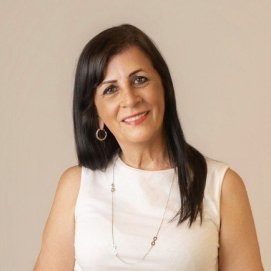
Recently, at the public school of Tahíche, at CEIP César Manrique Cabrera, that magic Juani writes about was experienced. She was present, with her first story for children: Tales for Hope. And she moved those who listened to her telling the creative process that inspired her debut in children's literature. A powerful personal experience in a country at war, a transcendental turn in the life of a mother and a son... All that led to Tales for Hope. In her words: "I write out of a desire to help through literature, convinced that I can help someone. And that is already the strongest motivation. As a teacher, I see insecurities, fears, conflicts, and also the need for positive messages. That kind of reality usually awakens the desire to create stories that accompany, console, or give strength."
Juani Alemán participated in the recent Book Week at the II Children's Mini Book Fair at the CEIP César Manrique Cabrera. We take the opportunity to list the children's authors and titles presented at this event in its two editions to recall extraordinary resources that Lanzarote's educational centers have nearby. Alongside Juani Alemán were Susanne Ramos, presenting the Felicity story series; Laura Curbelo and Dunia León, with El fabuloso pueblo de Onasni; Lorena Curbelo, with El universo y la estrella perdida; Patricia Hernández, with Conoce la misión de nuestra familia; and Tere Perera, with Pardelí
In the first edition, Susanne Ramos also participated; Lorena Curbelo, presenting The Little Midnight Mermaid and The Secret of the Old Devil of Timanfaya; Laura Curbelo, with Alma, the turtle who lost her temper, and with Nazaret, the flavor of a town; Nathalie Pons, with Leo and Lea want a pet, and with Leo and Lea dress up the numbers; Alejandra Rodríguez, Mimo's The Wooden Drum; and Ico Toledo, with César's Treasure.
Juani Alemán and J.J.Romero
Add La Voz de Lanzarote as a preferred Google source.
Stay informed with the latest current news.