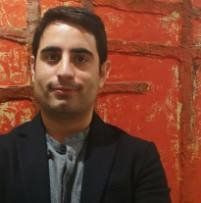
I met Arminda Arteta's work long before I met the methodical art historian and the charming person. It was through a Blog (when Blogs were in fashion...) called "Lanzarote Inédito" which is still available online for reading, although unfortunately, it has not had new entries since 2019. The contents of the Blog were very well curated and reviewed various heritage elements, traditions and characters of the island of Lanzarote.
Later I would have the opportunity to enjoy her work as a researcher and curator of various exhibitions. I particularly remember two that thrilled me. The first was in 2019 and was titled "Architecture as scenography. The house of Don Fermín Rodríguez in Puerto del Arrecife" where she reviewed the history of the mansion on Fajardo Street in one of the warehouses inaugurated in the ill-fated Archaeological Museum. The second was "Sombrera".
It was a tribute to the rural and coastal women of Lanzarote and was organized at Casa Amarilla in 2020. This exhibition highlighted the role played by women, their essential work throughout history. This exhibition moved me because it clearly showed the contradictions that historical sources often offer with respect to material reality, in this case the official documents that reflected women dedicated only to domestic tasks in contradiction with the photographs in which they performed arduous work in different areas and that was fundamental for the sustenance of the economy in the Lanzarote society of any time in the past.
But Arminda Arteta is a professional who has also demonstrated her worth in other fields. I remember her, for example, as a guide for interpreted hiking in an unforgettable Heritage course organized by the Lanzarote Teacher Center through which some teachers took different routes around the island in which she knew how to surprise us by making us discover unusual buildings, corners and landscapes, unknown on certain occasions to some of us, and in which we learned a lot.
And what about her latest contribution? It's a wonderful book. It is a monograph entitled "Pancho Lasso. First sculptor of Lanzarote" published by Itineraria with design and layout by Vanessa Rodríguez González and published with funding from the Government of the Canary Islands and the Art, Culture and Tourism Centers of the Cabildo de Lanzarote. I had the privilege of accompanying Arminda Arteta recently at the presentation of this book at the International Museum of Contemporary Art of Lanzarote and this possibility provided me, unintentionally, with an answer to a question that I face almost daily in my classes at the institute: What is History for? What is the work of a historian for? It is the old question that some of my students have asked me dozens of times over the years.
But before answering it, we must talk about a character who, until recently, had remained in the shadows: Pancho Lasso (Arrecife 1904- Madrid 1973) who was a prominent sculptor who ventured into other disciplines such as drawing, painting and medals. He was the first artist to be granted a scholarship from the Cabildo for his training in Madrid and there, together with Alberto Sánchez, he would become one of the founders of the Escuela de Vallecas. The Civil War forced him to return to Lanzarote for a few years, during which he even maintained an important link with a young César Manrique until he managed to return to Madrid, where he would die. He investigated different languages, in particular telluric surrealism and popular realism, never forgetting the island or his ideological commitment. Despite all these merits and many others, after his death he became a practically forgotten figure, except for specific recognitions such as the one dedicated to him by Santiago Alemán when proposing that the Arrecife School of Art bear his name or with the installation of the reproduction of his sculpture "Monument to the International" in the vicinity of the Puente de las Bolas.
And why was Pancho Lasso forgotten? Like any question, however simple it may be, the answer is complex and Arminda Arteta reveals it in the book. He was forgotten for several reasons: his humble origins, far from the centers of artistic creation of his time, his personality (apparently he was a shy and discreet man) and the depression of the time in which he lived added to his political commitment were decisive for this. However, keeping a figure of that stature in oblivion clearly impoverished us as a society.
The objective of History, since the remote foundation of the discipline by Herodotus and Thucydides in Ancient Greece, is to leave testimonies so that they do not fall into oblivion, in their case of ancient wars and feats. It is the task of each generation to select those events, those characters that we do not want or should not postpone.
History allows us, therefore, to know and understand the past and, more importantly, its influence on the present. It allows us to glimpse more clearly who we are. What is History for? Arminda Arteta's works answer the questions by themselves: to make known the heritage of the island so that we know it, value it, teach it and try to preserve it; To bring out of oblivion, to remember what we should never have forgotten, for example, the women with their hats dedicated to the hardest tasks outside the home to support their families for centuries. And it only remains, ultimately, to thank her for this latest book which is an act of justice, of recovering the memory, in this case, that of the sculptor Pancho Lasso, of whom, with all certainty, there are still too many things that we do not know. Perhaps Arminda Arteta, or another historian in the future, will be able to discover it and teach it to us.
Add La Voz de Lanzarote as a preferred Google source.
Stay informed with the latest current news.