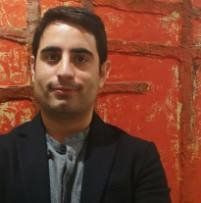
The book Of Discomfort (Mercurio Editorial, 2025), by the Lanzarote poet Antonio Martín Medina, is a radical and suggestive proposal that has moved me through its discourse, where he explores contemporary unease from a critical and materialist perspective. Through a fragmentary writing, the collection of poems constructs a universe in which memory, the body, the city of Arrecife and cultural history are intertwined under the sign of deterioration. In this poetic landscape, residue, wound and the substitution of the natural by the artificial become central axes of a poetics marked by decomposition and resistance.
From its very title, Of Discomfort is presented as an aesthetic and political declaration. Antonio Martín Medina's collection of poems works with difficult, uncomfortable materials: waste, remains, stains, sound effects and unresolved affective memories. Discomfort becomes a reading and writing strategy that challenges the reader, but also the landscape. And, as if all this were not enough, the author strains the limits of poetic language through a bodily imagery and a syntax that fractures linearity.
Through fragmentation, the superposition of temporal and spatial planes, and an imaginary that alternates between the mythological, the technological and the scatological, the author proposes a radical rereading of the landscape of Lanzarote, articulating an uncomfortable vision of Arrecife and, by extension, of the contemporary world. The landscape, in Of Discomfort, is neither background nor context, but the protagonist of the conflict. From the Charco de San Ginés to the docks of Bergen (the antipodes?), the collection of poems constructs a geography marked by mourning, deterioration and loss. The territories that are mentioned are places where the tensions between nature and memory are inscribed. This geography is not based on nostalgia, but on a critical look that denounces both environmental contamination and cultural colonization.
The deterioration of the environment is also the deterioration of ties and truth in Antonio Martín Medina. The natural environment appears invaded by urban waste, by infrastructures that do not fit, by remains of modernity. Lanzarote, the local, is presented not as a paradise or refuge, but as a space strained between the pre-modern and tourism.
From these coordinates, Of Discomfort bursts in as a commitment to opaque writing. Far from traditional lyrical models based on confession, personal experience or expressive fluidity, Antonio Martín Medina's collection of poems is committed to a poetics of the remainder: polluted landscapes, sick bodies, failed ties and decomposed language. His proposal is both aesthetic and political: to disturb, to force the reader to confront the illegible, with what does not fit. Faced with a symbolic or metaphysical view of the landscape, Of Discomfort offers a trace of intimate ruin and the body.
One of the most powerful axes of the book is precisely the representation of the body. The author shows an archaeological, instrumental, even pathological body. Disease, physical deterioration and radiography are not only clinical references. They function as metaphors of a fragmented subjectivity, of a memory embodied in bone ruins.
Another central thematic nucleus is the crisis of filiation. The figure of the father is presented as a ghost, as smoke: "it volatilizes / at the speed / of a dense dust of photons." Fatherhood does not found identity or continuity, it points to a constitutive absence. Thus, the filial bond is resolved in the failure of all genealogy: neither inheritance nor refuge. The house does not offer comfort either. The metaphor of the "Oedipal frying pan" turns the domestic into a scene of trauma. The mother, when she appears, does not communicate either, but returns as an enigma, leaving filiation, therefore, without a sense of belonging.
But one of the most remarkable successes of the collection of poems, without a doubt, is its reflection on language. Language as failed technology. Martín Medina does not conceive writing as revelation or testimony, Of Discomfort insists on the insufficiency of language. The poem does not say, but hides, erases, replaces badly. This is expressed in the following verses: "Easily, the tipex/ dirties Antwerp for... Antwerp.": correction that covers up the symbolic violence of cultural erasure.
Writing approaches archeology in this collection of poems: overprinting, montage, collage of fragments. The use of marks in the first poem such as "(CUT)" or "(FADE)" imitates cinematographic language, underlining the discontinuity of the discourse and the impossibility of a unified narration. The poem is not a linear testimony. The metaphor of the "illegible rune" perfectly summarizes this vision: the poem does not communicate what has been lived, but its impossibility of translating reality, experience. The book can no longer coincide with the work that one was trying to write.
Of Discomfort is more than a collection of poems. It is a declaration of principles about what poetry can do today. Faced with the imperative of the accessible, the emotional or the transparent, Antonio Martín Medina proposes a lyric of residue, of error, of the broken sign. Poetic language, in his work, does not reveal the experience but the impossibility. Discomfort is not only a quality or an affective state in which one finds oneself. It is a form of resistance against the discourses of linearity or progress. Reading Of Discomfort is accepting that meaning does not always arrive, that memory hurts, that filiation fails, that language corrects badly and, on most occasions, does not manage to express what one wants to say. The discomfort is in the experience of reading these poems: dense, fragmentary texts, without consolation or apparent order. But it is also in the relationship of the subject with his environment, with a globalizing culture that erases us.
In the end, although it is contradictory, a feeling of well-being leaves me with the reading of the book with the effort made in understanding, in deciphering. I think it has to do with the fact that I like to walk around Arrecife and find Antonio reading or writing in some cafeteria; his presence transmits a comforting sensation to me, as if the city became warmer and more human with his kind presence. I like to find him leafing through books in La Madriguera or El Puente and have the possibility of exchanging a conversation about literature with him, which is always a gift, since he is, without a doubt, one of the people who knows the most about books on the island. I read his book and reread it and accept, as it cannot be otherwise, the discomfort that he proposes to me as his particular form of poetic honesty.
Add La Voz de Lanzarote as a preferred Google source.
Stay informed with the latest current news.