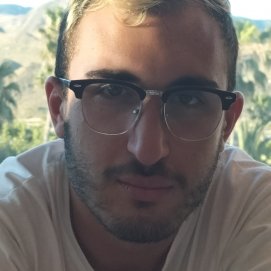
Goethe used to say that "a good man is one who recognizes his mistakes, but a great man is one who corrects them." Benjamin Niz Dorta was, without a doubt, a great man.
Born on December 5, 1929, son of Francisca Dorta Dorta and Juan Niz Concepción, Benjamin dedicated his life to work and commitment to others. It is not always easy to pinpoint the exact age at which he performed each of his tasks, but his constancy and dedication were a permanent hallmark.
Over the years, he participated in numerous works and projects: he worked on the construction and maintenance of several Arrecife gas stations, collaborated on the Civil Guard barracks in San Bartolomé —where he even shared more than a few drinks with the officers— and carried out part of his work in Haría.
It was precisely there, at the Haría Town Hall, where he left a particularly significant mark. Benjamin was the first permanent mason the institution had, attending to the municipality's needs between the 1960s and 1980s. He combined that job with various private works, always leaving a trail of professionalism, effort, and good work. Those who knew him remember his kindness, his smile, and that sparkle in his eyes, that quiet nobility he conveyed effortlessly.Thanks to his work in the City Council, he also participated as a picador in the altarpiece of the Church of Santa Bárbara, in his native Máguez, where—unknowingly or without giving it importance—he contributed to creating art alongside his colleagues.But beyond his craft, Benjamin had that gift for turning any moment into a little story. As a young man, he was involved in more than one prank, like the time he and some friends went down into a cistern to have a few drinks. The problem wasn't getting in, but getting out: every time they tried to climb up, one would slip and drag the rest down, amid laughter, shoves, and the echo of voices that is still remembered in the village.
Over the years, that vitality turned into a quiet joy. I remember one of the first times my father — then just starting to date my mother — joined him to go fishing with a friend. My father caught a huge fish, and my grandfather's smile was so big it seemed to light up the shore. It was one of those gestures that say more than any praise: simple, pure pride.
They even say my first smile was for him. And I want to believe it's true, because in his eyes there was always something capable of bringing out the best in oneself.In his private life, his marriage to Doña Esther Curbelo Hernández stands out, with whom he had three daughters. From the youngest of them was born his grandson, who today writes these lines to remember this noble man: the grandfather with a smile already artificial due to age, the one who taught me to read and bought me my firstbooks; the one where he took me to Claudio's supermarket in Órzola to buy some Conguitos; or that gesture of his, coffee in hand, while he painted a green gate, happy because he knew who would brighten up that garden.
This article is born as a tribute, as a remembrance of a man who did not need grand words to ennoble his name, because his life was already etched in the hearts of those who knew him. There remained not only his education—which had nothing to envy that of an English gentleman—but also his sense of humor, his off-color jokes, and his ability to elicit a sincere laugh.
Sadly, this great man passed away on January 1, 2011, due to lung cancer, leaving a legacy of work, kindness, and indelible memories. But he also left something else: a life transformed by his example. So, wherever you are, Grandpa, many congratulations and thank you for so many beautiful memories by your side.
Add La Voz de Lanzarote as a preferred Google source.
Stay informed with the latest current news.