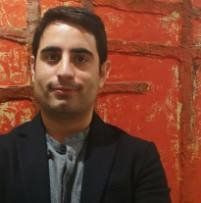
Last year, the Art, Culture and Tourism Centers (CACT) of the Cabildo de Lanzarote published my poetry book Casa de los volcanes in a bilingual Spanish-German edition, illustrated by the artist Lana Corujo, thanks to the call for artistic, cultural, and educational projects of 2022. It was a slow and difficult process, as is usually the case with any creative process, but we are finally reaping its rewards.
I am very grateful to the politicians who then directed both the CACT and the Culture Department of the Cabildo, Benjamín Perdomo and Alberto Aguiar, respectively, for having the appropriate sensitivity to understand the need to finance cultural values that enrich our society from the public sphere and for establishing new strategic lines that, unfortunately, do not seem to have had continuity from the highest island institution. But, especially, I wanted to thank the excellent workers or former workers of the CACT who decisively contributed to the project of editing the book going ahead in the best possible way, especially my recognition to María José Alcántara, Beatriz Delgado, and David Machado for their generous support.
I wrote Casa de los volcanes during the first two years I lived in Lanzarote, and it was first published in 2021 thanks to my admired Félix Hormiga, who invited me to participate in the Canarias en Letras collection of the Mapfre-Guanarteme Foundation alongside the poet Zharadat Lënne. The title of the book refers to a space in the Jameos del Agua that had disappeared at that time and is now renovated. But as anyone can understand, it is just a metaphor.
Through the poems that make up the book, I explored issues that concerned me then - and that largely still concern me - such as loneliness, permanence in time, and the deep relationship we have with our environment.
I organized the poems in a tripartite structure that develops from the idea of a castaway-poet who arrives on an island (Lanzarote) where his existence unfolds from that moment on. The forty-four poems that make up the book allude, in one way or another, to the island of Lanzarote.
The first part, Isla sin Robinson, includes a single poem with a quote from Saramago that gives rise to the title and that, in addition to making an effort to describe the unprecedented or unknown island until that moment - it is never completely virgin - aims to emphasize the feeling of loneliness, of isolation that guides the text. The second part, Los años en la isla, includes forty poems that symbolically want to represent forty years of permanence on the island. The number forty has great symbolism since it alludes to a change, to a new cycle of life. It is in this part where the spaces of the island of Lanzarote are related, marking the permanence in time of the poet-castaway and altering his vision of the landscape and his own existence. In the third part, La isla a la luz del tiempo, the island takes the word and describes the sensation left by the departure of the poet-castaway and the relationship they have established between them.
The influence of works such as Robinson Crusoe by Daniel Defoe is very clear in terms of the conceptual definition that gives rise to the book. Other works ranging from the readings of the collection of The Famous Five by Enyd Blyton to Treasure Island by Robert Louis Stevenson, passing through To the Lighthouse by Virginia Woolf, which have marked my reading experience since childhood, are also very marked influences, along with the travel diaries of various English and French travelers to the Canary Islands during the 19th-20th centuries (Sabino Berthelot, Olivia Stone, etc.). In this sense, the quotes from the authors at the beginning and end of the book, as well as at the beginning of each of the three parts, are key to illuminating some aspects and influences of the work (Padorno, Arozarena, etc., all authors with a close relationship with Lanzarote).
The poems, now accompanied by the magnificent illustrations of Lana Corujo, acquire a new dimension. I know that it was a challenge for her to collaborate artistically on the work, and she took it on, contributing all her talent to accompany and enrich the publication. In that sense, my gratitude will never end.
The work, available for sale in the CACT store, will generate profits that should revert to the possibility of editing more copies or carrying out new similar projects. I believe that this edition of Casa de los volcanes is, in short, a material that adds value and meaning for the residents of Lanzarote and also to the visit to our island by Spanish and German tourists, and, in addition, it could be a gift when certain institutional visits from the Germanic geographical area occur.
There is no doubt that literature and publications should be one of the priorities of action of the cultural departments of the Cabildo and the various administrations, since together with the plastic arts and photography, it becomes a fundamental legacy for the present and future generations. In addition to being a very profitable investment, which is not trivial. But things take time. As for the destiny of the book, it is no longer just mine now that it has been shared with everyone. There is no hurry. It is my way of saying thank you for all these years of welcome in Lanzarote, in the house of the volcanoes. And if it is not now, it will be in a century when the book acquires all its value, all its meaning.
Add La Voz de Lanzarote as a preferred Google source.
Stay informed with the latest current news.