The Government of Spain, presided over by Pedro Sánchez, has taken a decisive step with the approval this Tuesday, August 26, of the Royal Decree on the Ordinary Capacity of the reception systems in the different territories of the country. This is a regulation of enormous importance, which allows us to advance in the protection of unaccompanied migrant children and adolescents, guaranteeing that no autonomous community is overwhelmed and that solidarity translates into concrete facts.
From now on, those communities that multiply their ordinary capacity by three, that is, the minimum number of places that their reception systems must have available, will be declared in extraordinary migratory contingency. This will activate a mechanism that will allow the transfer of minors to other communities with greater response capacity.
The Ministry's initial estimates put the number of children and adolescents who will leave the Canary Islands, Ceuta and Melilla at 3,975, territories that are expected to be declared in extraordinary contingency. This figure will also be reduced by around a thousand, given that the Supreme Court has recognized that minor asylum seekers should be excluded from this distribution.
It is important to emphasize that the transfers will be made in an orderly and objective manner, following criteria included in the Royal Decree itself: population, per capita income, unemployment rate, previous reception effort... In this way, equity and proportionality are ensured in the number of minors assigned to each autonomous community.
It has not been an easy process. We have seen attempts to block by some communities governed by the Popular Party, which have already suffered judicial setbacks, such as Aragon on two occasions, when trying to stop the development of a procedure that has all the legal guarantees. The explanation for these maneuvers is clear: the political mortgages of the PP with Vox, which has demanded in different territories to reject the binding and solidarity reception process in exchange for budgetary support.
It is worth clarifying two falsehoods that are circulating with interest. The first is that the autonomous communities have not been counted on. Nothing could be further from reality. The Ministry of Youth and Childhood has convened three Sectoral Conferences on Childhood and Adolescence and multiple Sectoral Commissions in just five months. The communities governed by the PP have not presented a single alternative; their only position has been to block and refuse to apply the law.
The second falsehood is that there is a lack of resources. The Government has put on the table a fund of 100 million euros to cover the transfers, reinforce the reception of relocated minors and support the communities that are above their ordinary capacity. This is the largest transfer of resources in history in this area. What happens is that some communities, while reducing taxes for those who have the most, claim that there are not enough resources to fulfill a moral and legal obligation: the protection of children. The definitive proof that it is not a financing problem is that the PP's regional governments did not attend the last Sectoral Conference, in which an extraordinary credit of 22 million euros was planned to be approved precisely for territories governed by them: Balearic Islands, Ceuta, Melilla and Canary Islands.
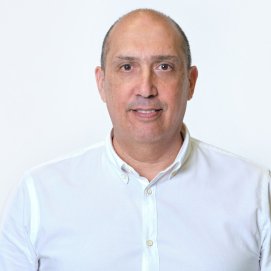
From Lanzarote, as Insular Director of the General State Administration, I want to emphasize a clear message: the protection of migrant children is not a question
ideological, but humanitarian and legal. It is not a debate about borders, but about dignity and rights. The Canary Islands has more than demonstrated its commitment, sustaining for years an immense effort that now, thanks to this Royal Decree, will be shared by the entire country.
Spain once again demonstrates that it is a solidary State, that does not leave the most vulnerable behind and that is committed to co-responsibility. Migrant children cannot be used as political bargaining chips. We owe these children protection, future and humanity.
Add La Voz de Lanzarote as a preferred Google source.
Stay informed with the latest current news.