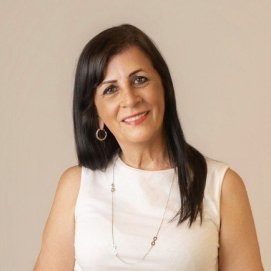
September arrived with the smell of colored pencils, of new socks waiting to be filled with adventurous steps. The sun illuminated the schoolyard, that giant lamp that lights up the laughter of children on this island of Lanzarote. The children ran; others walked more slowly with their backpacks full of illusions. It was that return to school.
Daniel, with his arms crossed, murmured sadly. He didn't want to go back and preferred to stay on vacation.
Lucía replied happily:
—Well, I'm happy. I want to see my friends and I'm curious to look out of those magical windows where the teachers tell us interesting things.
Ana Gloria, in silence, listened and said:
—I want them to tell me about that place, Gaza, that I hear every day in my parents' conversations.
Diego immediately added:
—And I want them to explain to me what is happening in Russia and Ukraine. All the news talks about those places.
At that moment, Professor Verónica arrived with a big smile and welcomed us with a warm hug. We suggested that she talk to us about those topics and she, very happy, told us:
—Today we are going to travel with our imagination. —And she hung a map on the wall.
—Here is the Gaza Strip —she pointed to a tiny spot next to the great Mediterranean Sea—. It is a very small place, smaller than Lanzarote, but more than two million people live there.
The children opened their eyes surprised like giant flashlights.
In Gaza there are many children like you: they have dreams, they want to play, for their parents to be able to hug them and not hide from bombs, to have a bicycle and be able to go out and play. While other children ask for electronic toys,
they only ask that their house become a safe haven again and not a burnt memory.
Ana Gloria lowered her head and, very sadly, said:
—How sad it must be not to have a clean little bed with the smell of mom and dad's hugs.
Then, the teacher moved her finger towards a huge country on the map: Russia, the largest country in the world. It has very high mountains, huge lakes, beautiful forests with very cold winters, where everything is covered in snow. There is a very beautiful city where there are white tigers: Vladivostok, the main base of the Russian Pacific Fleet
But in recent years it has been in conflict with a neighboring country called Ukraine. This has caused many families to flee their homes and children to suffer fear and loss. They also suffer, like the children of Gaza.
Diego raised his hand and said:
—Wow, those poor people want the same as us: to have a life like any child.
Marta nodded:
—We don't ask to come into the world, but if we come to life, we deserve to be like the pages of a new book that didn't ask to be written. But if we open the first page, we deserve to be the best story told, and with a lot of love.
The teacher looked at everyone and asked:
—What can we do from Lanzarote to help those poor children in the world?
Lucía was the first to respond:
—We can write them letters and make drawings with messages of friendship, send them school supplies: notebooks, pencils, backpacks...
Ana Gloria proposed:
—We can make a large mural in the school that says: “All children deserve to live with dignity.”
Then Lucía reflected aloud:
—The world is very badly divided... Some children live in sorrow, wars and sadness. And others, on the other hand, have everything, live with wealth, security and yet they are unhappy.
Ana Gloria added:
—The worst thing is that many times we all look back, remember what happened, feel sorry... but we don't move or commit to changing anything.
The teacher listened to them carefully and said:
—You are not the only ones who think like that. In May 2025, many writers and professionals of Children's and Young Adult Literature in Spain launched a manifesto to denounce the massacre in Gaza aloud. They said they did not want to be “silent accomplices” and ended it with these words: “It is not the world we imagine, it is not the world we want.”
Here in Lanzarote we also have a very important example: the José Saramago House Museum, in Tías. Saramago was a writer who lived on our island and always defended justice and spoke about Palestine. He taught us that the written word can also be an act of commitment.
—All of these are wonderful ideas! Even though we are far away, we can do a lot: inform ourselves and talk about them so that their stories are not forgotten; create messages of peace —letters, murals, videos, songs—; collaborate in solidarity campaigns with school supplies.
—So... —said Ana in a low voice—, does helping start here, in our class and in our lives?
—Of course —replied the teacher—. If here we learn to respect and take care of each other, we are building the peace we want for them.
Daniel raised his head and said with a smile:
—Now I like being at school. Here we not only do homework, we also learn to commit and change the sadness of other children.
The others smiled. And that first day they discovered that school was not only a place for notebooks and homework, but a space to dream together of a world in peace, reflect on the inequalities of the world and learn that the real difference is in committing body and soul.
—We can record a video with phrases made by the children —Lucía proposed—. We join it and send it to other schools around the world. It is spread on networks with
subtitles in several languages. Our commitment cannot only stay in this class.
—Let's write letters in several languages asking for peace —added the teacher—, so that they travel to all the schools we can and gradually reach the leaders of the world. This way they will know that children also ask for peace and that we do not want to be silenced voices. May they not cover our ears, while other children scream.
“Childhood is the homeland of all men. Defending the dignity of a child is defending the future of humanity.” José Saramago.
“The future of children is always today. Tomorrow will be too late.” Victor Hugo. “Dignity is not negotiable, not even in misery.” Benito Pérez Galdós.
When the world is silent, let our color letters speak. Happy start to the course!
Add La Voz de Lanzarote as a preferred Google source.
Stay informed with the latest current news.