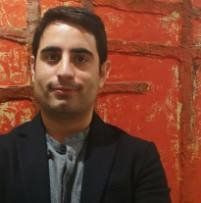
María del Pino Marrero Berbel (1950), known as Berbel, is a multidisciplinary writer and artist who has developed her talent in various fields such as photography, film, and especially painting, which she entered after joining the prestigious Escuela Luján Pérez. She graduated in Romance Philology from the University of La Laguna and worked as a Language and Literature teacher in various educational centers in the Canary Islands for more than forty years until her retirement.
Her artistic and literary career is very long, and we find Berbel's first publications in the early 1980s when her poetry collection Apoemas del alba escarlata (Editorial Ronda, 1982) was published. La Grecia que hay en mí (1999) marked a turning point in her literary career by achieving an accésit in the prestigious Tomás Morales prize. This work was followed by others such as Los días quebrados (2002), Las mil y una (City of Las Palmas Poetry Prize, 2005), Los desiertos extraños (2006), Los caminos del agua (2008) and Pespuntes (2021). Berbel has received many awards throughout her career, but among them, it is worth mentioning the title of Adoptive Daughter of Gran Canaria.
Berbel comes to Lanzarote whenever she can because she loves this island, and these days she came to present, last Saturday, November 9th at 12:00, in the El Aljibe Hall of Haría, her latest collaborative project: an anthology entitled Madre (Mercurio Editorial, 2024) where 151 women of different ages from 43 countries participate with the premise of collecting a sample of anecdotes, poems, and stories about the concept of mother. Among the participants in the book, we find several residents in Lanzarote, such as Teresa Ruiz, a teacher who for years directed the school of Los Valles and who served as hostess of the event, the poet Isabel Montero, Paulette Peyronnet Lamigeon, and Luise Guttenberger, a good example of the great diversity of origins of the authors of the book and of the people who inhabit the island.
But Berbel also came to give a literary workshop, a lesson on the creative act last Friday, November 8th in the same El Aljibe Hall of Haría. For Berbel, the creative act begins with the gaze, with the senses. We cannot talk about something that has no name. Then, the question of innocence. The avant-gardes have all been a game, a daring. Purity is a very important pill for creativity. Simplicity too. These are the foundations of beauty, and together with the experience of life, they make art. Art, the sublime, what is not within reach. Because for art, perhaps a gift is also necessary.
Under the unexpected splendor of the light among the Indian laurel trees of the Plaza de Haría one November morning, she unravels for me her tender memories of Lanzarote. At the age of nine, she visited the island for the first time with her parents. It was a desert with scattered white houses. A landscape that caused her great amazement.
She would return as a student of the Escuela Luján Pérez. There, they made small excursions to investigate and paint everything they saw. Then, cameras were not so frequent. They went in tomato boats to other islands to draw and paint. They were not charged anything. "Kids, are you coming to Lanzarote?" the sailors would say to them. And they embarked with their parents' permission, and on the boats, they were given food. They stayed to sleep at the doors of the warehouses, anywhere with canvases and brushes, and went to a reed bed to paint, and then they gave the paintings to people with the oil still sticky, but so happy to have painted there. At that time, when she was very young, she was able to discover Lanzarote in another way, investigating through painting, experimenting, and getting to know it.
Later, during her time at the University of La Laguna - that longed-for city that allowed students from all the islands to meet in one place - she would return. The students invited their friends to visit their places of origin during the summer holidays. She returned to Lanzarote, visited La Graciosa, and held gatherings there to talk about poetry and painting. Teguise then seemed to her the capital of an ancient empire. It was a time with less tourism, where people took care of everything and nothing was thrown away because there was nothing.
Later, Berbel would also be a friend of César Manrique, they were always connected, and she was able to learn a lot from the creative process of that noble and hyperactive man, in her own words. She even stayed once in the Taro de Tahíche when it was "only" the peculiar house of an artist, in a time of effervescence in which El Almacén was created, which was so important to promote culture. She tells me about a time that seems so distant and incredible as a utopia, of years as strange and beautiful as a vision of the island and its volcanoes veiled by the haze.
Add La Voz de Lanzarote as a preferred Google source.
Stay informed with the latest current news.