The spokesperson for Unidos por Lanzarote (UPL), Laureano Álvarez, explained in a press release that he considers it "essential to open a serious and rigorous process to recover the public management of the integral water cycle on the island, especially considering the structural situation that said management has been suffering for years, such as high water losses in the network, aging infrastructure, supply cuts, and a growing cost for families and economic sectors".
The island formation recalls that water "is not just any service, but critical infrastructure for public health, the tourism economy, and the sustainable development of the island". Therefore, it understands that its management "must be oriented exclusively towards the general interest and not conditioned by business profitability objectives or focused on experiments or political interests of the usual ones".
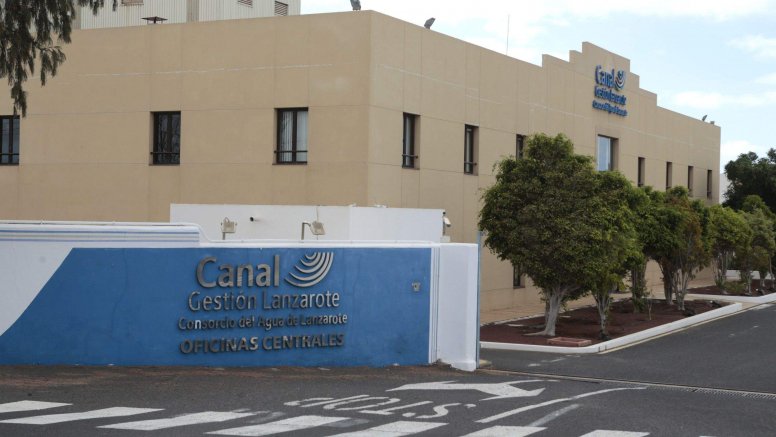
Unidos por Lanzarote recalls that, currently, the service is provided under the concession model with Canal Gestión Lanzarote, within the framework of the Lanzarote Water Consortium. UPL considers that "the experience gained in recent years shows that this model has not resolved the island's structural problems and that the time has come to evaluate alternatives with a future vision".
"Lanzarote cannot and should not lose sight that there are numerous international experiences that support the change," he continues. The public recovery of water services is not an exception; it is also a global trend. Since 2000, there have been more than 300 remunicipalization processes of the service worldwide. Relevant cases such as Paris, which in 2010 created the public company “Eau de Paris” after ending private contracts, achieving tariff reductions, increased investments, and greater transparency, serve as examples.
Another example is that of Berlin, where a citizen referendum allowed the recovery of public control over water and the elimination of clauses that guaranteed business profits. Also Valladolid, with the public company Aquavall, which has maintained stable tariffs and reinforced social programs. In Terrassa, Catalonia, Taigua was created with citizen participation mechanisms and transparent control. "All these examples show that, with professional management and planning, public entities can be efficient, sustainable, and beneficial for citizens," they assure.
"To this string of arguments we can add the economic and strategic reasons for Lanzarote," they say. Unidos por Lanzarote emphasizes that, "in island territories dependent on desalination, as is the case with Lanzarote, water will always have a high cost due to energy consumption and infrastructure complexity. However, the management model determines where the money paid by citizens ends up." Among the advantages of public management are the full reinvestment of income on the island itself, lower long-term financial costs, greater capacity to apply social tariffs, strategic planning without concession time limits, as well as coordination with energy and sustainability policies.
The island formation estimates that, in the medium term and with an adequate investment plan to reduce losses, "the bill could stabilize and even be progressively reduced".
In this regard, they defend that "everything proposed is a process that must be done with rigor". UPL insists that "recovering public management does not mean improvisation, but planning and, for this reason, proposes an independent technical, economic, and legal audit; the evaluation of the real cost of transition; the creation of a professionalized and transparent public company; a long-term investment plan to modernize the network and reduce leaks and, finally, guarantees of job continuity for workers".
“Citizenship does not expect speeches, it expects solutions. Governing means making difficult decisions when they are necessary for the general interest,” they point out from UPL.
For Unidos por Lanzarote, the debate "is not ideological, but strategic". The island depends technologically on water to live, produce, and sustain its main economic engine, tourism. "Every euro that leaves the water bill must return to Lanzarote in the form of better infrastructure, lower cost, and greater supply security. Recovering public management is an opportunity to build a fairer, more transparent, and more efficient model. The island faces a historic decision that must be made with responsibility, political courage, and long-term vision, because when water belongs to everyone again, so does the future," concludes Laureano Álvarez.
Add La Voz de Lanzarote as a preferred Google source.
Stay informed with the latest current news.