The Tías City Council has begun the signage and cordoning-off work at the site known as Las Grietas, located in the Montaña Blanca area, in compliance with Phase I of the Action Plan approved after the completion of the Geological, Geomorphological, and Stability Study commissioned by the council itself.
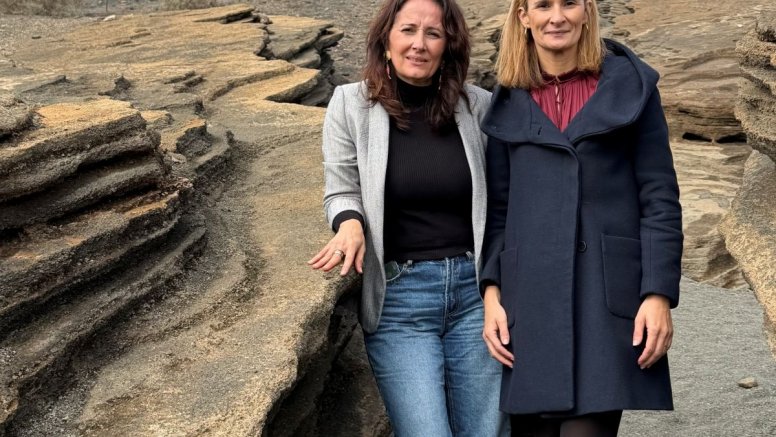
The Councilor for Heritage, Mariana Pérez Noriega, and the Councilor for Environment, Carmen Gloria Rodríguez, visited the area and explained that this first phase aims to guarantee people's safety and protect a space of high geological value, which in recent years has suffered increasing pressure from an increase in unregulated visits, with its completion expected in the coming days.
According to the technical study carried out by geologist M. Leticia Pacheco Cabrera, Las Grietas constitutes a Site of Geological Interest (LIG) included in the Catalog of the Geopark of Lanzarote and Chinijo Archipelago. This area presents a high susceptibility to block detachments, derived from the nature of the volcanic materials that make up its walls, mainly poorly cohesive lapilli and ash, as well as from the action of erosion, meteorological agents, and human activity
The slopes of Las Grietas show local instabilities
The report concludes that the slopes of Las Grietas present local instabilities and a high possibility of falling blocks, which makes the immediate adoption of preventive measures necessaryIn this context, Phase I of the Action Plan includes cordoning off the most sensitive areas, limiting access to risk zones, and installing informational and warning signage, as a preliminary action to future comprehensive regulation of public use of the space
From the Tías City Council, presided over by José Juan Cruz Saavedra, it is clarified that these actions do not aim for the definitive closure of the enclave, but rather its protection and management in a way compatible with the conservation of natural heritage and public safety. In later phases, the implementation of controlled and guided visits will be studied, as recommended by the technical study.
The Heritage and Environment departments continue to work towards the protection of geological heritage, risk prevention, and responsible management of natural spaces, appealing for citizen collaboration and respect for the installed signage.
Add La Voz de Lanzarote as a preferred Google source.
Stay informed with the latest current news.