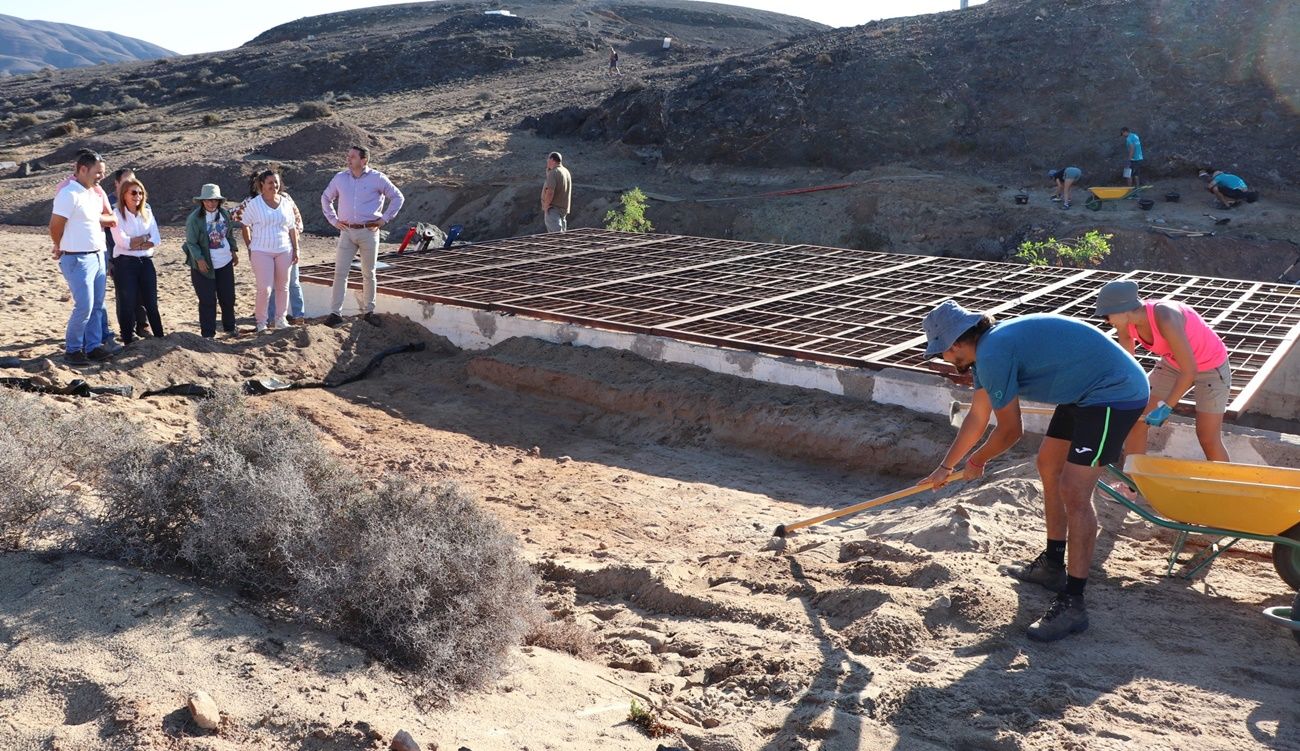
A team of twenty people began this Tuesday the third phase of archaeological research at the San Marcial de Rubicón Site, with the aim of "continuing the excavation work of the past campaign".
The Consistory points out that this campaign "not only discovered buried work, habitat and defensive structures of this enclave of high scientific and patrimonial level that shows the first contacts between European and native Canarian culture in the 15th century, but also found materials of aboriginal origin and also European such as ceramics and the oldest coins within an archaeological context in Lanzarote".
“This new and transcendental step will lead us to discover new findings to achieve the great objective of promoting knowledge and, above all, the conservation and protection of the site. I appreciate the work and enthusiasm of all the people committed to this mission, including the municipal workers who are at the foot of the work”, highlighted the mayor of Yaiza, Óscar Noda, who visited the area under investigation together with the Councilor for Heritage of Yaiza, Silvia Santana, and councilors of the municipal government.
Noda also thanked “the willingness of Nona Perera, director of Cultural Heritage of the Government of the Canary Islands, who as a technician and as a political leader has materialized her interest in helping to bring this project to fruition, the result of the agreement signed by the Government, the City Council and the two Canarian public universities”.
Technical managers of the project guided the municipal expedition through the first work areas of this new phase: the so-called factory area, on the eastern flank of the Los Pozos ravine, and the residential area, on the western flank, both areas that were already the subject of excavations last year with "highly productive" results.
The archaeological excavation that is currently being carried out is directed by María del Cristo González and Esther Chávez, archaeologists from the universities of Las Palmas de Gran Canaria and La Laguna, respectively, and the archaeologist from the company Baraka Arqueólogos, Miguel Ángel Hervás, a team that also includes technicians from Baraka, students and graduates from the two Canarian universities, workers from the company Lumar and municipal personnel who, from the beginning of the project, collaborate with the field work of the investigation.
Add La Voz de Lanzarote as a preferred Google source.
Stay informed with the latest current news.