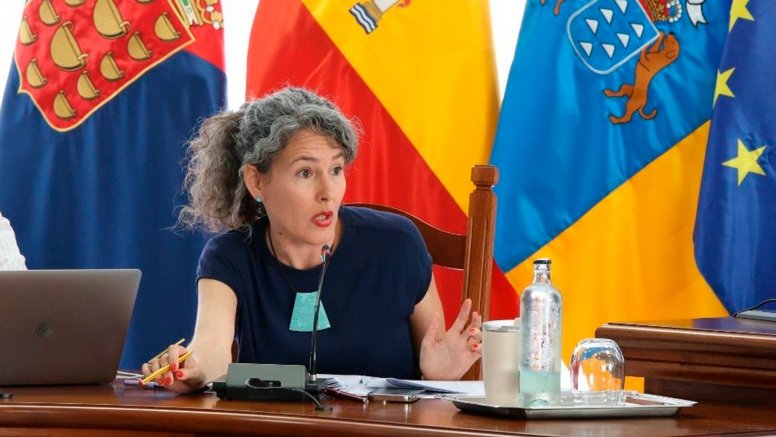
The spokesperson for the Socialist Group in the Cabildo of Lanzarote, Ariagona González, has expressed her satisfaction that the plenary session of the institution has approved the PSOE's motion to change the name of the Zonzamas archaeological site to Fayna and Zonzamas archaeological site.
The socialist councilor has justified the change of name as a way to recognize the role that women played in the Maho society of pre-Hispanic Lanzarote.
"With very few exceptions, history only speaks of men, and the indigenous women of the Canary Islands join the long list of invisible, yet indispensable, women who have been part of humanity's history," the councilor explained
González recalled that although aboriginal society was not matriarchal in the political sense of female executive dominance, the maternal line of descent was the fundamental vehicle for dynastic legitimacy and the high status of women, reinforced by the practice of polyandry. "In other words, leadership and the right to govern were transmitted through women. In this specific case, through Queen Fayna."
During the debate on the motion, the councilor pointed out that Maho women exercised their authority in the public and political sphere of society, acting in some cases as peacemaking and ritual authorities, guaranteeing tribal stability, while at the same time being the main managers of the material subsistence infrastructure, ranging from housing construction to maintaining the fire or collecting vegetables."And they practiced polyandry. In Lanzarote, a woman could have up to three husbands, and this positioned her as the structural axis for consolidating alliances, managing livestock resources, and preventing patrimonial fragmentation, granting women crucial economic control," the councilor recalled, emphasizing that "it is not about incorporating Fayna's name into the archaeological site because she was Zonzamas' wife. It is about reflecting that leadership and the right to govern were transmitted through Fayna's lineage."González concluded by proudly contracting himself for the approval of the site's name change, highlighting, "Naming our main aboriginal site as Fayna and Zonzamas Site means not only the recognition of a historical-anthropological fact, but also making visible the role that women have played throughout history."
Add La Voz de Lanzarote as a preferred Google source.
Stay informed with the latest current news.