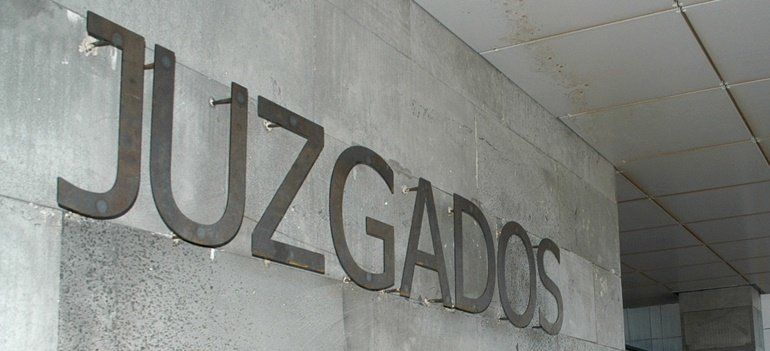
The Council of Ministers has agreed in its meeting this Wednesday to extend the period of suspension of evictions and foreclosures of vulnerable households economically and socially from their habitual residence until December 31, 2024, in the cases already provided for by current regulations. The measure is included in the Royal Decree-Law, approved this Wednesday, which adopts measures to address the economic and social consequences derived from the conflicts in Ukraine and the Middle East, as well as to alleviate the effects of the drought.
In this way, in order to address the social and economic reality of households in the context of the process of mitigating the inflationary dynamic and the prolongation of the consequences of the international situation, certain protection measures are extended in situations of vulnerability in housing matters that were introduced in Royal Decree-Law 11/2020, of March 31, which adopts urgent complementary measures to deal with COVID-19.
This is largely due to the existence of a scenario marked by the temporary extension of the War in Ukraine and its repercussions on the economy of families, mainly through the growth of consumer prices that especially affect those people and households with fewer resources.
Compensations for landlords or owners
Along with the extension of the measure for one more year for vulnerable households without housing alternatives, the possibility is also contemplated until January 31, 2025 to request compensation from the landlord or owner, collected in Royal Decree-Law 37/2020, of December 22, on urgent measures to address situations of social and economic vulnerability in the field of housing and transport.
Likewise, the deadline is extended for landlords and homeowners affected by the extraordinary suspension in force of the eviction or foreclosure to submit the compensation request provided for in that same RDL. This deadline was one month from the end of the validity of the measures. Thus, with the planned extension for these measures, the new deadline in which said request may be submitted is set until January 31, 2025.
Social protection measures
The extension of the protection measures was approved for those vulnerable households facing eviction proceedings from their habitual residence, with the coordinated action of the judicial bodies and the competent social services, including those households affected by foreclosure proceedings of their habitual residence, which do not derive from lease agreements, when there are dependent persons, victims of violence against women or dependent minors.
In this last case, the possibility is established that the judge, after a weighted and proportional assessment of the specific case, has the power to suspend the foreclosure, when the owners of these properties are natural or legal persons holding more than 10 homes, requesting a report from the competent social services in order to assess the situation of economic vulnerability and identify the measures to be applied to respond to said situation.
In these cases, those that were already regulated in which the suspension can never be dictated will always be taken into account and are:
- When the home is the habitual or second residence of the owner.
- When it has occurred in a property owned by a natural or legal person who has it assigned by any valid title in law to a natural person who has his habitual or second residence duly accredited in it.
- When the entry or permanence in the property has occurred through intimidation or violence against people.
- When there are rational indications that the home is being used for the performance of illegal activities.
- When it comes to properties intended for social housing and the housing has already been assigned to an applicant
- That the entry into the property has occurred after the entry into force of Royal Decree-Law 11/2020.
Housing Law
The extension throughout 2024 of the extension approved today in the Royal Decree, adds to the structural measures that are being carried out in this area from Mivau, aimed at making effective the exercise of the constitutional right to adequate decent housing, such as the approval and entry into force of the Law for the Right to Housing.
The new legislation establishes a maximum annual increase of 3% of the rent in current contracts from January 1, 2024 to December 31 and introduces a mandate to the National Institute of Statistics (INE) to define before December 31, 2024 a new reference index for the annual update of housing lease contracts to avoid disproportionate increases in rent. It should be remembered that the limitation of 2% of the annual update of the rent approved at the end of 2022 has remained in force throughout this 2023.
The Housing Law also includes improvements in the eviction procedure that may affect the habitual residence of vulnerable households to guarantee effective and rapid communication between the judicial body and social services through a requirement for them to assess the situation and, where appropriate, quickly assist people in a situation of economic and/or social vulnerability.
In this sense, it is ensured that Social Services can offer housing solutions to those affected, avoiding situations of helplessness as a result of the eviction. While these solutions occur, the suspension periods of foreclosures in these situations of vulnerability are increased, from 1 to 2 months when the owner is a natural person, and from 3 to 4 when it is a legal person. In addition, objective criteria are introduced in the procedure to define situations of economic vulnerability.
Add La Voz de Lanzarote as a preferred Google source.
Stay informed with the latest current news.