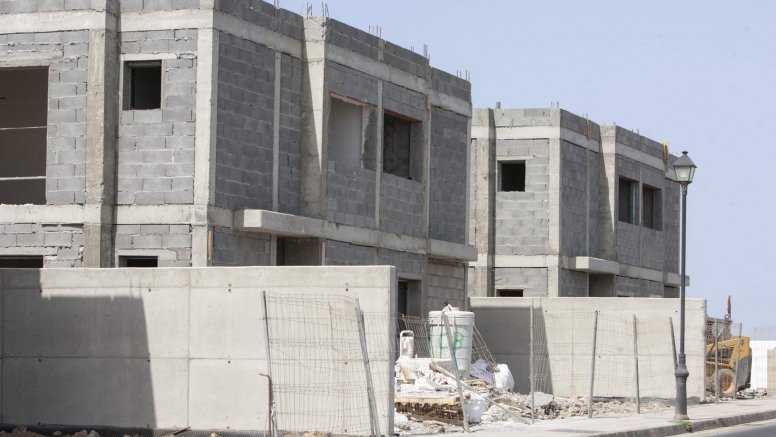
The president of the association of builders of the province of Las Palmas, María Salud Gil, has denounced that housing problems stem from "everything" which includes a "rotten system" with an "obstructive vocation".
As she explained minutes before the start of the meeting organized by Cadena Ser, the system "has an obstructive vocation, of which it is even proud" because "what suffocates housing production is taxation, poor management by public administrations," which has also "worsened since Covid."
This situation, she warns, is "common knowledge, both for public administration and for market operators."
The administration "has retreated inward, it hears itself and does not listen to what citizens and companies have to say," as "they do not respond to letters, they force citizens to litigate their matters, the appointment system...", she detailed.
María Salud Gil highlighted that "there is a regulatory framework," a bill, a decree from the Canary Islands Government, and a "commitment" from the regional Executive "to remove obstacles" but "the fundamental thing is missing: the budgets."
For the president of the association of builders, "there must be a real commitment" because, as she assessed, "we cannot be proud of building 30 homes in Ingenio, 25 in San Bartolomé, or 10 in Teror," but rather we must build "12,000 homes per year".
This is the estimated figure so that, "from now until 2039, we will have 150,000 homes" and alleviate a deficit of "almost 8,000 homes annually, depending on how households grow."
In the Canary Islands, she said, "we have gone from building 30,000 homes in 2007 to building 2,900 now", so the problem "is not just the bottleneck, which it is" but also the timing, as "land transformation takes between 10 and 15 years plus another 5 years to produce the homes," meaning that "the developer is subjected to brutal financing costs for 15 years, without obtaining the final product."
This is "a whole package" and that is why the private sector does not build housing, as "we cannot build homes at the price that citizens can afford" and this, she anticipates, "could collapse the sector in a couple of years and could become a major social problem."
Qualified financing must be recovered, down payment aid for the sale of protected housing, mobilize land designated as officially protected, and make land available to private initiative in municipal areas", among other issues.
For the sector's spokesperson, these are figures and issues that "are known" and what remains is "to get to work instead of philosophizing and rambling."
Add La Voz de Lanzarote as a preferred Google source.
Stay informed with the latest current news.