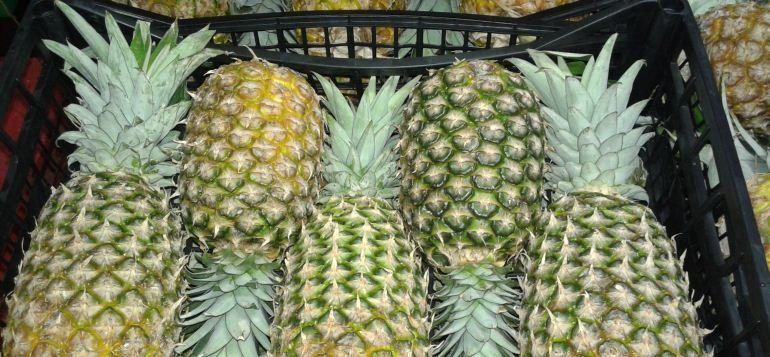
The Parliament and the Government of the Canary Islands have requested that "urgent measures" be taken by the State Administration to improve controls at the border inspection posts of the islands, as they warn that "shipments of illegal fruit, especially pineapple, have been detected in the Islands of Lanzarote, Fuerteventura and La Palma." In this regard, it emphasizes that the risk is not only in "the illegal entry of fruit, but also of new pests and invasive plants or species that endanger biodiversity."
It should be remembered that in the Archipelago, since March 1987 and according to a ministerial order, it is prohibited to import tropical fruits and other plant products "to prevent productions treated with unauthorized phytosanitary elements and pests or diseases that may affect the crops of the Islands from entering the Islands."
Faced with this situation, the Minister of Agriculture of the Government of the Canary Islands, Narvay Quintero, reiterated this Friday the need for the State to "improve the human and material resources with which the border inspection posts of ports and airports of the Islands are equipped." In addition, he has also demanded that "extreme zeal be exercised in the inspection" of departures from the Peninsula.
"Complaints from local producers and consumers"
"We have again received complaints from local producers, hotel clients and consumers," added the Minister, "who assure that there are fruits in the marketing channels, especially pineapple, that comes from outside the Islands." Quintero recalled that this issue is one of the "usual" topics that are part of his department's agenda in Madrid and that "control of merchandise leaving the Peninsula is not sufficient because it is ineffective."
Quintero explained that the regional Executive asked "a few months ago" the Government of Spain to "increase the maximum amount of sanctions when this type of product is detected in these inspection posts, because today these possible sanctions do not seem to have deterrent effects on illegal importers and could be considered a crime against public health."
Regarding the Canarian Government, the Minister affirms that it is "intensifying controls not only in wholesalers, but also in restaurants, hotels and retail sales, and in coordination with the general directorates of Public Health, Consumption, Commerce, Livestock and the Canarian Institute of Agri-Food Quality (ICCA)."
Add La Voz de Lanzarote as a preferred Google source.
Stay informed with the latest current news.