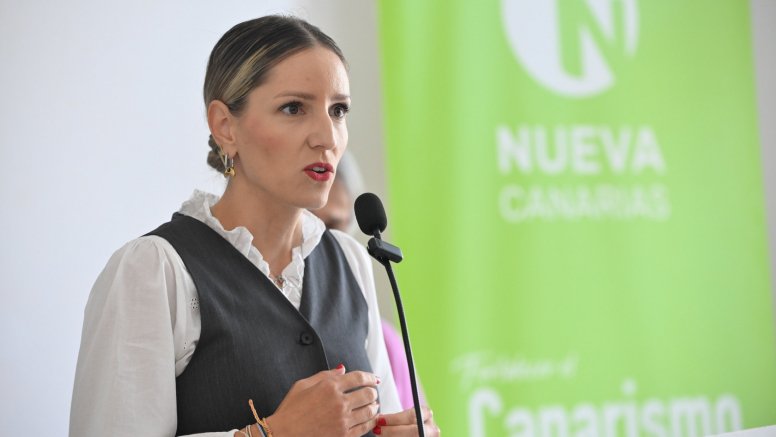
The Local Committee of Nueva Canarias-Bloque Canarista (NC-bc) of Arrecife has urged the governing group of the Partido Popular (PP) and Coalición Canaria (CC) to "adopt forceful policies" to curb the proliferation of betting shops, arcades, and casinos, especially in areas near educational centers, cultural and sports spaces, bus stops, etc., where the youth population is concentrated.
The local spokesperson for the party, Sheila Guillén, warned of the "worrying increase" in these establishments and their effects on mental health and social well-being. "Gambling not only empties the pockets of families; it also deteriorates emotional health: it generates anxiety, low self-esteem, feelings of guilt, isolation and, in many cases, leads to a dependence that is difficult to overcome. We are facing a public health problem that demands a firm and coordinated institutional response," she said.
For NC-bc, the situation in the Canary Islands reflects an alarming trend. According to a study by the Adsis Foundation, around 16% of young Canary Islanders between the ages of 9 and 20 show addictive indicators to online gambling (including sports betting and roulette), a percentage that has increased compared to the previous year. In addition, more than 89% of these young people are minors, and the 13 to 17 age group is the one that shows the greatest addictive risk.
For its part, the ESTUDES 2023 survey by the Ministry of Health confirms that 21.5% of Spanish students between 14 and 18 years old have participated in games involving money in the last year, and that 4% present a possible problematic gambling behavior or addiction. In the Canary Islands, these percentages are even higher than the national average, especially among boys.
Guillén emphasizes that "the normalization of gambling among adolescents and young people has direct consequences on mental health, generating addictions that are aggravated in contexts of precariousness and a lack of healthy leisure alternatives, as is the case in Arrecife, where there are neighborhoods without modern, alternative, and healthy public spaces."
To confront this problem, the Canarian activists propose “modifying urban planning and licensing regulations to impose minimum distances between betting shops and educational or sports centers; suspending the granting of new licenses in sensitive areas; strengthening inspection and control over advertising and access for minors, both in physical locations and on municipal advertising platforms; prevention and awareness campaigns focused on the psychological and social risks of gambling with the participation of youth, educational, and mental health associations; creation of healthy leisure alternatives through municipal programs that promote sports, culture, and community participation.”
According to Sheila Guillén, "the City Council has allowed these types of establishments to proliferate in sensitive areas such as bus stops. It is extremely irresponsible for casinos to exist in Arrecife right next to bus stops where young people or anyone else waits for public transport."
"Arrecife must be a safe and healthy city, not a showcase of temptations that can ruin lives," Guillén stressed. "If we want a future free of gambling addiction and exclusion, we must offer real alternatives for leisure, culture, and sports that strengthen the self-esteem and emotional health of our young people. In the Canary Islands, one in six young people shows risky behavior with gambling: we cannot continue to look the other way."
Nevertheless, NC-bc "reaffirms its commitment to a city model that prioritizes mental health, education, and collective well-being over the economic interests of the gambling sector," which it considers "a business that feeds on the suffering and vulnerability of people."
Add La Voz de Lanzarote as a preferred Google source.
Stay informed with the latest current news.