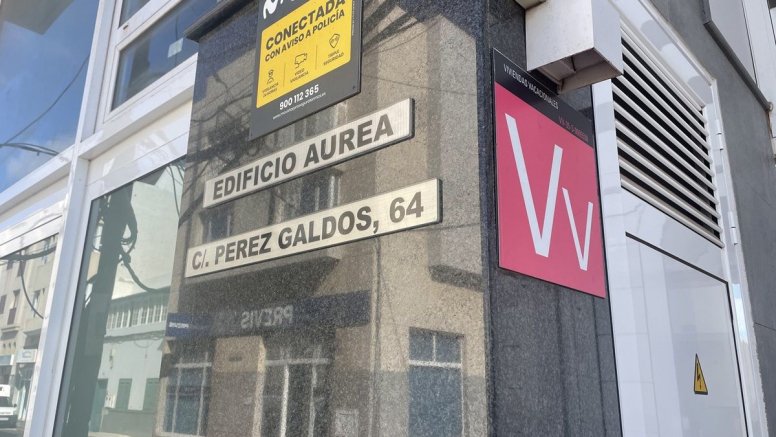
The president of the Tenerife Island Council, Rosa Dávila, revealed this Wednesday that the island corporations of the eastern province –Gran Canaria, Lanzarote, and Fuerteventura–, as well as the one she presides over, which constitute the four most populated islands with the greatest tourist weight in the Canary Islands, have requested from the Government of the autonomous community “a moratorium” on the granting of licenses for vacation homes.
All of this is in response to the “avalanche” of applications following the announcement of the new law that will regulate the activity of vacation homes, which in the case of Tenerife has translated into “more than 5,000”, Dávila detailed in an interview on RNE in the Canary Islands. She explained that the request for this “moratorium” on vacation homes was conveyed to the regional executive by the island councils of Gran Canaria, Lanzarote, Fuerteventura, and Tenerife within the framework of the Canary Islands Federation (Fecai).
In the same interview, Dávila advocated for a revision of the tourism model in the Canary Islands, which has been “useful” in the last 50 years but at this time “is not providing what the citizens are asking for: quality of life”, and also implies “more pressure on resources: territory, water, energy, heritage…”, she noted.
She believes that “it is the moment” to undertake this revision, which is not done “overnight”, because “the tourism figures are very important, records are being broken for arrivals and billing”.
“The question”, she continued, “is whether that success is going to kill us: because of record numbers, citizens cannot access rental housing” or protected places are “overcrowded”.
Regarding the “moratorium” requested by the island councils, the Canary Islands Vacation Rental Association (Ascav) has come forward to deny that this activity is “the main cause” of the “serious problem” of rental housing supply for residents.
The sector's employers express “their astonishment”
In a statement, the president of Ascav, Doris Borrego, expresses her astonishment that the Ministry of Tourism is the cause of “a call effect and avalanche of registrations” of vacation homes with its announcement last October of a new law, since “many” of these “are not advertised” and “only registered just in case”.
She alludes to the fact that half of the registrations correspond to “large holders of complete promotions of homes under construction, others in unbuilt plans or tourist complexes that are partly or wholly registered also 'just in case' or because they exercise” this activity.
Which is why, she recalls, Ascav proposed months ago to the Ministry of Tourism “a moratorium of one year to stop and agree among all on a regulation adapted to the real model” of vacation homes, “the one that allows Canarian families to participate actively”.
Ascav argues that the main cause of the scarce supply of residential rentals is a state Housing Law that, “by not protecting the owners, has expelled 40% of the rental housing due to the lack of legal certainty: 20% has gone to vacation rentals and the rest has been sold or closed”, she estimates.
She also points to a “lack of foresight of housing for the growing demand of workers”, especially in tourist municipalities.
Add La Voz de Lanzarote as a preferred Google source.
Stay informed with the latest current news.