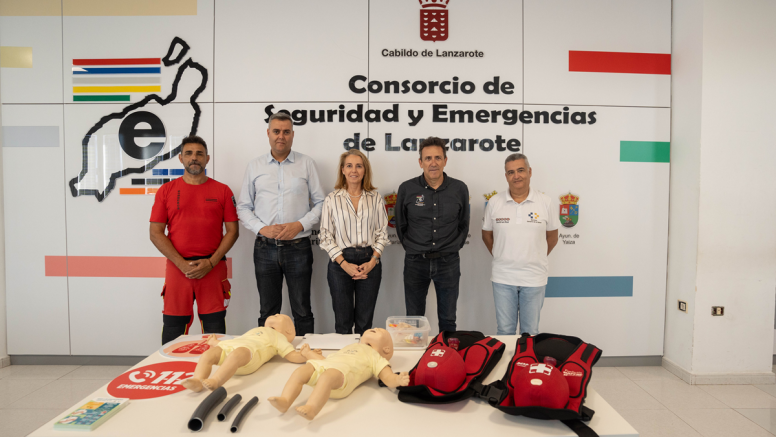
In an effort to expand safety standards in the restaurant sector, the Lanzarote Security and Emergency Consortium and the Lanzarote Tourism Federation have signed an agreement that aims to provide specialized training in prevention and intervention in cases of choking. This initiative, which is part of the need to provide hospitality and restaurant staff with the necessary tools to act effectively in critical situations, materialized through two training sessions last Monday, February 24.
The course, organized by the Security Consortium and developed in collaboration with the Lanzarote Tourism Federation, focused on training attendees in first aid techniques specifically oriented to intervention in cases of choking.
During the sessions, participants had the opportunity to learn both the theoretical and practical aspects of the intervention, carrying out simulations and exercises that allowed them to reinforce the action protocols. The training included the rapid identification of emergency signs, the application of rescue maneuvers and airway clearance techniques, essential in the restaurant environment.
"Ensuring an effective response to unforeseen emergencies that may arise in the restaurant sector is essential for the well-being of local and visiting diners. With this agreement, we seek to provide professionals with practical and effective tools that allow them to intervene quickly and safely in choking situations, reducing risk and enhancing emergency response,” said the president of the Consortium, Francisco J. Aparicio.
For her part, Susana Pérez, president of the Lanzarote Tourism Federation, highlighted the sector's commitment to safety, in all areas that can contribute to maintaining service excellence: “This training represents a decisive step in that direction. Our goal is for each professional to feel prepared to act in critical moments, ensuring the integrity and well-being of our clients."
With this initiative, the Security and Emergency Consortium and the Lanzarote Tourism Federation "reaffirm their commitment to safety, promoting continuous training and the adoption of emergency protocols that strengthen the response capacity in the tourism sector." The collaboration is expected to expand to future editions, benefiting a greater number of professionals and contributing to raising safety standards throughout the island.
Add La Voz de Lanzarote as a preferred Google source.
Stay informed with the latest current news.