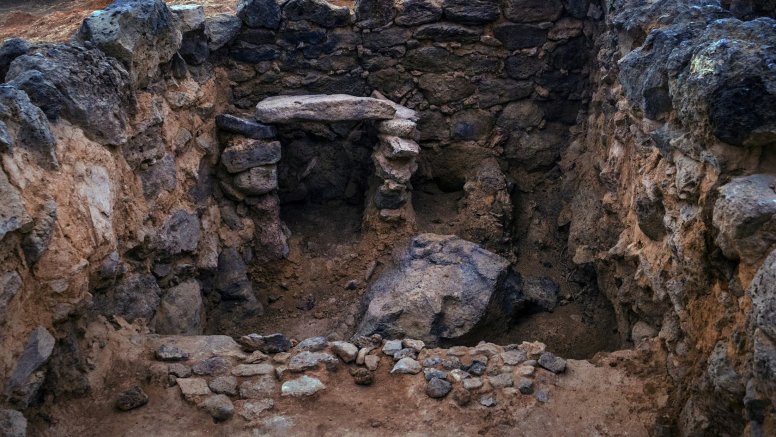
The Ministry of Universities, Science, Innovation and Culture, through a cooperation agreement with the University of Las Palmas de Gran Canaria (ULPGC), is allocating 100,000 euros to archaeological research at the Zonzamas archaeological complex, in the municipality of Teguise. This is a systematic research project, with an initial duration of four years, which will allow for a deeper understanding of the materiality of one of the most important archaeological sites on the island of Lanzarote.
Over the past two decades, specific interventions have been carried out in Zonzamas that have contributed to expanding knowledge of the aboriginal settlement, the preservation of its structures, and the identification of its high scientific potential. However, the site has so far lacked a long-term research project, unlike other sites of similar importance in the archipelago.
In this regard, the agreement constitutes a "necessary instrument to guarantee rigorous, sustainable, and stable archaeological research, which will result in the protection and conservation of one of the most unique archaeological sites in the Canary Islands," explains the Minister of Universities, Science, Innovation, and Culture, Migdalia Machín. With this agreement, she adds, "the quality of the scientific work developed by the public universities of the Canary Islands is recognized."
Performances
The actions planned within the framework of the agreement focus on research and dissemination. In this way, the aim is not only to deepen knowledge about the aboriginal society of Lanzarote, but also to bring the results of these interventions closer to the public.
On the one hand, the research is carried out, firstly, through surface surveys, soundings, and extensive excavations. These main activities are complemented by restoration and consolidation work on the excavated units, as well as the study of archaeological materials related to material culture, archaeobotany, archaeozoology, and other specific analyses such as Carbon 14, stable isotopes, and micromorphology.
On the other hand, **dissemination is focused on informational resources at the site itself**, as well as the **integration of the results** obtained in the future on-site archaeological museum. Furthermore, the creation of educational resources, teaching materials, and audiovisual media for schools and the general public is also contemplated.It should be noted that the ULPGC has the most complete Archaeology Laboratory in the islands, co-financed by the Government of the Canary Islands, with equipment, facilities, materials, and specialized research personnel in the application of advanced techniques for archaeological documentation and cultural heritage conservation
With the signing of this new agreement, the Government of the Canary Islands leads research in two of Lanzarote's most important archaeological sites: Zonzamas and San Marcial de Rubicón. This initiative is part of the commitment of the Ministry of Universities, Science, Innovation and Culture to the recovery and dissemination of the archipelago's historical legacy, in compliance with the principles and objectives established in Law 11/2019, of April 25, on Cultural Heritage of the Canary Islands
Archaeological Site
The archaeological complex of Zonzamas encompasses different types of sites such as the sunken houses, among which the "Palace of Zonzamas" also called the "Cave of the Majo" stands out. In some of these structures, rock engravings, remains of malacofauna, ceramic fragments, animal bones, and tools linked to the culture of the Majo society are preserved
The settlement was organized around a central core composed of semi-subterranean structures protected by a stone wall. Although the exact function of these buildings is unknown, various uses have been attributed to them, such as storage or meeting spaces.
A certain distance from the settlement is the "Quesera de Zonzamas," a set of rock art formations consisting of longitudinal channels carved into basalt blocks. According to expert personnel, these "cheese makers" could have been used for ritual practices, daily activities such as grinding, or for collecting and storing water.
In the immediate surroundings of the settlement is also located the so-called "Piedra del Majo" (Majo Stone), an area with abundant Libyco-Berber engravings, podomorphs, and other symbols from the pre-Hispanic era.
Add La Voz de Lanzarote as a preferred Google source.
Stay informed with the latest current news.