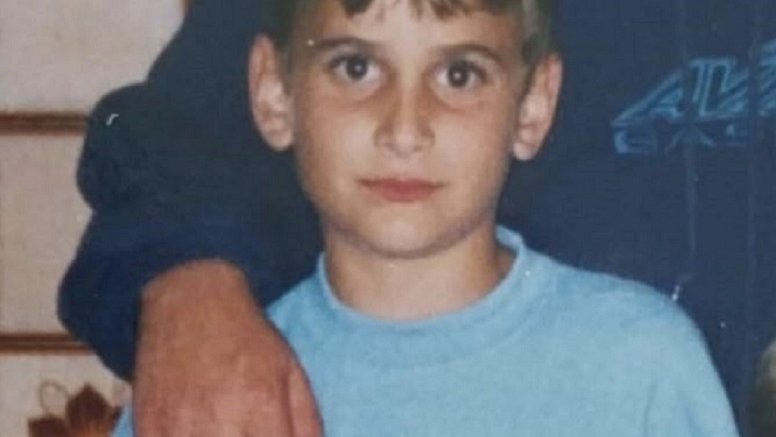
Ciro Molina knew he wanted to be a priest when he was still a child. His family had instilled in him a faith in the Catholic religion. His parents were devout and attended mass every Sunday. He served as an altar boy in his village church, but when he was only nine years old, the walls that should have been his refuge and his hope turned into a nightmare.
A tremor in his thigh accompanies him when someone brushes against him, like a reflex action. The words of his aggressor still echo in his mind. "Does it get hard for you?" the priest from his church would ask him when Saturday mornings arrived and it was time to confess his sins. On a bench and not the traditional confessional, the priest was supposed to grant him forgiveness, but the dynamic was far from being the one **ordained by God**.
"He would put his hand over your shoulder and squeeze you against him. Then, he would start groping you, rubbing your thigh," Molina narrates. On that bench, the priest would ask the children to confess every time they masturbated, ask them what they were thinking when they did it or how they did it, and put his hand under their pants. Furthermore, he narrates that on one occasion he even kissed him on the mouth and on another he felt his erect penis brush against his thigh.
"At that time, you are developing, you also don't know what to call what is happening, you feel bad, but you don't know what is happening or what they are doing to you," Molina explains. Accepting that he was being a victim of sexual assault was difficult to process for that child who saw in the priest a person to admire and who should be a reflection of an attitude in accordance with religious values.
Since his first complaint, filed two decades ago, this survivor has waged a battle for the Church to formally acknowledge his pain and carry out an act of public reparation in which he is identified as a victim and survivor of ecclesiastical pedophilia. For the moment, he has only obtained apologies in written or in-person conversations with some members and that his abuser was removed as a priest, eleven years after his first complaint.
The smell of coffee and walks through El Teide
At fourteen, Molina decided to continue on his path of faith and took the step of entering the seminary to become a priest. "I believed so much in God, I wanted to help people, and I made that mistake," he recalls in an interview with *La Voz*. That seminary forced him to spend more time with his abuser.
To the confessions on that parish bench were added the walks through El Teide. Molina took years to reconcile himself with the mountain, to go for walks on those volcanic slopes without remembering the walks he once took with his aggressor while he groped him as a child. He also took years to reconcile himself with the smell of coffee, which the priest drank before hearing his confession and which repeatedly brought him back to those scenes of terror.
During a phone conversation, Ciro recounts a day when he feared the sexual abuse would escalate. "When there was a clear intention of rape, that's when he took me to his mother's house," this survivor indicates. He still remembers how that priest sat him on his lap and began to touch him "more than usual." "At that moment, I stood up, I went towards the door, and I stiffened up like a board," Molina recalls. "He told me, 'calm down, it's okay, we're leaving now.'"
The first complaint
This survivor learned that what was happening to him was also happening to other teenagers during a weekend retreat. "I heard other altar boys saying: 'I'm not confessing to this priest because he's a faggot.' At that moment, I realized that what was happening to me wasn't just happening to me," he recounts. At that retreat, they dared to tell the catechists accompanying them about the abuse they were suffering. "I spoke because I had a younger brother and what I didn't want was for him to go through the same thing I went through. That pushed me to speak," he recounts.
Molina left the Seminary to become a priest in November 2003. In 2004, his parents filed a canonical complaint, within the Church itself, with the then bishop of the diocese of San Cristóbal de La Laguna, Felipe Fernández. "These acts of pedophilia cause us immense scandal, and we find them, moreover, very serious and unbecoming of a priest," his parents stated to the Bishopric."The Church, the priests back then, some of whom are already dead, deceived my parents, they told them that it was best not to go through the criminal route because that would do me more harm and the important thing was for me to move forward," indicates Ciro Molina
So, the Bishopric's decision was to remove the priest from the Tejina Church and transfer him to a convent in Castilla y León. The parents' complaint to the Church and the fact that the priest had been removed led part of the town to start harassing his family. "The social terrorism that my family and I suffered in 2004 reached such a point that my parents were not given peace in church, they called home threatening us, saying that Tejina had a stain and that we had to retract," he recalls. Some even started a petition for the priest to return to the church.
The Church's Complicity: "Forgiving the Weaknesses of Others"
In 2005, with the change of Bishop and the arrival of Bernando Álvarez, his aggressor returned to the island, where he lives to this day. In the summer of that same year, 2005, Molina contacted Monsignor Alfredo Pros of Rome via email, Vatican delegate for the Congregation for the Clergy, and revealed the sexual abuse he had suffered at the hands of the village priest. In an email to which *La Voz* has had access, the Vatican responded: "I believe your claims, but what I believe in most is the capacity we humans have to forgive and forget the weaknesses of others."
In 2013, with the arrival of Pope Francis at the Vatican, the Commission for the Protection of Minors was created, and in 2019 the Pontifical Secrecy, which until then allowed the Church to conceal cases of sexual abuse, hindering civil justice and silencing victims, was abolished.
Hopeful about the change of direction in the Vatican, in 2014, Molina filed a complaint with the Diocese of La Laguna and underwent a forensic examination so that a psychologist could determine the validity of his testimony. The examination determined that his testimony was credible and that he was undergoing psychological treatment as a result of the abuses suffered. "That was the first time I felt believed," the young man recounts.
In 2015, the bishop of Tenerife, Bernardo Álvarez, responded that the priest Carmelo Hernández González was suspended in December 2014 and that an administrative process was initiated to clarify the facts, appointing the vicar general of the Archdiocese of Seville as judge.
It is not an isolated incident
A report by the Ombudsman warned that the Catholic Church has denied or minimized sexual abuse allegations, even going so far as to pressure victims or blame them for what happened. Furthermore, it highlighted the lack of institutional and judicial response to guarantee the reparation of some of the survivors' pain.
In the aforementioned document, he recommended that the Catholic Church hold a public event to acknowledge and make amends to victims for the neglect, which was more prevalent between 1970 and 2020, and the creation of a state fund for the payment of compensation, as well as providing victims with the necessary means to receive treatment and opening investigations to clarify the cases
If you have been a victim of pedophilia in the Church in Lanzarote and wish to share your testimony anonymously or with your details. Contact us at: andrea@lavozdelanzarote.com.
Add La Voz de Lanzarote as a preferred Google source.
Stay informed with the latest current news.