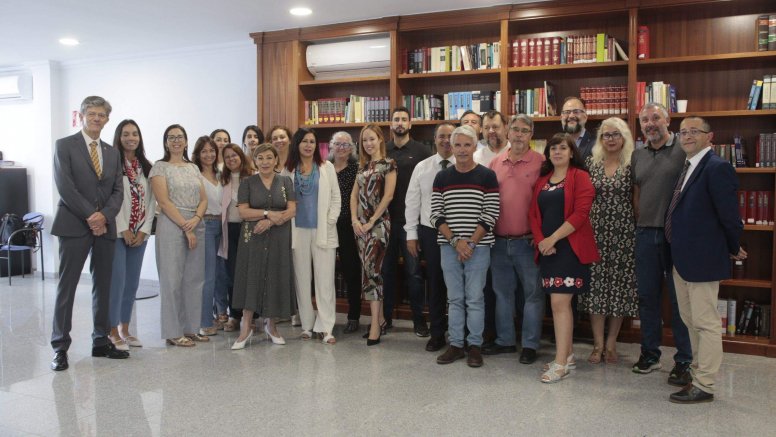
The Lanzarote Bar Association celebrated this Monday 30 years since its creation. In an event attended by the members of the entity, they took the opportunity to enjoy three decades since it was created on May 27, 1994.
The dean of the Lanzarote Bar Association, Carlos Viña Romero, summoned the media this Monday at noon to celebrate the anniversary of the institution he represents with a toast and a cake.
"It was a very special day, we didn't want to let it pass without further ado," Viña began in statements to La Voz. During the event, held at 2:00 p.m. this noon, Carlos Viña addressed a few words to the attendees, members of the Association, and blew out the candles together with the secretary of the Association, Rosa María García.
In addition, the presiding judge of the judicial district of Arrecife, Adalberto de la Cruz, also participated in the event.
"One achievement of the Association is to facilitate the work of people coming here and having their right to defend their legitimate interests in equal conditions. We are also looking for the digitization of the Association and specializing the guard service for minor victims, for example," he highlighted.
Carlos Viña was re-elected dean of the Lanzarote Bar Association last November after having been so for a decade. For the moment, Viña will be dean of the institution for another five years. Together with him, the vice-dean, Rosa Mary Callero; the secretary, Rosa María García; the treasurer, Francisco González Cordón; the librarian-accountant, Chouhayda Beneyto; the second deputy, Paola María Matassa; the third deputy; Astrid Sflijas; the fourth deputy, José Enrique Gómez; and the fifth, Miguel José Magdaleno, are part of the entity.
In addition to this family toast, Viñas explains that conferences will be held throughout the year and that the celebration of this 30th anniversary will be extended with a dinner between the members of the association at the end of the year.
Carlos Viña has taken the opportunity to claim the role of the public defenders, which grants the right to justice to the most disadvantaged classes, and has asked that they be fairly remunerated for this work and that fair scales be given.
Add La Voz de Lanzarote as a preferred Google source.
Stay informed with the latest current news.