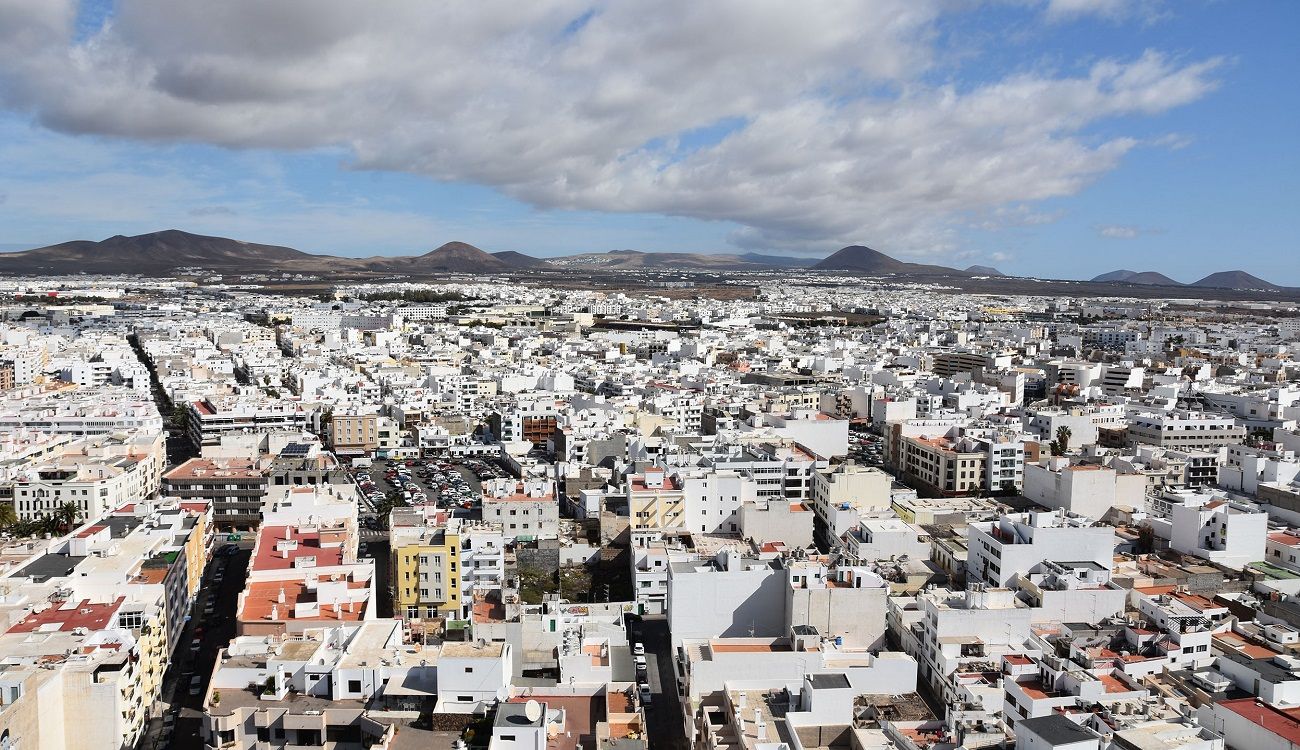
The César Manrique Foundation has expressed a critical stance regarding the draft of the Island Plan for Land Management of Lanzarote and the Chinijo Archipelago (PIOLC), during the meeting of the Biosphere Reserve Council, reaffirming its commitment to the defense of the territory, cultural identity, and the environment. The FCM considers that the island is at a decisive moment, facing the crossroads of repeating past mistakes or opting for a future consistent with its values and the limits imposed by nature.
While the Foundation acknowledges the willingness of the Cabildo de Lanzarote, presided over by Oswaldo Betancort, to provide the island with an updated PIOL, they point out that Lanzarote and the Canary Islands suffer from tourist overcrowding and overflows that affect a generalized unease. This situation is due to congestion and the progressive deterioration of essential public services, such as healthcare, education, water supply, and mobility, in addition to the natural heritage. The FCM warns that growth and overcrowding are "unacceptable and incompatible with global well-being."
"Not one more tourist bed, to begin with"
The FCM underscores the urgent need for planning that realistically respects the ecological limits of the island environment. The Foundation argues that it is not enough to mention sustainability, but that it must be at the center of planning with concrete measures, rigorous diagnoses, and "political courage."
In this sense, the FCM repeats its historical demand, "not one more tourist bed, to begin with." They propose that the future should be written by declassifying land and expectations, betting on decreasing in "old economic logics" in order to, on the contrary, "grow in well-being and coexistence with the territory."
The FCM's diagnosis is deeply critical, pointing out that the PIOLC Draft presents serious shortcomings that compromise its validity. According to the Foundation, the plan is limited to collecting data and addresses natural resources and carrying capacity from a fragmentary and technical perspective, without offering a strategic vision or a project for the future. They consider this to be a very worrying "deficit of substantive planning."
Specific shortcomings of the draft
Carrying Capacity: The plan does not rigorously calculate carrying capacity, nor does it relate it to essential factors such as seasonal population, pressure on water and energy resources, or infrastructure saturation. Without this analysis, the PIOLC becomes a "blind tool that perpetuates unlimited growth."
Landscape: The document reduces the value of the landscape to a simple environmental zoning, ignoring its structuring and identifying role and its cultural condition. This reductionist vision distorts the integral conception defended by César Manrique, where art, culture, and nature merge.
Strategic Resources: Although the plan acknowledges the total dependence on desalination and water losses exceeding 50% in the distribution network, it does not propose any integrated management strategy to guarantee water security in the face of climate change, with the island "on the verge of water collapse." Nor is an island plan for transitioning to renewable energies or a coherent wind map articulated.
Mobility and Growth: The draft continues to favor more roads and highways, an obsolete model that increases dependence on private cars and destroys the landscape, instead of moving towards sustainable mobility. Furthermore, it uncritically accepts historical land classifications, perpetuating unsustainable dynamics.
### Demand for a Transformative Plan
The Foundation maintains that Lanzarote needs a plan that establishes clear criteria for protection and containment, defining thresholds for tourist and residential carrying capacity that should be managed downwards.
The PIOLC, instead of being a simple administrative document, must be "profoundly reformulated" to transform itself into an authentic strategy of territorial, ecological, and social transition. This requires orienting Lanzarote towards a model based on sufficiency (replacing unlimited growth), respect for biophysical and landscape limits, climate resilience, and economic diversification, reducing dependence on tourism monoculture.
The FCM concludes that Lanzarote cannot afford a continuity plan, but rather needs an ambitious and transformative document that places sustainability at the center of every strategy and honors the legacy of César Manrique with coherence and responsibility. They warn that if the demands of the future are not discussed and translated into anticipated decisions, it "will overwhelm us."
### PIOLC
The Island Plan for the Management of Lanzarote and the Chinijo Archipelago (PIOLC) is the island's main instrument for territorial planning. Its objective is to regulate land uses, economic activity, and environmental protection.
The document is currently in the public consultation phase, within the process promoted by the Lanzarote Island Council, which seeks to update the 1991 PIOL. During this period, institutions, groups, and citizens can submit allegations and proposals before its final approval.
Add La Voz de Lanzarote as a preferred Google source.
Stay informed with the latest current news.