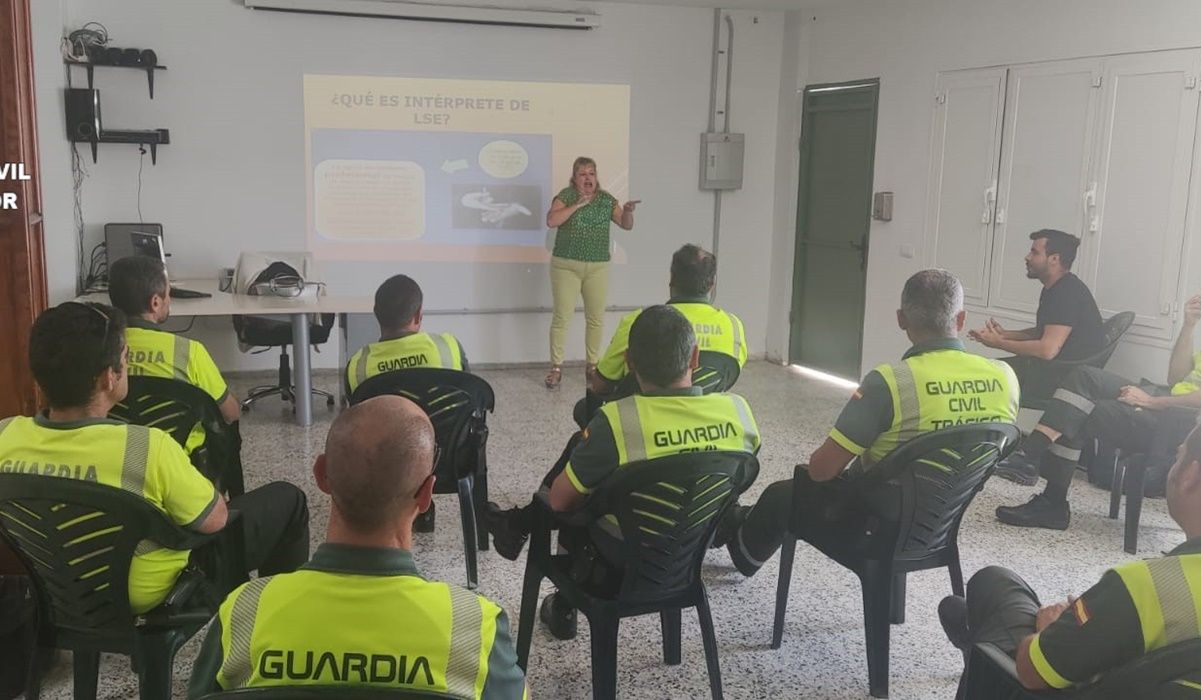
Members of the Arrecife Traffic Detachment in Lanzarote participated on April 28 in the first training and awareness days between personnel of the Traffic Group on the island of Lanzarote and the Association of Deaf People of Arrecife and Lanzarote (APSAL).
This activity is part of the so-called Unit Training Days (JFU), which constitute the basis of continuous professional training for agents of the Traffic Group. In addition to being oriented towards purely professional and regulatory aspects, they contemplate the inclusion of other matters of interest to the service, among which are those aimed at improving the quality of services provided to citizens.
From the Benemérita they point out that the object of this training is "the sensitization of agents in relation to the needs for the normal development and social, labor and personal integration of deaf or hearing-impaired people", having been oriented in a specific way, to the improvement of communication skills, with the ultimate goal of "contributing to the achievement of safer mobility, an aspect in which the Traffic Civil Guard plays a preponderant role."
The day was led by María Teresa Alonso, trainer of APSAL, being assisted by the sign language interpreter Ismael Torres, and included content related to the problems that people with this disability have to face in their day to day, techniques and strategies of assistance through sign language, as well as recommendations aimed at improving communication, especially in the interactions that agents may have with deaf people during the performance of their duties on the road.
The Civil Guard adds that the reinforcement of these aspects was "through the development of a practical simulation and interaction workshop", to finish with a round of questions and answers, where those present exchanged impressions and experiences.
At the end of the activity, both groups showed their willingness to continue this type of collaboration, all in favor of a better service to deaf or hearing-impaired citizens.
Add La Voz de Lanzarote as a preferred Google source.
Stay informed with the latest current news.