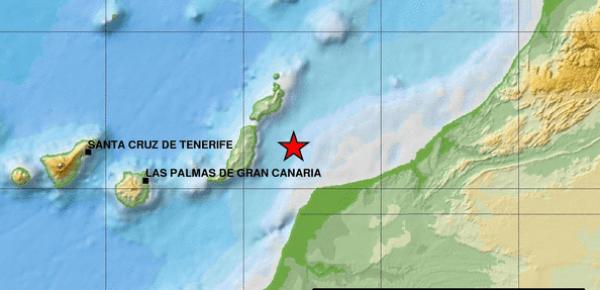
The area where Repsol intends to start oil exploration soon has again recorded an earthquake this Monday. The tremor has been of 2.3 degrees and has taken place shortly after 6 in the morning, according to information from the National Geographic Institute.
This small earthquake adds to those recorded only a few months ago, specifically on June 11. On that morning, up to three seismic movements were recorded. One of them reached 3.7 degrees of magnitude and was felt in several areas of Lanzarote, despite the epicenter being in the sea, off the coast of Sotavento in Fuerteventura.
After that episode, the councils of Lanzarote and Fuerteventura once again raised the added danger posed by this oil project in an area with seismic movements. "Drilling to levels above 5,000 meters below a seabed located at great depth and where seismic activity is intense, can only increase the level of risk, the magnitude of the threat of accidents, leaks and spills off the Canary Islands," they denounced from the Cabildo of Lanzarote.
For his part, Mario Cabrera warned then that in the documentation provided by the oil multinationals and by the Government of Spain itself "no type of measure or study is contemplated on how to react in case the seismic movements coincide with the drilling and cause spills, simply because there is no possible reaction." In his opinion, "a drilling at more than 2,500 meters deep like the ones planned here, with the pressure that exists at those depths and with the complications that there are to work, generates a number of risks that is not reasonable to assume. Neither with earthquakes, nor without earthquakes."
Add La Voz de Lanzarote as a preferred Google source.
Stay informed with the latest current news.