During the year 2021, a total of 25 people took their own lives in Lanzarote. This is the highest figure recorded in the history of the island. The information was published by the Lanzarote Data Center and collected through the Ministry of Health of the Government of the Canary Islands.
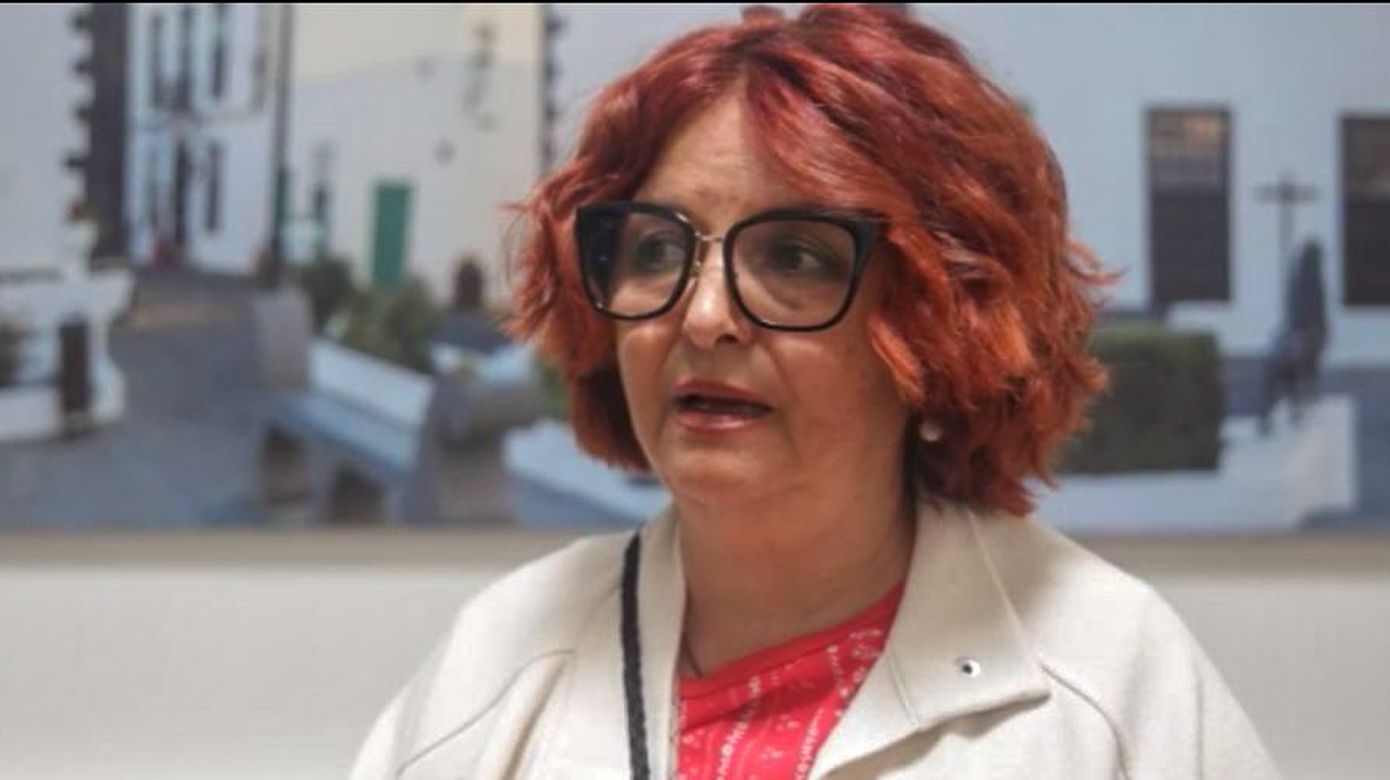
Although suicide and mental health are gaining space in the public debate, there is still a way to go. For this reason, the president of the foundation for the prevention of suicide Gamas (Mutual Aid Group for People Affected by Suicide), Marta Ceñal, offers some tools to be able to act in case of being with a person who shows thoughts or suicidal attempts.
The initial point is detection, that is, knowing how to identify the "verbal or non-verbal" signals that indicate that a person is suffering suicidal thoughts. In Gamas they have a project carried out by a pedagogue where they give "great importance" to the change in behavior. "If a person starts to isolate themselves, when they have been very sociable or stop, for example, attending to their friends, to their family, or if they even present aggressive behavior." These indicators may show "that something is happening and that there is something that is not working well internally," says Ceñal.
Marta Ceñal is a survivor of her son's suicide. After suffering her loss, she created the Facebook page El Descanso de Pedro and the Gamas project germinated to help surviving families and to work on prevention.
Sometimes, when the suicidal thought advances to the suicide attempt and the person begins to plan their death, they also plan their farewell. Letters, giving away precious goods, granting the care of a pet, are usually common signs.
If you need help call 024
"In the Association we talk a lot about this issue and in all the cases in which parents, mothers or children have committed suicide, they always have the same characteristics and almost always they are giving away their most valued things and they also say goodbye to their loved ones, in one way or another."
In this sense, it is important to emphasize that not all suicidal thoughts lead to suicide attempts and therefore not to completed suicides. "There are people who may be going through a bad time or a crisis, pathologies such as anxiety or depression or more serious mental illnesses and possibly, well, they experience suicidal thoughts." When suicidal thoughts appear, "in most cases," they are usually transmitted to family, friends or the trusted environment. "Many times they communicate it and ask you to keep the secret, but that should never be done. It can be the limit between life and death," Ceñal emphasizes.
How to act when someone tells us that they have suicidal thoughts?
"You have to talk openly about suicide so that the other person opens up and once they lose the fear of stigma they can tell what they feel," advises Ceñal. "Then you have to be clear that they do not want to die, that they only need to stop suffering and they consider that this is the most immediate way to do it," says the president of Gamas. When creating an environment of trust in which a loved one can confess that they suffer thoughts or even suicide attempts, it is crucial to be clear: take it seriously and do not criminalize it.
"Empathize and never, never downplay it, because when they talk about suicide they can carry it out, especially when they also talk a lot about death. They are very typical characteristics in people who have taken their own lives," Ceñal reiterates.
In the case of witnessing a suicidal attempt in a close person, it is also necessary to take into account the closest tools to facilitate the help they need.
"Keep in mind that they are not left alone, remove all nearby means with which they can be injured and try to talk," she advises.
In addition, there are different tools through which you can request help to know how to act in each specific situation, such as the suicidal behavior attention telephone of the Government of Spain 024, the Telephone of Hope 928 334 050, socio-health centers or mental health specialists.
In suicide prevention, the environment plays a very important role. "We are neither psychologists nor psychiatrists but we can learn those characteristics that a person who has that thought may have and help them, of course we can."
"We all have had problems throughout our lives, we have had moments of sadness. When a person has had a crisis or an important emotional problem, you have to watch them because at some point they may have thought about ending that problem by taking their own life and what you have to talk about is that there are other means that can help you and that is the least indicated."
Gamas offers an hour of weekly company between 8:00 p.m. and 9:00 p.m. on Wednesdays on Triana Street in Arrecife, number 35, ground floor right, in a premises ceded by Cáritas. Among other things, they offer breathing workshops.
The problems in the mental health of adolescents in Spain after the pandemic and the irruption of social networks has revealed the seams of the system. At this time, the general perception of people who work in suicide prevention or in areas of mental health is that imbalances in mental health are increasingly frequent, "especially in adolescents," emphasizes Marta Ceñal. "It is totally amazing how the cases of adolescents in suicide have increased. There have been many people who have told me that in the same night they have seen four or five cases of suicide attempts by adolescents and that has been as a result of the pandemic."
In people under 18 years of age, cases of bullying, drug use or dependence on technologies cause the main problems in the mental health of adolescents. "Now there are a series of channels that children have easily at hand that are very dangerous, such as the casino game that gets them into debts that they then do not know how to get out of and end up taking their own lives."
To this must be added the lack of public resources to meet the demand for consultations related to mental problems. "We need more psychologists in Primary Care." In addition, "the other day we went to the Emergency Room with a case of a tremendous crisis for him to be admitted and there were no means for admission to the hospital."
For economic purposes, Marta Ceñal considers that the lack of resources to tackle this problem causes economic losses to public coffers.
"If a person commits suicide, only with one person who commits suicide, there are at least six adjacent people who have been left for life with disorders in the type of anxiety, depression and with pills, that is so and it is studied."
To continue tackling and fighting for the prevention of suicide, the president of Gamas sees the creation of a prevention action plan in schools in Primary and ESO as fundamental. If it existed, she understands that "we would not reach those extremes." Emotional education is another of the fundamental values to fight "against the scourge of suicide."
"We take anonymous files to schools in relation to suicide prevention and the cases are alarming. Just as the Canary Islands has been a pioneer in implementing emotional intelligence in schools, a suicide prevention should also be done, of course, but not only in talks but in the center. That would be ideal to then not end up going to the psychiatrist when you are already a teenager," she concludes.
Add La Voz de Lanzarote as a preferred Google source.
Stay informed with the latest current news.