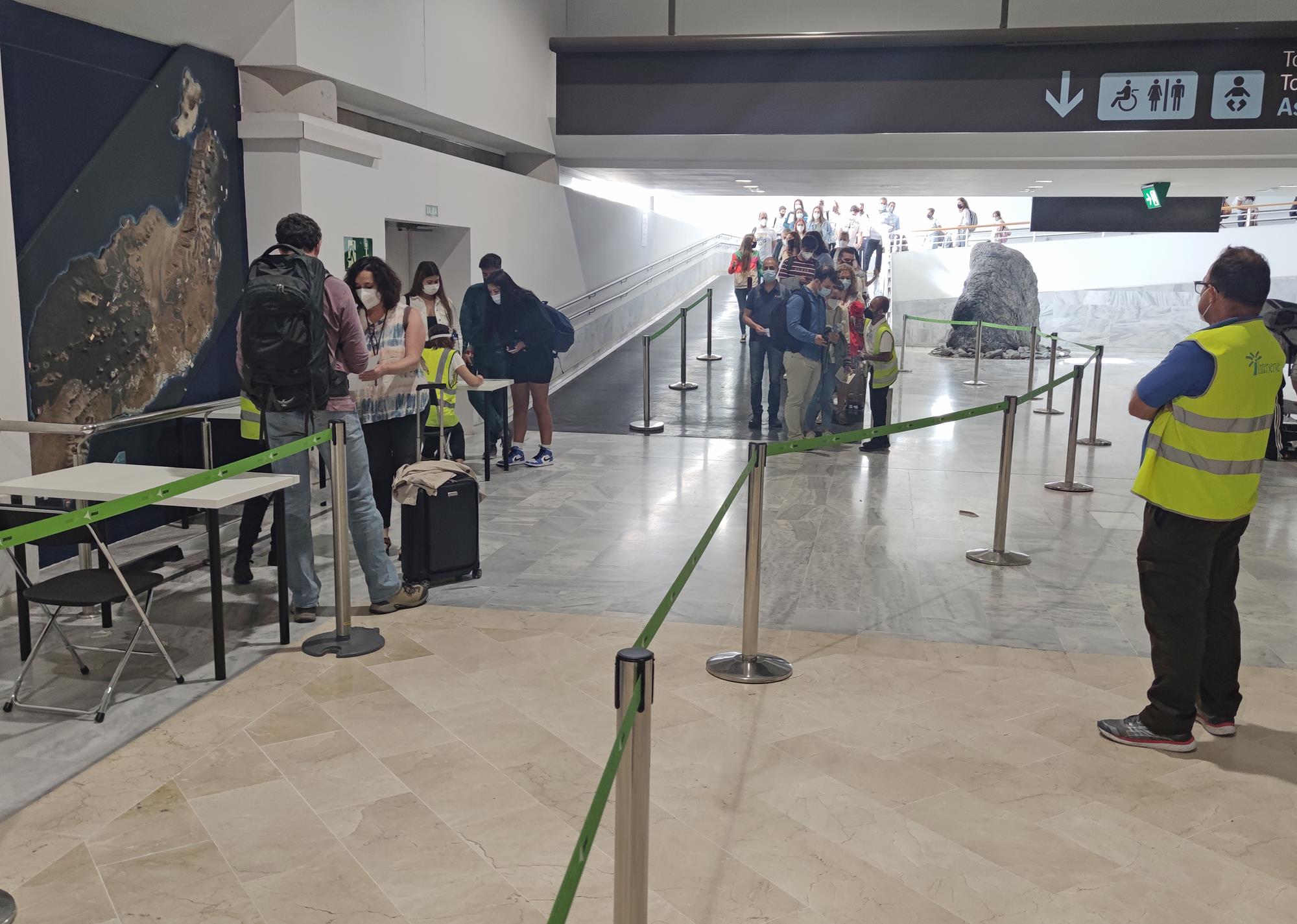
The Minister of Tourism, Industry and Commerce of the Government of the Canary Islands, Yaiza Castilla, has shown her concern about Germany's decision to consider the Canary Islands as a risk area, which was announced this Friday. Although this classification does not imply quarantine after traveling to the Islands as long as a negative Covid test is presented upon returning to Germany, Castilla warns of the need to control the epidemiological incidence in the Archipelago to prevent the German country from raising the level of the Islands and applying more severe travel restrictions.
The counselor recalls that Germany is the second most important issuing market for the Canary Islands. “In 2019, the Islands received 2.65 million German tourists, 17.5% of the total, and, although they have not stopped coming in these months because there was no explicit prohibition to do so, their presence has been greatly conditioned by the obligation to carry out quarantines upon returning to the country”, explains Castilla. Currently, German tourists traveling to the Canary Islands must present a negative Covid test upon arrival in Spain and another when they return to Germany.
"The interest of Germans in enjoying their vacations in the Canary Islands is palpable, as is the willingness of tour operators and airlines to recover the tourist flow with the Archipelago. Proof of this is that airlines have scheduled half a million seats from Germany to the Islands for the months of July, August and September", they emphasize from the regional government.
Regarding the new classification published this Friday by the Robert Koch Institute, they affirm that "it does not seem to imply an interruption of tour operator operations at this point, given the stoppage of recent months, but it is true that the German population is characterized by being more disciplined in the face of the recommendations of its authorities, which is expected to lead to a retraction of the intention to travel that will have to be assessed in the coming days.”
“We must first of all control the epidemiological incidence in the Islands, lower the number of cases and continue with the good rate of vaccination. If we are not strict when it comes to complying with security measures and in the future the German Government declares us a high incidence zone or a mutation zone, the consequences would be disastrous for our economic engine”, insists Castilla.
The classification of high incidence zone entails carrying out tests and quarantines, except for those vaccinated and recovered from the disease, which may negatively affect family tourism, since it would be the case that unvaccinated children have to confine themselves upon arrival, despite the fact that vaccinated adults are not obliged to do so.
As for the places that are considered a mutation zone, all people who travel to these regions must undergo mandatory quarantine upon their return to Germany, regardless of whether they are vaccinated or not.
Add La Voz de Lanzarote as a preferred Google source.
Stay informed with the latest current news.