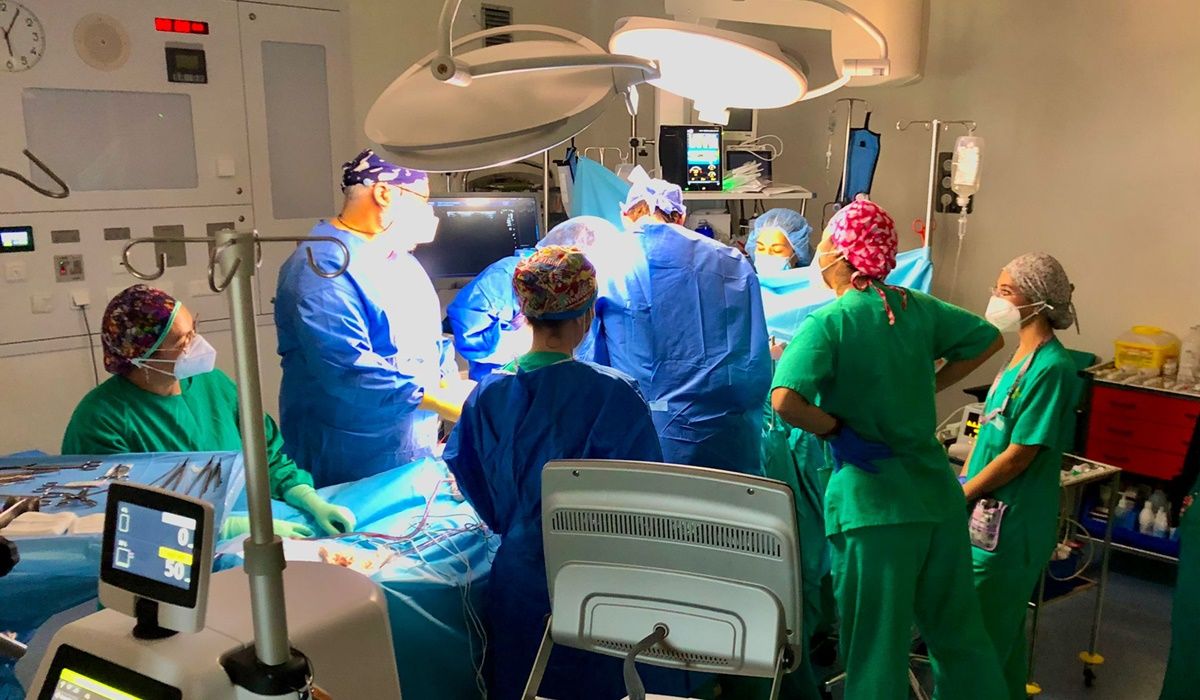
The Doctor José Molina Orosa University Hospital has performed, for the first time and successfully, the irreversible electroporation technique, an innovative procedure that allows addressing malignant pancreatic tumors that are not operable.
The intervention, led and coordinated by the surgeon Juan Manuel De Diego, was carried out jointly by the Surgery and Radiodiagnosis teams of Molina Orosa and was assisted by the head of the Radiodiagnosis service of the Doctor Negrín University Hospital of Gran Canaria, and specialist in advanced ablative therapies, Carmen Rosa Hernández.
The Ministry of Health points out that this procedure, which until now has only been carried out in reference hospitals, "accelerates the destruction of tumor cells".
“It is a tissue ablation therapy by means of needles connected to a device called Nanoknife, electrical impulses are generated by electrodes in the affected area that manages to destroy cancer cells, without damaging important veins and arteries when they are surrounded by tumor tissue, with millimeter precision”, explains the surgeon, Juan Manuel De Diego.
From the Ministry of Health they detail that irreversible electroporation is a technique "very advanced and innovative to treat complex tumors, in this case of pancreas, for which conventional surgery does not offer a response." They also point out that this procedure, which pursues "a significant reduction of the tumor", has shown "good results in cancer patients, who in addition to greater survival to the disease, improve their quality of life".
The intervention, which lasted almost four hours due to the extension and complex location of the lesion, responds to the firm commitment of the Doctor José Molina Orosa University Hospital "to the most advanced technology and the most innovative and least aggressive medical treatments for patients", and has been possible thanks to the training and experience of the Surgery and Radiology teams of the center.
Add La Voz de Lanzarote as a preferred Google source.
Stay informed with the latest current news.