Addictions without substances such as addiction to gambling or betting with money, problematic internet use, possible video game use disorder and pornography use are some of the social concerns in Spain. According to data collected by the Government, in the report presented within the National Drug Plan, nearly 4,000 people, between 15 and 64 years old, started treatment for these addictions in our country in 2023.
Among young people, the age at which they begin to access the internet and consume this type of space is decreasing. It is estimated that 21.5% of students gambled with money online and/or in person in the last 12 months, in an age range of 14 to 18 years. In addition, 23.5% of students who have gambled online in 2023 would have a possible gambling problem.
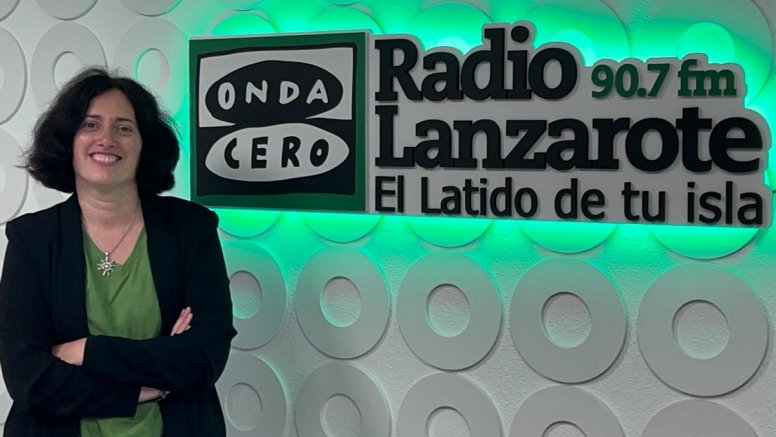
Ana Isabel Estévez, tenured professor at the Faculty of Health Sciences of the University of Deusto and expert in research on addictions without substances, offers us the keys to understand the dependence generated by these harmful behaviors for young people, and not so young people. The university professor, who has been conducting research since 1999, has approached an institute in Arrecife to offer a talk related to substance-free addictions in young people. Addictions are the main topic of the studies, although it also deals with addiction to consumption in shopping, pornography, emotional or relational dependence on people...
The traditional way in which addictions are known has changed in recent years. This has been expressed by Estévez, making it clear that in the diagnostic manuals of psychiatry and psychology, there is already a recognition that "certain behaviors are likely to generate addiction." As in the case of gambling and video games, which are considered addictions at the "same level" as any other addiction to substances, such as alcohol or tobacco. "Before, when we talked about addictions, we thought solely and exclusively about addictions to substances," a question that has been advancing as time has passed.
Women start later, but end up with more serious problems
The gender role is a matter of vital importance for gambling addictions. A problem focused for years more directly on the male sex, but that also affects women of all ages. According to studies, men start before the age of 18 and women at 30 or 40 years of age, although the consequences of their addiction are greater in a shorter period. "Women start playing much later than men, but in a shorter period of time they end up developing a much more serious problem," she pointed out.
According to social research conducted so far, there was a "higher prevalence of men than women" in this type of addiction, although the data is modified depending on the type of game on which the analysis falls. Therefore, the type of game also varies in consumption depending on gender.
"In a shorter period of time, women end up developing a much more serious problem"
In addition, the greater or lesser consumption also has to do with the activities or free time in question of gender. Sometimes, women "focus more on the care of other people", and start playing in a "moment of crisis, emotional or vital", Ana stressed. The main reasons why both genders play are very different, Estévez acknowledged. Adolescent boys play more "out of impulsivity or for sensation seeking", and in the case of women, they do so as a "measure to alleviate their emotional distress or not feel so sad", she added.
"We are concerned that teenage girls are starting earlier and earlier," is the conclusion they have reached in recent studies. In the case of the female gambler, research shows that she receives "more violence than male gamblers." A situation that may occur in the present due to a lack of money in the couple or even throughout the history of her life, with situations in childhood that may have been painful," Ana explained.
How to detect an addict
In most cases, it is difficult for the addict's environment to identify the problem of their family member or relative. The doctor in psychology shows the keys to know and detect someone who suffers from this type of addiction. The waste of money and the centralization in certain activities are two specific points to detect it. "Someone who spends a lot of money, focuses a lot on certain activities and leaves others aside," she revealed.
Families suffer from ignorance in cases of gambling addiction, especially with the arrival of the Internet. In many occasions, no member even "considers that this could be an addiction", Estévez stressed. "We have teenagers locked in the room and we think, "look, he/she is not consuming", she added. Although the reality is very different. "Being at home does not mean that it is a safe place, they can contact any person and access all types of content," she pointed out.
The most remarkable thing about the research is the way in which family dynamics have changed. Before, the man went with his partner to the treatment centers, now it is the mothers who go with their children to solve the problem. "It becomes more complicated, they say: "if it were my partner I would separate, but I cannot stop being the mother of my son", Estévez pointed out.
In the case of female gamblers, there is a "lack of social support, they are not as accompanied by their partners as men", data that the studies show.
"If it were my partner I would separate, but I cannot stop being the mother of my son"
The addict fulfills a series of behaviors that mark his addiction and interfere in his daily life as in family relationships, with friends, partners or educational. "Lying is one of the signs, when someone does not recognize that he has done something and cannot stop doing it," he stressed.
Important changes in mood or character, thefts, lack of money, etc., are some signs to which "we must be attentive", Ana remarked. It is the prelude to seeking help from a professional to avoid letting it pass and detect that possibility in the shortest possible time. "The earlier addictive behaviors begin, the greater the degree of severity," she acknowledged.
The problem is strengthened when there is "a need to spend more hours playing and the addiction is increasing", Estévez added.
Consequences of addiction and its social stigma
The consequences of addictions have more impact on the person who suffers the addiction. "It does more damage to himself than to others, it can even put his health, relationships or work at risk," she said.
The addict will do "anything" to get money to play, even spend the money from the mortgage, electricity or water, to maintain the addiction. "The most important thing in his life is to play, and he uses the game as an escape route to problems," he revealed. Addictions are related to depressive and anxious symptoms, previous causes that push the person to think that the game "will solve their setbacks".
The social stigma that continues to be experienced around addictions is remarkable in our society. "No one is likely to develop an addiction problem," Estevez remarked. The main reason why, in the professional's opinion, a "more compassionate" look should be taken towards those affected.
How to get unhooked?
Along with recognizing the addiction, the most difficult thing is to get unhooked. "It is the unavoidable way of having to face everything that has not been done until now," Estévez stressed. The most important ingredient is motivation, which makes you leave the addiction aside, Ana recognizes. Seeking help in specialized centers to work on behavioral addictions is essential for recovery. "Many people who lived in a real hell have managed to get out of situations that they thought would be impossible," she added.
Self-prohibition is one of the measures to reach zero gambling, a way to exclude yourself from consuming online and face-to-face gambling content, which can be done through the Spanish Federation of Rehabilitated Gamblers (FEJAR), which helps the addict to process their self-prohibition request to restrict access to casinos, bingo and online gambling. A "strong control" that must also be taken by the environment, monitoring the money and prohibiting the addict from having cards or money in his account, only "very specific" amounts. In addition, some guidelines that should be accompanied by the cognitive behavioral technique, which manages to change the "behavior, emotion and thought of the patient so that he can recover his life", he advised.
Pornography, sex addiction, compulsive shopping and emotional dependence
In relation to pornography consumption, Ana stressed that "the most serious thing is that there are no scenes of care of the woman's body, and there are images of a lot of violence", in the pornographic videos that young people have access to. "The problem is that these people are not adults with experiences to know how to distinguish what is real and what is part of a movie," she revealed. What begins to trigger in the development of "more violent" relationships and the "learning of reproduction of what they see", he said.
In relation to the above, the University of Deusto also studies sex addiction. "We have found that it has to do with the need to feel loved," she added.
Compulsive shopping is also part of an addiction, established in a daily way in our day to day. Estévez has expressed that it is a state of "impulsivity", in which the buyer "does not stop to think" about the need or not of that consumption. "It is something ephemeral to calm anxiety and think that it will give happiness", she added. One of the details that mark the study in which the teacher has participated is that "it is not correlated with that feeling". In the addiction to shopping are included both families with a lot of money and little money, with people who have aid. "Materialism could be a predictive element," she stressed.
Emotional dependence among peers, in which they have investigated on "secure attachment and addictions" and going through the first years of life, highlighting the importance of the family. Some of the data found have been based on the line that "children who feel safer" in their childhood, surely "will not need external things to be able to calm down", Estévez pointed out.
With a teaching to "read their own emotions and affection from a young age", the adult "will not use the person next to him to calm or manage their emotions", concluded the doctor in psychology.
Add La Voz de Lanzarote as a preferred Google source.
Stay informed with the latest current news.