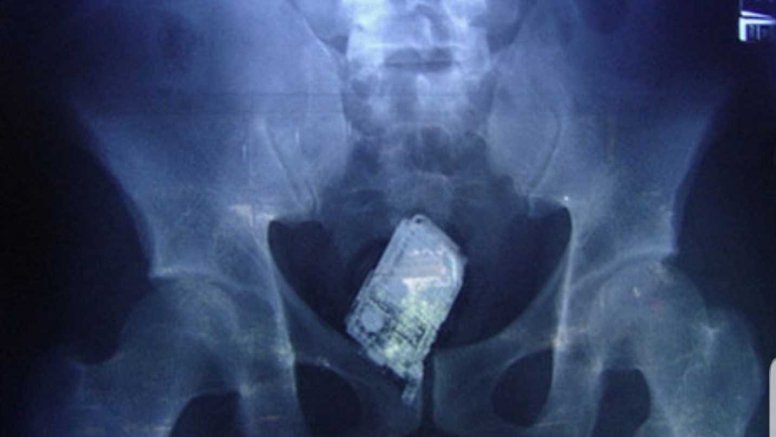
The ACAIP prison union together with UGT has denounced that 157 cell phones have been seized in the Tahíche prison in the last four years and that this represents "a latent threat to prison security."
In a press release, it indicated that cell phones have become one of the most coveted objects in prison, generating a black market with serious consequences for internal order. According to data provided by the union, between 2020 and 2024 a total of 157 terminals have been seized in the Arrecife penitentiary center.
In the centers dependent on the General Secretariat of Penitentiary Institutions, the number amounts to 12,882. In 2024 alone, 2,884 devices were seized, of which 35 were seized in the Lanzarote prison
Thus, they have indicated that cell phones are prohibited inside penitentiary centers because they allow inmates to "evade established communication controls, facilitating the continuity of criminal activities." Among them, it exemplifies gender violence or the coordination of criminal networks from inside prisons.
Thus, it adds that "this prohibition not only responds to security criteria, but also to compliance with the constitutional mandate of re-education and social reintegration."
From ACAIP-UGT, they wanted to value the effort and commitment of public prison employees who, despite limited resources and the increasing sophistication of introduction methods, "continue working intensely to stop this type of smuggling."
Always according to this source, many of these devices "are used by especially dangerous inmates, such as those convicted of terrorism, gender violence or belonging to organized gangs, whose communications are restricted for legal or security reasons." Access to these phones not only allows them to continue with their criminal activity, but also generates "internal conflicts, debts between prisoners and episodes of violence related to their control and possession."
The new challenges: lack of personnel and drones
Acaip has denounced that "officials must face this reality with clearly insufficient means." Thus, the terminals, increasingly smaller and manufactured with plastic components, "easily escape metal detectors and can be hidden in the most unsuspected places." This forces to carry out "exhaustive searches that require specialized training and sufficient personnel, something that is not guaranteed in all centers today."In addition, new introduction methods have emerged that pose a serious threat to security: drones. Their ability to "fly over facilities and deposit objects with precision makes these devices almost undetectable risk vectors, capable of bypassing the current defenses of the centers."
Faced with this panorama, they have pointed out that "a decisive investment in modern security technology is urgently needed. The inhibitors installed years ago, based on 3G networks, have become obsolete in the face of the advancement of telecommunications." Thus, it has indicated that "it is essential to provide penitentiary centers with updated inhibition systems that prevent the use of cell phones inside and prevent drones from flying over restricted areas."
In this sense, it has indicated that "security in prison is a prerequisite for the effective application of reintegration programs." Thus, it has indicated that "the introduction and use of prohibited objects such as cell phones seriously destabilizes coexistence, encourages violence and undermines the objectives of the penitentiary system."
Likewise, it has indicated that "the fight against this threat must be a priority for the Administration, providing workers with the human and technical resources necessary to guarantee order and security in the centers."
Finally, from ACAIP-UGT they have demanded a "firm, modern and effective response" to face this constant threat. Meanwhile, they have indicated that "the security of our prisons cannot depend solely on the effort and vocation of prison workers. It requires institutional commitment, technological investment and strategic planning."
Add La Voz de Lanzarote as a preferred Google source.
Stay informed with the latest current news.