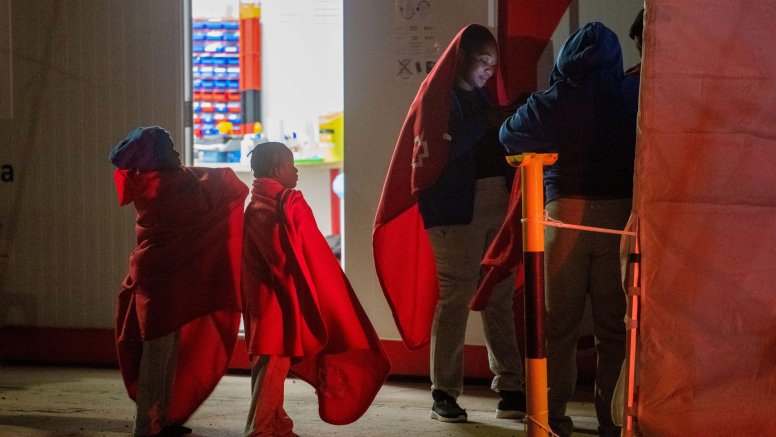
Around 200 unaccompanied migrant minors who arrived on the coasts of the Canary Islands have been transferred to Mérida. These people have been welcomed in the municipal hostel of the Extremaduran capital, as confirmed by the Junta de Extremadura. The regional executive has considered "important" the number of boys and girls transferred to resolve the child reception crisis experienced by the Archipelago.
The spokeswoman for the Board, Victoria Bazaga, has referred to this issue, asked by the media in the press conference after the Governing Council, in which she stressed that the Executive of María Guardiola is "open and willing" to collaborate in everything possible so that "they are as well as possible here."
Bazaga explained that this transfer to Mérida has been possible thanks to an agreement with the Ministry, which "is within the coherence of any government that has to be aware of what is happening."
"These people must be attended to and here they will be attended to," she said, although she did not specify how long these two hundred immigrants will be in Extremadura, "because it depends a little now on how the future of these people is going to be managed." "In any case - she insisted - we want them to be well, to be comfortable and that it is beneficial for them after what they have experienced to be here with us," added Victoria Bazaga.
After reminding her that the mayor of Mérida, the socialist Antonio Rodríguez Osuna, was the one who showed his interest last Saturday in the city welcoming migrants from the Canary Islands, the spokeswoman for the Board clarified that it is not a three-party agreement and specified that when a national government has to make decisions, it "pulls" from the autonomous communities "to see what each of us can do."
In that sense, she specified that the Extremaduran Executive made itself available to bring these 200 immigrants to Mérida and a hostel was sought that met the best conditions for it.
"From there, those who have been most accurate in all this have been the Red Cross, who already have a lot of experience and have been very generous in being there," said Victoria Bazaga.
The councilor spokeswoman, who did not want to tell the characteristics of the group that has arrived in Mérida, "a little for protection," insisted that "we have been involved, as it cannot be otherwise socially to work on this issue."
In her opinion, the transfer has been "very hard" and she thanked the Red Cross for the work done, together with those responsible for the Health Area of Mérida to bring them and welcome them in the Emeritense hostel.
Add La Voz de Lanzarote as a preferred Google source.
Stay informed with the latest current news.