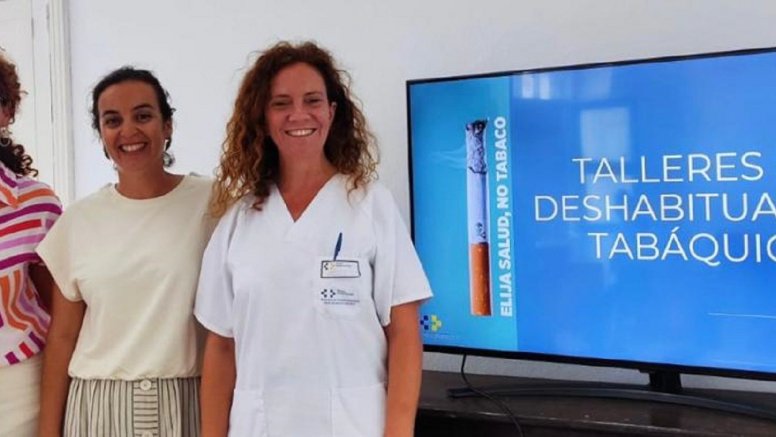
Health professionals from the Lanzarote Health Area have participated in a course to help the smoking population quit the habit of tobacco consumption.
The initiative, conceived by a group of nurses with experience in smoking cessation, has a training program aimed at health personnel in the island's health centers with the aim of "acquiring the knowledge and skills necessary to develop group smoking workshops among smoking citizens."
Thus, the ultimate goal is to "increase the number of workshops offered by Primary Care centers, in which specialized personnel participate, to advise smokers who express their desire to quit the smoking habit."
The course has been taught by nurses Begoña Hernández Berriel and Yanira Alonso García, responsible for group therapy to quit smoking in the island's health centers, and health psychologist Angélica Virgil.
Training contents
This course provides health personnel with "the necessary skills and techniques to address tobacco consumption among the population, enabling them to resolve the complications that arise from the cessation process such as relapses, weight gain or certain negative feelings and emotions."
The role played by Primary Care professionals in smoking cessation, together with the increase in medical and nursing consultations to quit smoking by users, requires "specialized personnel to guide and accompany patients in the process of quitting smoking."
Strategy to quit smoking
The strategy implemented for addressing the smoker, in addition to the pharmacological part of the treatment, focuses on the "realization of group therapy workshops in which the patient is accompanied throughout the process."
The health professionals in charge of these workshops try to "reinforce positive attitudes and decrease negative ones, enhance self-esteem, self-efficacy and strengthen willpower, both individually and as a group."
These smoking cessation workshops also insist on the "benefits of quitting smoking, debunking myths about tobacco and helping the patient to face the first days of the process, in which withdrawal syndrome usually appears." In this case, "relaxation techniques are used."
Professionals must also "know how to prevent and detect relapses in follow-up sessions and strengthen self-control strategies, therapeutic adherence and reinforce patients' vigilance attitude in the face of possible risk situations", at least during the first year.
"To know how to prevent and detect relapses in follow-up sessions and strengthen self-control strategies", among other elements
The course leaders assure that these workshops are "an effective therapeutic intervention that, combined with pharmacological treatment, increases the possibility of success in quitting tobacco by the patient."
Add La Voz de Lanzarote as a preferred Google source.
Stay informed with the latest current news.